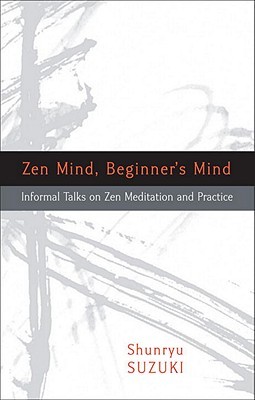
Zen Mind, Beginner's Mind by Shunryu Suzuki is a 1970 religion & spirituality book about zen, meditation, beginner's mind. In the beginner's mind there are many possibilities; in the expert's mind there are few. Keeping beginner's mind — open, questioning, free of fixed ideas — is the whole of Zen practice.
Summary
Zen Mind, Beginner's Mind is a collection of informal talks given by Shunryu Suzuki to his students at the San Francisco Zen Center in the late 1960s, edited and compiled by Trudy Dixon and published in 1970. It has become the most widely read Zen text in the English-speaking world — a status it has held for over fifty years without ever trying to be definitive or systematic. Its authority comes entirely from the quality of attention behind the words.
The book's organizing principle is the concept of beginner's mind — shoshin in Japanese. In the beginner's mind there are many possibilities; in the expert's mind there are few. This is not false modesty but a precise observation: expertise can foreclose perception, filling the space where direct experience should be with concepts, comparisons, and conclusions. Practice in Suzuki's teaching means maintaining the open, questioning quality of someone encountering something for the first time, even when doing something familiar for the ten-thousandth time.
The talks cover basic Zen practice — posture in zazen, breathing, the relationship between sitting and daily life — and move through topics including right effort (not too tight, not too loose), the importance of impermanence and imperfection, and the nature of Zen mind. The writing is deceptively simple. Suzuki speaks in short, plain sentences that seem obvious on first reading and reveal unexpected depth on return. "In the beginner's mind there is no thought 'I have attained something.'"
The book makes no attempt to explain or defend Zen doctrine. It is not interested in converting the reader to Buddhism. Its method is closer to the koan tradition — presenting a way of looking at ordinary experience that disrupts ordinary assumptions — than to the expository tradition. Many readers report that they return to it periodically across years and find new things each time, which may be the most reliable endorsement of a book about beginner's mind.
Talk to Zen Mind, Beginner's Mind like its author wrote you back.
Get the ideas that fit your life — not generic summaries.
- Chat with the book
- Audiobook-style main ideas
- Adapts to your life and goals
- Helps you take action
Key takeaways
- 1.
In the beginner's mind there are many possibilities; in the expert's mind there are few. Keeping beginner's mind — open, questioning, free of fixed ideas — is the whole of Zen practice.
- 2.
Proper posture in zazen is not a means to enlightenment but an expression of it: sitting fully, without expectation or agenda, is itself the practice.
- 3.
Right effort is not too tight and not too loose — the middle way between forcing and abandoning, applied moment to moment in practice and daily life.
- 4.
Impermanence is not a problem to solve but the nature of reality, and recognizing it fully — in sitting, in relationships, in all experience — is a form of freedom.
- 5.
The goal of practice is not to gain anything; the person who thinks they have attained enlightenment has already lost beginner's mind.
- 6.
Our original nature — what Zen calls 'big mind' — is already perfect and always present; practice is not acquiring it but stopping the interference.
- 7.
Each moment of sitting is complete in itself, not a step toward a future goal; this is what is meant by 'just sitting' (shikantaza).
- 8.
The practice extends into every activity: washing dishes, walking, talking. There is no division between meditation time and the rest of life.
Discussion questions
Use these on your own, with a book club, or as chat starters in Superbook. Book club version, ready to copy or print →
- 1.
Suzuki says in the beginner's mind there are many possibilities. In what area of your life have you lost beginner's mind — seeing only through the lens of what you already know?
- 2.
The book says the goal of practice is not to gain anything. Is that motivating or demotivating? How do you pursue something without a goal?
- 3.
Suzuki describes proper posture as an expression of enlightenment rather than a path toward it. Does the idea that form and content are inseparable apply anywhere in your own work?
- 4.
The teaching on right effort — not too tight, not too loose — is described as central. Where in your life are you currently too tight? Too loose?
- 5.
The book makes no arguments for Zen and no attempt to persuade. Is that kind of writing spiritually effective, or does it leave too much up to the reader?
- 6.
Impermanence pervades the teaching: everything is always changing. How would you describe your actual, lived relationship to change — resistant, accepting, ambivalent?
- 7.
Suzuki says our original nature is already perfect and always present. If that were true, what is the purpose of decades of formal practice?
- 8.
Many readers return to this book at different life stages and find new things. Why might a book about beginner's mind be particularly suited to rereading?
- 9.
The San Francisco Zen Center was founded in 1962 and became the first major Zen institution outside Asia. What was available to Western students in Suzuki's teaching that they couldn't find elsewhere?
- 10.
The book has been quoted by Steve Jobs and many others in technology and business contexts. Does that appropriation honor or distort the teaching?
- 11.
What would your day look like if you approached each task — including the most familiar ones — with genuine beginner's mind?
Themes
Frequently asked questions
-
What is beginner's mind?
Shoshin in Japanese — the open, questioning quality of someone encountering something for the first time, without preconceptions or conclusions. Suzuki argues that this quality is the heart of Zen practice and that expertise without beginner's mind closes off direct perception.
-
Do I need to meditate to read this book?
No. Many readers find the book clarifying before they start any practice. But Suzuki consistently points back to sitting meditation as the ground of the teaching; the book will be richer if read alongside practice.
-
How does this compare to other Zen texts?
It is the most accessible entry point to Zen for Western readers. The Platform Sutra of the Sixth Patriarch and The Gateless Gate (Mumonkan) are classical Zen texts in a very different register — more formal, more cryptic. Suzuki speaks directly and plainly, which is unusually rare in the Zen literary tradition.
-
Is Zen Mind, Beginner's Mind part of a curriculum?
At the San Francisco Zen Center and many Zen communities worldwide it is the standard introductory text. It is often given to people when they begin formal practice.
-
Why has this book endured for over fifty years?
Because it describes the quality of attention available in practice without demanding any doctrinal commitment, and because it rewards rereading in a way that technical or argumentative books don't. Each return finds something the previous reading missed — which is, in a sense, the whole point.