The Practicing Mind by Thomas M. Sterner is a 2005 self-help book about practice, process orientation, patience. Outcome fixation makes the learning process feel like an obstacle. Shifting to process orientation — treating practice itself as the goal — reduces frustration and improves actual performance.
Summary
Thomas Sterner's argument starts from a simple observation: most people approach learning and improvement with an outcome-fixated mindset that makes the process feel like an obstacle to tolerate rather than the activity itself. They want to play piano, not practice scales. They want to be fit, not work out. The Practicing Mind is an attempt to reorient that relationship — to make the process the goal so that the journey becomes the reward rather than the cost.
Sterner draws on his own background as a professional piano tuner and musician, a golfer, and a practitioner of disciplines requiring long patient improvement. The core idea is that a "practicing mind" — one that stays fully engaged with the present moment of a repetitive or difficult task, without judging its own performance against an imagined ideal — is both more effective at improving and more satisfying than an outcome-focused approach. He frames impatience and frustration as errors in mental framing rather than reasonable responses to slow progress.
The practical tools he offers include the DO-RE-MI method (Do, Review, Make Adjustments), a deliberate slowing down to fully experience the quality of each action, and the use of the word "practice" as a mental reframe — treating any difficult skill acquisition as practice removes the implicit standard of immediate perfection. He also emphasizes the compounding nature of attention and patience: the people who make the fastest progress are often the ones most at peace with being slow.
The book is short and personal in tone, somewhere between a meditation on craft and practical instruction. It will resonate most with people learning a musical instrument, a sport, or any skill requiring sustained repetitive effort. The ideas translate to knowledge work and personal development, but that application requires the reader to do the bridging. Sterner's writing is earnest and occasionally repetitive, but the underlying philosophy is sound and underexplored in popular productivity literature.

Talk to The Practicing Mind like its author wrote you back.
Get the ideas that fit your life — not generic summaries.
- Chat with the book
- Audiobook-style main ideas
- Adapts to your life and goals
- Helps you take action
Key takeaways
- 1.
Outcome fixation makes the learning process feel like an obstacle. Shifting to process orientation — treating practice itself as the goal — reduces frustration and improves actual performance.
- 2.
Impatience is not a rational response to slow progress; it's a symptom of judging the present moment against an imagined future state that doesn't yet exist.
- 3.
The practicing mind stays fully engaged with the immediate quality of each action rather than evaluating how close that action is to a finished ideal.
- 4.
Deliberate slowing down — doing the action slowly enough to feel its quality fully — is often more effective than drilling at full speed.
- 5.
The word 'practice' itself is a useful mental reframe. Labeling an activity as practice removes the implicit demand for immediate competence.
- 6.
Progress compounds most quickly in people who are most patient with current performance. Urgency and frustration are headwinds, not motivators.
- 7.
Every skill requires a period of conscious incompetence before unconscious competence. Accepting that stage explicitly, rather than fighting it, makes it shorter.
- 8.
The same process orientation that applies to musical practice applies to golf, athletic training, meditation, and any domain requiring sustained deliberate effort.
Discussion questions
Use these on your own, with a book club, or as chat starters in Superbook. Book club version, ready to copy or print →
- 1.
Sterner argues that outcome fixation makes the process feel like an obstacle. Where in your own learning or work do you recognize that pattern?
- 2.
Is there a skill you practiced or learned where you got the relationship with the process right? What made that different from the times you didn't?
- 3.
He claims that impatience is a framing error rather than a reasonable response. Does that reframe land for you, or does it feel like rationalization?
- 4.
Which discipline in your life currently requires patient, repetitive practice that you're either avoiding or doing with frustration?
- 5.
The DO-RE-MI cycle — Do, Review, Make Adjustments — is simple. How different is that from how you actually approach improvement in a skill you're building?
- 6.
Sterner writes from deep personal experience with music and golf. Does the narrowness of his examples make the ideas more concrete or harder to generalize?
- 7.
The book is short and deliberately simple. Does that feel appropriate for its subject, or does it leave things under-explained?
- 8.
What's the fastest you've ever improved at something? Looking back, what was your relationship to the process during that period?
- 9.
Process orientation requires tolerating being bad at something without letting that judgment derail the work. Where do you struggle to do that?
- 10.
Sterner says the people who progress fastest are often the most patient. Where have you seen this to be true, and where have you seen driven urgency also produce results?
- 11.
How would your relationship to daily work change if you reframed every task as practice rather than performance?
Themes
Frequently asked questions
-
Is The Practicing Mind worth reading?
Yes, especially for anyone learning a skill that requires long repetitive practice — an instrument, a sport, a craft. The core idea is simple but the book is one of the better treatments of process orientation in popular writing. It's short enough that the cost is low.
-
How long does it take to read The Practicing Mind?
Under three hours. The book is around 150 pages and reads quickly. Some chapters cover similar ground from different angles, which can feel repetitive but also reinforces the ideas.
-
What is the main idea of The Practicing Mind?
That process orientation — staying engaged with the quality of the present action rather than judging it against a distant goal — reduces frustration, improves performance, and makes skill acquisition sustainable over the long term.
-
Who should read this book?
Musicians, athletes, martial artists, and anyone learning a skill that requires sustained repetitive practice. Also worth reading for anyone who finds themselves impatient with slow progress in any domain.
-
How does it compare to Peak by Anders Ericsson?
Peak is a research-based account of deliberate practice with substantial evidence and mechanism detail. The Practicing Mind is shorter, more philosophical, and focused on the mental relationship to practice. They complement each other well, with Ericsson covering what to do and Sterner covering how to be while doing it.
Similar books
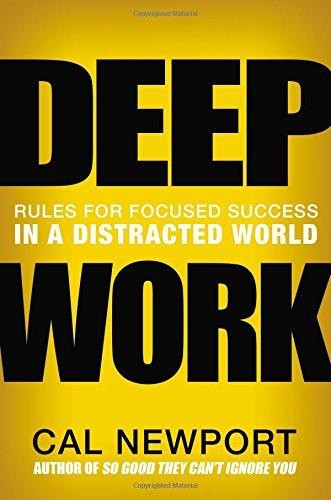
Deep Work
Cal Newport

Atomic Habits
James Clear
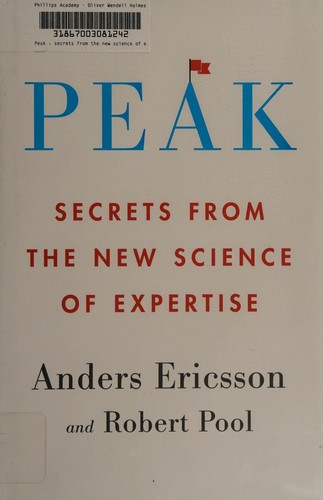
Peak: Secrets from the New Science of Expertise
Anders Ericsson and Robert Pool
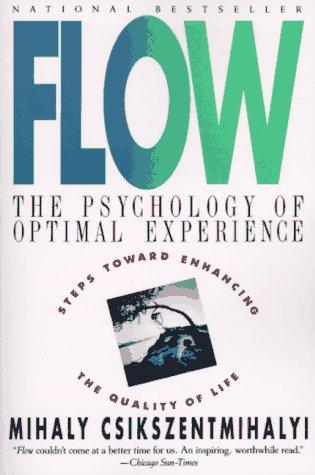
Flow: The Psychology of Optimal Experience
Mihaly Csikszentmihalyi
