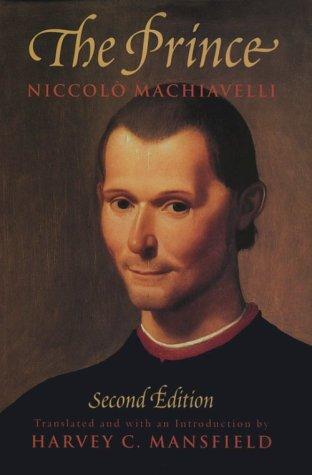
The Prince by Niccolò Machiavelli is a 1532 philosophy book about power, political realism, leadership. Rulers must separate political necessity from conventional morality. Machiavelli argues that a prince who always acts virtuously in the traditional sense will be destroyed by those who do not.
Summary
The Prince is Machiavelli's short treatise on how to acquire, hold, and exercise political power. Written in 1513 and published posthumously in 1532, it was addressed to Lorenzo de' Medici as practical advice for a new ruler, but its real audience has always been anyone who wants to understand how power actually works rather than how moralists say it should. The book's enduring shock is its refusal to dress up political calculation as virtue.
Machiavelli's central argument is that effective rule requires a clear-eyed separation between political necessity and conventional morality. A prince must be willing to use cruelty decisively when required, appear virtuous without being bound by it, and adapt his behavior to circumstances. The famous lion-and-fox metaphor captures the idea: force alone is not enough; a ruler must also be cunning enough to identify traps and bold enough to break from precedent when the situation demands. Machiavelli distinguishes fortune from virtù — the latter being not moral virtue but something closer to capability, adaptability, and the will to act at the right moment.
The book is also a study in how rulers lose power. Machiavelli catalogs the failure modes: relying on mercenaries rather than one's own arms, depending on the goodwill of the powerful few while alienating the many, being hated or contemptible (the two worst outcomes), and misjudging when to be ruthless versus when to be generous. His reading of historical examples — Cesare Borgia as a near-exemplar of decisive action, the cautious Pope Julius II as a case study in lucky boldness — gives the abstract principles concrete weight.
What makes The Prince difficult is that Machiavelli doesn't resolve the tension between his descriptive claims and his normative ones. He is describing what works, but he also seems to admire it. Five centuries of readers have disagreed about whether the book is a cynical manual, a satirical exposure of power, or simply the first serious work of political science. It remains most useful as a corrective to naive assumptions about leadership — a reminder that good intentions and sound policy are not the same thing, and that the gap between how people live and how they ought to live is where rulers are made or destroyed.
Talk to The Prince like its author wrote you back.
Get the ideas that fit your life — not generic summaries.
- Chat with the book
- Audiobook-style main ideas
- Adapts to your life and goals
- Helps you take action
Key takeaways
- 1.
Rulers must separate political necessity from conventional morality. Machiavelli argues that a prince who always acts virtuously in the traditional sense will be destroyed by those who do not.
- 2.
Virtù — capability, adaptability, and decisive action — matters more than fortune, but fortune determines much of the field on which virtù operates. Acting boldly tends to beat acting cautiously.
- 3.
It is better to be feared than loved if you cannot be both, but a ruler must avoid being hated. Fear without hatred is stable; hatred makes enemies of the people themselves.
- 4.
New rulers face a structural disadvantage: those who benefit from the old order resist change fiercely, while those who might benefit from the new order remain uncertain and passive.
- 5.
A prince should rely on his own arms — citizen soldiers loyal to the state — rather than mercenaries or auxiliaries, who have no stake in the outcome and cannot be trusted when it matters.
- 6.
Appearing virtuous is more important than being virtuous, but a prince must know when to abandon appearances. Consistency is a liability when circumstances change.
- 7.
Cruelty used once and decisively is preferable to cruelty applied gradually. Decisive harshness can be forgiven; drawn-out cruelty breeds lasting resentment.
- 8.
The most dangerous position for a ruler is to be neither loved nor feared — contemptible and unpredictable rulers invite conspiracy from both elites and the people.
Discussion questions
Use these on your own, with a book club, or as chat starters in Superbook. Book club version, ready to copy or print →
- 1.
Machiavelli says the gap between how people live and how they ought to live is where rulers fail. Where have you seen that gap cause problems in an organization you've been part of?
- 2.
The book claims it is better to be feared than loved if you cannot be both. Do you think this holds in non-political contexts — management, parenting, coaching?
- 3.
Machiavelli admires Cesare Borgia's decisive ruthlessness while acknowledging his eventual failure. What does that tension suggest about the limits of his own framework?
- 4.
The lion-and-fox formulation says force and cunning must be combined. Which of the two do leaders you've observed rely on too heavily?
- 5.
Machiavelli argues new orders have weak defenders and strong enemies. Think of a change initiative you've been involved in. Did that dynamic play out?
- 6.
He insists a ruler's own arms are essential. What is the equivalent of 'relying on mercenaries' in a modern professional or organizational context?
- 7.
The claim that appearing virtuous matters more than being virtuous is the book's most controversial idea. Is there a version of this that you find defensible?
- 8.
Machiavelli treats fortune as roughly half of all outcomes — beyond any ruler's control. How does that sit alongside the modern emphasis on personal agency and accountability?
- 9.
Which historical or contemporary leader would Machiavelli most admire? Which would he consider a cautionary example?
- 10.
The book has been read as a cynical manual, a satirical exposure of power, and the first work of political science. Which reading do you find most convincing after reading it?
- 11.
Machiavelli says drawn-out cruelty is worse than decisive harshness. Can you think of examples from business or public life that support or contradict this?
- 12.
The Prince was written as advice to a specific ruler in a specific moment. How much of it survives translation to very different contexts — corporate leadership, democratic politics, NGOs?
Themes
Frequently asked questions
-
What is The Prince actually about?
It is a short treatise on how rulers acquire and hold power, written by a Florentine diplomat with firsthand experience of Renaissance Italian politics. Machiavelli argues that effective rule requires clear-eyed realism about human nature and a willingness to prioritize necessity over conventional morality.
-
Is The Prince worth reading today?
Yes, especially if you work in any environment where power, authority, or institutional politics matter. The book is short, dense with ideas, and the best antidote to naive assumptions about leadership. Its observations about how change fails and how rulers lose legitimacy are still accurate.
-
How long does it take to read The Prince?
Around two to three hours for most readers. The text is roughly 45,000 words in translation, but the language is compressed and rewards slow reading. Many readers return to individual chapters as reference.
-
Is Machiavelli actually endorsing ruthless behavior?
Scholars disagree. The most defensible reading is that Machiavelli is describing what works in political competition, not prescribing it as morally good. He does, however, seem to admire effective action regardless of its ethics, which is what made the book scandalous in 1532 and still makes it uncomfortable.
-
Who shouldn't read The Prince?
Readers looking for ethical guidance on leadership will find the book frustrating — it refuses to resolve the tension between effectiveness and virtue. It is also less useful if your primary interest is organizational management rather than political or institutional power.