Science · Book club
The Princeton Companion to Mathematics book club questions
Here are 11 book club questions for The Princeton Companion to Mathematics by Timothy Gowers, ordered to open easily and end somewhere worth arguing about. Copy them, print them, or bring them up one at a time.
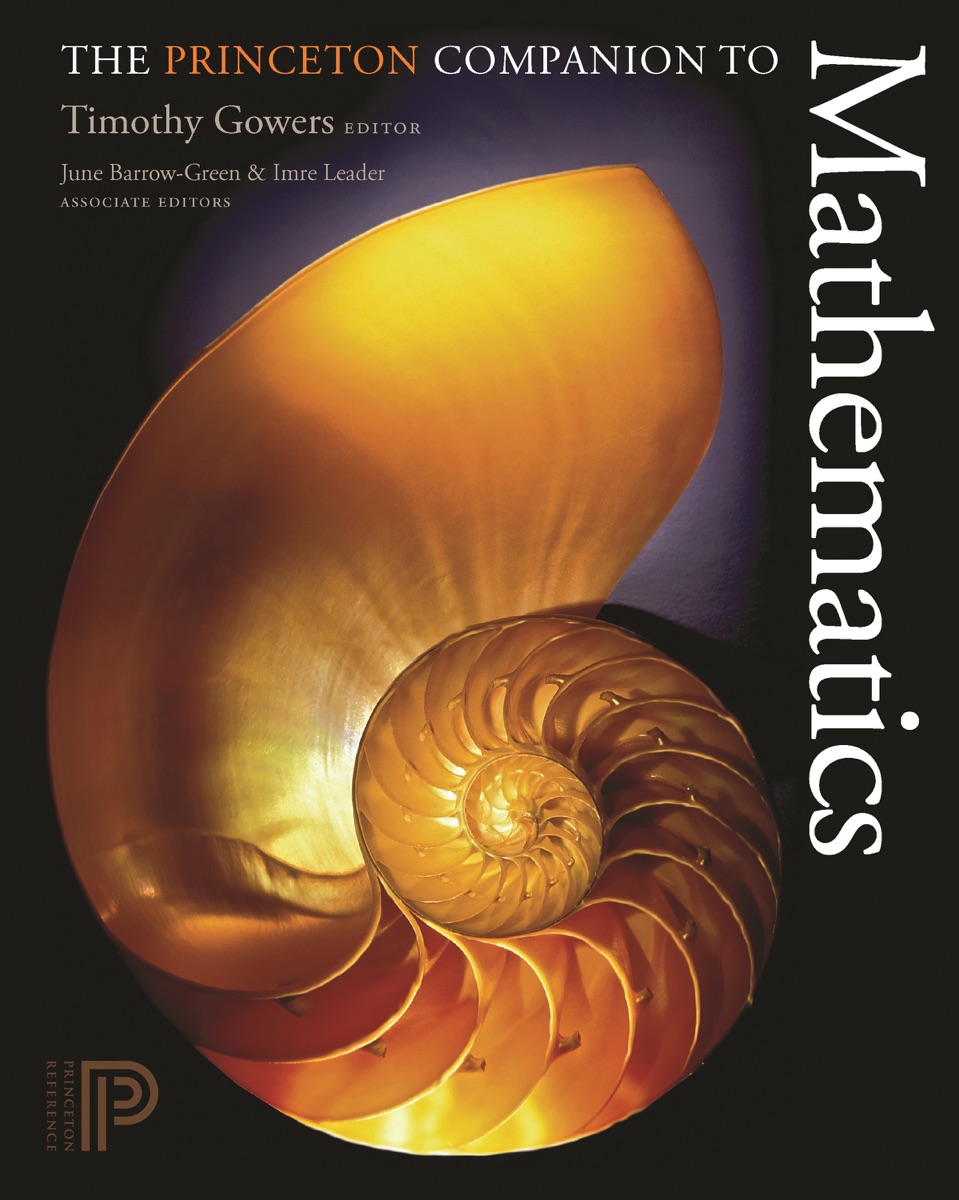
The Princeton Companion to Mathematics is a reference work unlike most reference works: it is meant to be read, not just consulted.
Timothy Gowers · 2008 · 46h 30m
Full summary and key takeaways →The 11 questions
- 1.
The companion argues that proof-based mathematics is fundamentally different from calculation. Did your own mathematical education emphasize proof or computation, and what did you gain or miss from that emphasis?
- 2.
Several essays describe results that were developed in pure abstraction and later turned out to be essential to physics or cryptography. What does this pattern tell us about the relationship between abstract thought and practical application?
- 3.
The book covers an enormous range of mathematics. Which area, after reading about it here, seems most surprising or alien to you — and what makes it feel that way?
- 4.
Gowers and contributors are explicit that mathematical intuition is both essential and unreliable. How do you cultivate and calibrate intuition in the field you work in?
- 5.
The historical essays describe mathematics developing through individual genius and also through social and institutional factors. How much of intellectual progress do you think is explicable by individual brilliance versus conditions?
- 6.
Some branches of mathematics described in the companion — like mathematical logic and set theory — study the foundations of mathematics itself. What does it mean to ask foundational questions, and does the answer feel satisfying?
- 7.
The companion is explicit that it requires mathematical maturity to read. What is the right level of challenge in a book you read for learning, and how do you find it?
- 8.
The Langlands Program connects apparently unrelated areas of mathematics. What is the most surprising connection between apparently unrelated fields you've encountered in your own reading or work?
- 9.
Several contributors write about what draws them to their specific area of mathematics. What draws you to the intellectual areas you find yourself returning to?
- 10.
The companion was published in 2008. What has changed in mathematics since then that isn't covered, and how would you update the volume?
- 11.
Is the companion the right format for conveying mathematics to serious non-specialists, or would a different structure work better?
How to run the discussion
- Pick six to eight, not all of them. An hour of real discussion covers fewer questions than anyone expects, and racing the list is what makes a book club feel like homework.
- Open with what people noticed, not what they concluded. Asking for a verdict first hardens opinions before anyone has heard each other.
- Let the disagreement run. The questions below that split a room are the ones worth the time; the ones everyone answers the same way can be skipped.
- Ask the quiet person a specific question. A direct, narrow question is far easier to answer than an open invitation to contribute.
Themes worth steering toward
If the conversation stalls, these are the threads that usually restart it.
Common questions
What are good book club questions for The Princeton Companion to Mathematics?
Here are 11 book club questions for The Princeton Companion to Mathematics by Timothy Gowers, ordered to open easily and end somewhere worth arguing about. The strongest openers ask what each reader noticed rather than what they concluded, and the discussion usually turns on mathematics, proofs, mathematical concepts.
How long should a book club discussion of The Princeton Companion to Mathematics last?
Most groups run 60 to 90 minutes of actual discussion. That is roughly six to eight questions, not all of them, so pick the ones that suit your group rather than working down the list in order.
What are the main themes in The Princeton Companion to Mathematics?
Mathematics, Proofs, Mathematical concepts, History of mathematics, Pure mathematics. Those are the threads most likely to divide a room, which makes them the useful places to steer a discussion that has gone quiet.
Picking the next one? See books like The Princeton Companion to Mathematics or questions for other book club picks.
