Science · Similar reads
Books like The Princeton Companion to Mathematics
The best books like The Princeton Companion to Mathematics are A Short History of Nearly Everything, How Not to Be Wrong: The Power of Mathematical Thinking, and Surely You're Joking, Mr. Feynman!. The Princeton Companion to Mathematics by Timothy Gowers is about mathematics, proofs, mathematical concepts. If that's what drew you in, here are 12 books that share its DNA — each summarized on Superbook, and ready to chat with in the app.
- A Short History of Nearly Everything
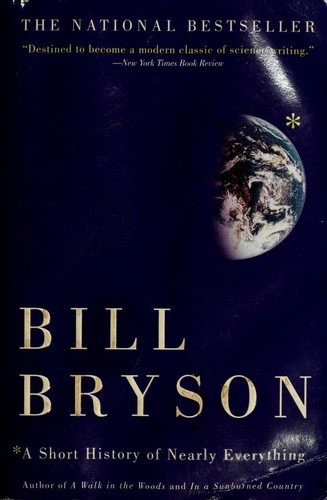
01
A Short History of Nearly Everything
Bill Bryson · Science
A Short History of Nearly Everything is Bill Bryson's attempt to understand the scientific story of everything — from the Big Bang to the emergence of modern humans — by spending three years talking to scientists and reading science history.
A kindred science read.
Read the summary → - How Not to Be Wrong: The Power of Mathematical Thinking
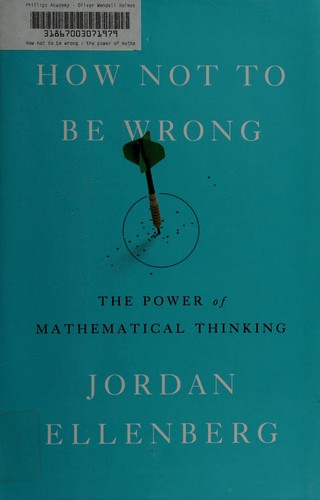
02
How Not to Be Wrong: The Power of Mathematical Thinking
Jordan Ellenberg · Science
Jordan Ellenberg is a research mathematician who writes as if mathematics is something you would want to think about over dinner.
Both dig into mathematics.
Read the summary → - Surely You're Joking, Mr. Feynman!
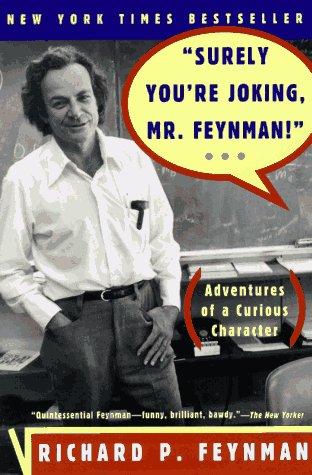
03
Surely You're Joking, Mr. Feynman!
Richard P. Feynman · Memoir
Surely You're Joking, Mr.
A kindred science read.
Read the summary →
- The Man Who Knew Infinity
04
Robert Kanigel · Biography
Srinivasa Ramanujan was born in 1887 in the South Indian town of Erode into a Brahmin family of modest means, received almost no formal mathematical training, and by his mid-twenties had filled notebooks with thousands of mathematical formulas, many of them original results that professional mathematicians would spend decades verifying.
Both dig into mathematics.
Read the summary → - Zero: The Biography of a Dangerous Idea
05
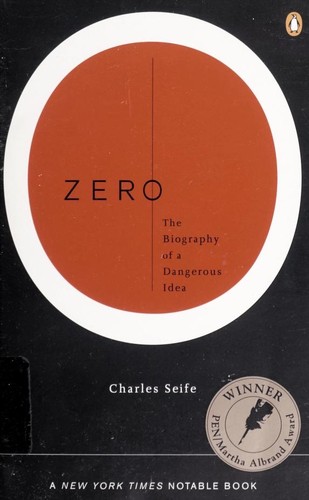
Zero: The Biography of a Dangerous Idea
Charles Seife · Science
The number zero seems self-evidently harmless, but Charles Seife's history argues that zero has been, at various points, theologically threatening, mathematically subversive, and philosophically destabilizing.
Both dig into mathematics.
Read the summary → - Is God a Mathematician?
06
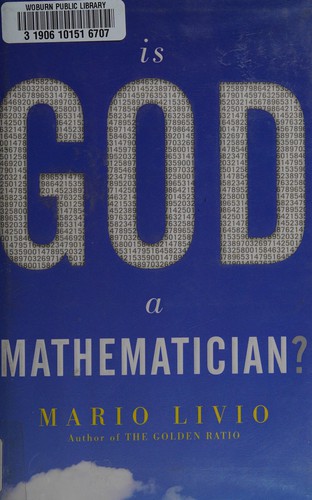
Mario Livio · Science
Mario Livio is an astrophysicist who has spent decades studying galaxies and supernovae, and who has been persistently haunted by a question that comes up whenever mathematics meets physics: why does abstract math, invented centuries before anyone knew it would be needed, keep turning out to perfectly describe physical reality?
Shares mathematics and history of mathematics with The Princeton Companion to Mathematics.
Read the summary → - Chaos: Making a New Science
07
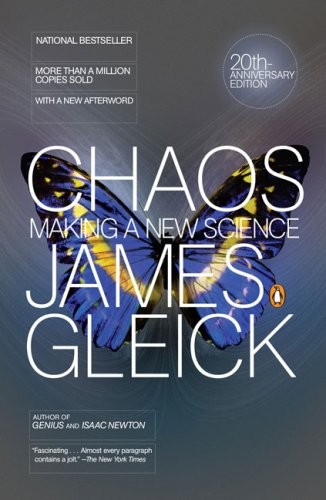
James Gleick · Science
Chaos: Making a New Science, published in 1987, tells the story of how a loose network of scientists working across meteorology, mathematics, biology, and physics in the 1960s and 1970s developed chaos theory — the study of systems that are deterministic but unpredictable because tiny differences in initial conditions produce wildly different outcomes.
Both dig into mathematics.
Read the summary → - Deep Learning
08
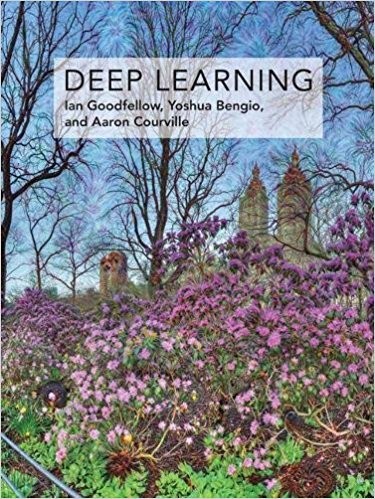
Ian Goodfellow, Yoshua Bengio, and Aaron Courville · Science
Deep Learning by Ian Goodfellow, Yoshua Bengio, and Aaron Courville is the standard graduate-level textbook on the mathematical and computational foundations of deep neural networks.
Both dig into mathematics.
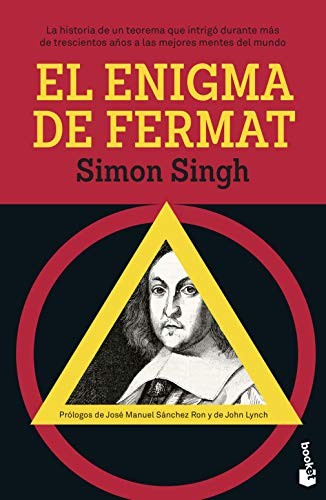
Read the summary → - Fermat's Enigma
09
Simon Singh · Science
In 1637, Pierre de Fermat scrawled a note in the margin of a mathematics book claiming to have found a proof that no three positive integers can satisfy the equation a^n + b^n = c^n for any integer value of n greater than 2 — but that the margin was too narrow to contain it.
Both dig into mathematics.
Read the summary → - Mathematics: Its Content, Methods and Meaning
10
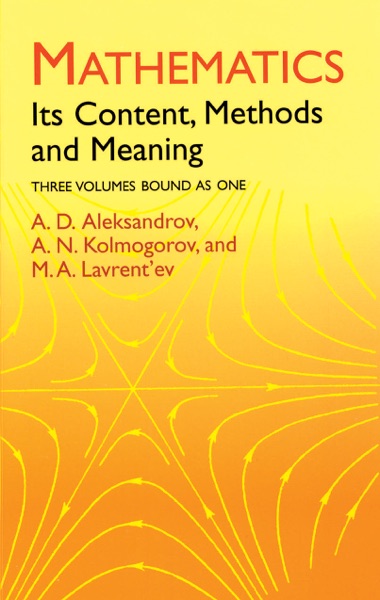
Mathematics: Its Content, Methods and Meaning
Aleksandrov, Kolmogorov & Lavrent'ev · Science
Mathematics: Its Content, Methods and Meaning is a three-volume survey of mathematics compiled by a group of eminent Soviet mathematicians, originally published in Russian in 1956 and translated into English by the American Mathematical Society in 1963.
Both dig into mathematics.
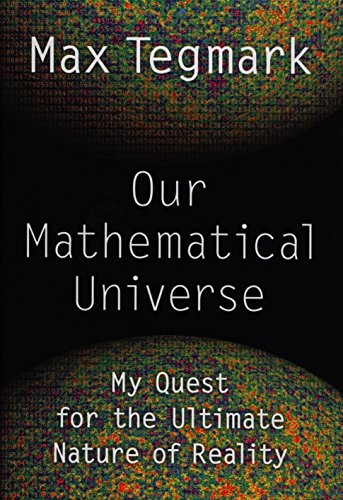
Read the summary → - Our Mathematical Universe
11
Max Tegmark · Science
Our Mathematical Universe is Max Tegmark's argument for what he calls the Mathematical Universe Hypothesis: the bold claim that the universe is not merely described by mathematics but is a mathematical structure.
Both dig into mathematics.
Read the summary → - The Code Book: The Science of Secrecy from Ancient Egypt to Quantum Cryptography
12
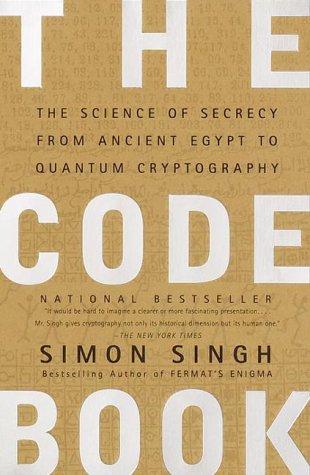
The Code Book: The Science of Secrecy from Ancient Egypt to Quantum Cryptography
Simon Singh · Science
Simon Singh's The Code Book traces the history of cryptography from Caesar's cipher through the breaking of Enigma to the mathematics of public-key encryption and the looming possibility of quantum cryptography.
Both dig into mathematics.
Read the summary →
Books like The Princeton Companion to Mathematics: quick answers
What are the best books like The Princeton Companion to Mathematics?
The best books like The Princeton Companion to Mathematics by Timothy Gowers are A Short History of Nearly Everything by Bill Bryson, How Not to Be Wrong: The Power of Mathematical Thinking by Jordan Ellenberg, Surely You're Joking, Mr. Feynman! by Richard P. Feynman, The Man Who Knew Infinity by Robert Kanigel, Zero: The Biography of a Dangerous Idea by Charles Seife, plus 7 more below. Each was chosen for themes it shares with The Princeton Companion to Mathematics, such as mathematics, proofs, mathematical concepts.
What should I read after The Princeton Companion to Mathematics?
A natural next read after The Princeton Companion to Mathematics is A Short History of Nearly Everything by Bill Bryson. A kindred science read. Other strong choices are How Not to Be Wrong: The Power of Mathematical Thinking by Jordan Ellenberg, Surely You're Joking, Mr. Feynman! by Richard P. Feynman, The Man Who Knew Infinity by Robert Kanigel.
What books are similar to The Princeton Companion to Mathematics by Timothy Gowers?
The Princeton Companion to Mathematics centers on mathematics, proofs, mathematical concepts. Books with a similar feel include A Short History of Nearly Everything by Bill Bryson, How Not to Be Wrong: The Power of Mathematical Thinking by Jordan Ellenberg, Surely You're Joking, Mr. Feynman! by Richard P. Feynman, The Man Who Knew Infinity by Robert Kanigel, Zero: The Biography of a Dangerous Idea by Charles Seife, Is God a Mathematician? by Mario Livio — all free to read and chat with on Superbook.
