Economics · Book club
The Psychology of Money book club questions
Here are 12 book club questions for The Psychology of Money by Morgan Housel, ordered to open easily and end somewhere worth arguing about. Copy them, print them, or bring them up one at a time.
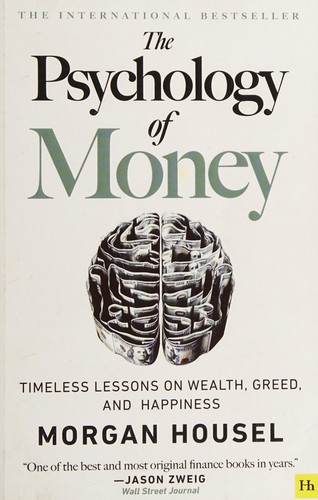
The Psychology of Money is Morgan Housel's argument that financial success depends less on technical knowledge than on behavior — specifically, on understanding how your personal history, emotions, and cognitive biases shape every financial decision you make.
Morgan Housel · 2020 · 4h 0m
Full summary and key takeaways →The 12 questions
- 1.
Housel argues that your personal financial history shapes your investment behavior more than any rational analysis does. What financial experiences from your past most influence how you behave with money today?
- 2.
The book opens with Ronald Read — a janitor who became a multimillionaire — and Richard Fuscone — a Harvard-educated financier who went bankrupt. What is the most important thing that explains the gap between those two outcomes?
- 3.
Housel distinguishes between getting rich and staying rich. Which set of behaviors feels harder for you to maintain, and why?
- 4.
The essay on luck and risk argues that financial success is more random than most successful people admit. How does that idea sit with you? Does it feel liberating or deflating?
- 5.
Housel's 'enough' concept argues that the failure to know when you have enough leads many wealthy people to take risks they should not take. What does 'enough' look like for you specifically?
- 6.
The book argues that staying in the market through downturns is the key behavioral skill in investing. What was your actual behavior during the most recent significant market downturn you experienced?
- 7.
Housel says reasonable beats rational. What is a financial decision you have made that was not theoretically optimal but that you knew you could stick with? Did it work out?
- 8.
The tail events concept — that a small number of events drive most returns — suggests that most investing time is spent waiting and not losing ground, rather than winning. Does that match your experience or expectations?
- 9.
Housel argues that the highest form of wealth is control over your time. How much control do you currently have over how you spend your days, and what would you change if you had more?
- 10.
The 20 essays are deliberately independent. Which single essay most changed how you think about your own financial situation?
- 11.
Housel writes that wealth is invisible — you can't see the savings or the restraint that built it, only the consumption that eroded it. How does that observation change how you interpret the apparent wealth of people around you?
- 12.
The book ends with a section on Housel's own financial approach. Do you find it reassuring or surprising that a financial writer with his knowledge makes the simple choices he describes?
How to run the discussion
- Pick six to eight, not all of them. An hour of real discussion covers fewer questions than anyone expects, and racing the list is what makes a book club feel like homework.
- Open with what people noticed, not what they concluded. Asking for a verdict first hardens opinions before anyone has heard each other.
- Let the disagreement run. The questions below that split a room are the ones worth the time; the ones everyone answers the same way can be skipped.
- Ask the quiet person a specific question. A direct, narrow question is far easier to answer than an open invitation to contribute.
Themes worth steering toward
If the conversation stalls, these are the threads that usually restart it.
Common questions
What are good book club questions for The Psychology of Money?
Here are 12 book club questions for The Psychology of Money by Morgan Housel, ordered to open easily and end somewhere worth arguing about. The strongest openers ask what each reader noticed rather than what they concluded, and the discussion usually turns on behavioral finance, wealth psychology, long-term thinking.
How long should a book club discussion of The Psychology of Money last?
Most groups run 60 to 90 minutes of actual discussion. That is roughly six to eight questions, not all of them, so pick the ones that suit your group rather than working down the list in order.
What are the main themes in The Psychology of Money?
Behavioral finance, Wealth psychology, Long-term thinking, Risk and uncertainty, Saving and spending. Those are the threads most likely to divide a room, which makes them the useful places to steer a discussion that has gone quiet.
Picking the next one? See books like The Psychology of Money or questions for other book club picks.
