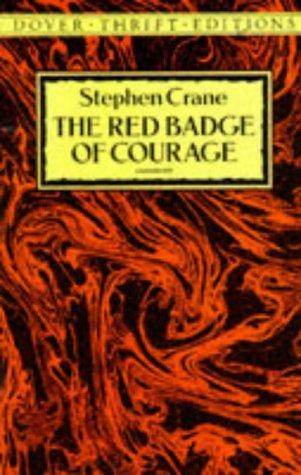
The Red Badge of Courage by Stephen Crane is a 1895 classics book about fear and cowardice, the gap between war's myth and reality, self-deception and maturation. Crane's central insight is that heroism and cowardice often look identical from outside — the distinction is internal, and even the internal distinction is subject to relentless self-interested revision.
Summary
The Red Badge of Courage is a Civil War novel written by a man who had never been to war, published when Stephen Crane was twenty-four. It follows Henry Fleming, a young Union soldier who enlists with romantic notions of heroism and spends most of the novel either fleeing from battle, lying about his cowardice, or constructing elaborate rationalizations for his own behavior. What Crane achieved — a psychologically precise portrait of how fear and self-deception function in combat — was so accurate that veterans described reading it as a recovered memory.
The novel's real subject is the gap between war as myth and war as experience. Henry arrives expecting the Homeric battlefield — the individual test, the moment of discovered courage — and what he gets instead is chaos, noise, smoke, confusion, and the completely indifferent deaths of people around him. Crane is interested in the way ideology (about heroism, about manhood, about national purpose) shapes perception so thoroughly that reality has difficulty getting through. Henry doesn't simply misunderstand war before the battle; he keeps misunderstanding it after, constructing self-serving interpretations of his own behavior with impressive flexibility.
Crane's style is one of the novel's great achievements. He uses impressionistic, almost cinematic shifts in perspective — pulling back to describe the overall battle in grand, almost geological terms, then plunging into Henry's immediate sensory experience of mud and noise and fear. The prose is angular and modern in a way that felt alien to readers in 1895 and feels exactly right today. He also uses irony with great precision: the famous "red badge" that Henry eventually acquires is not a wound earned in battle but a blow from a fleeing Union soldier, and Crane never explains this to Henry or to us explicitly.
Readers who approach this as a conventional war narrative about the discovery of courage will be confused by the ending. Henry's final assessment of himself is not fully supported by the events we've observed; Crane seems to be demonstrating rather than explaining Henry's continued capacity for self-flattery. At under 150 pages, the novel is one of the most efficient uses of that length in American fiction — there is nothing here that doesn't earn its presence.
Talk to The Red Badge of Courage like its author wrote you back.
Get the ideas that fit your life — not generic summaries.
- Chat with the book
- Audiobook-style main ideas
- Adapts to your life and goals
- Helps you take action
Key takeaways
- 1.
Crane's central insight is that heroism and cowardice often look identical from outside — the distinction is internal, and even the internal distinction is subject to relentless self-interested revision.
- 2.
Henry's capacity for self-deception is the novel's consistent subject: each action he takes is rapidly reinterpreted as something more flattering than it actually was, and this process never fully stops.
- 3.
The 'red badge' itself — a wound acquired not in heroic combat but from a panicked comrade — is the novel's sharpest irony: Henry's symbol of courage is the mark of a different kind of cowardice.
- 4.
Crane was twenty-two when he wrote most of this novel and had never seen combat. Veterans' recognition of its accuracy suggests that genuine war experience produced in him something like imaginative sympathy pushed to its limit.
- 5.
Crane's impressionistic prose — jerky, sensory, often refusing to complete a conventional sentence — was formally unprecedented in American fiction and anticipates modernism by twenty years.
- 6.
Nature in the novel is completely indifferent to human suffering and human heroism: the sun rises, trees exist, battles happen. This indifference is not cruel — it simply refuses to validate the meanings humans project onto it.
- 7.
The collective, the regiment, provides Henry with both cover for individual cowardice and the genuine courage that sometimes comes from not being alone. The individual and the group are in constant productive tension.
- 8.
The ending deliberately refuses to confirm Henry's self-assessment, which leaves the reader doing the work of evaluating what he has and hasn't learned — one of the novel's most sophisticated structural choices.
Discussion questions
Use these on your own, with a book club, or as chat starters in Superbook. Book club version, ready to copy or print →
- 1.
Henry's final self-assessment at the novel's end is arguably not fully supported by what we've watched him do. Does Crane intend this gap — and if so, what is he arguing?
- 2.
The red badge that gives the novel its title is not what Henry thinks it is. How does knowing this change your reading of the final chapters, and should Henry know?
- 3.
Henry spends a significant portion of the novel constructing elaborate justifications for running away. Do his rationalizations feel psychologically accurate — have you recognized that process anywhere in your own thinking?
- 4.
Crane never saw combat but veterans found the novel accurate. What does that suggest about the relationship between experience and imagination in fiction — can a novelist 'know' something without having lived it?
- 5.
The battle scenes are often described in impressionistic, almost abstract terms — smoke, color, noise, fragments of movement. Does this technique make the war feel more or less real to you?
- 6.
Henry's attitude toward the soldiers who are braver than him ranges from contempt to awe to envy. What do you think Crane is showing us about how we relate to people who have qualities we lack?
- 7.
The novel's nature descriptions are deliberately cold — the sun doesn't care about the dead, the forest doesn't respond to human tragedy. Is this nihilistic or simply honest?
- 8.
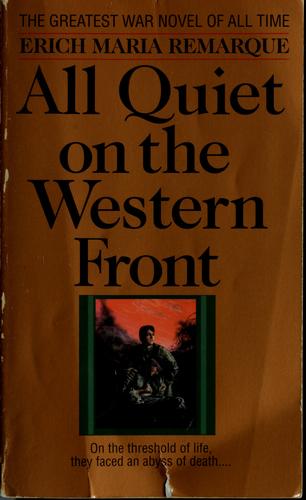
How does The Red Badge of Courage compare to All Quiet on the Western Front as an anti-war novel? They approach the same subject from different wars and different national perspectives — what does each one see that the other doesn't?
- 9.
Henry's relationship to the regiment — being part of a larger body rather than an individual — is complex. When does the group give him genuine courage, and when does it give him cover?
- 10.
The novel is short — under 150 pages. Does the brevity feel like restraint or incompleteness?
- 11.
The Civil War is the background, but Crane doesn't really engage with slavery, emancipation, or the specific causes of the conflict. Is this a failure of historical scope or a deliberate narrowing of focus?
Themes
Frequently asked questions
-
Is The Red Badge of Courage worth reading?
Yes, especially at its length — under 150 pages, it makes a very large argument about courage, self-deception, and the gap between war mythology and war experience with extraordinary economy. The prose is still strikingly modern and the psychological observation remains acute.
-
Is The Red Badge of Courage about the Civil War specifically?
It's set during the Civil War, but Crane uses the war as a laboratory for psychological observation rather than engaging seriously with the war's political or historical dimensions. No battle or commander is named. The novel could be transplanted to other wars with minimal adjustment.
-
Is this a novel about heroism or cowardice?
Both, and neither straightforwardly. Crane is interested in how the two categories blur in practice, how external behavior can be read either way, and how powerfully we want to read our own behavior as heroic regardless of what actually happened.
-
Why is The Red Badge of Courage a classic?
It was the first major American novel to depict war from a psychologically realistic inside view, stripped of romanticism. Its prose technique was twenty years ahead of its time. And its central insight — about the relationship between fear, action, and self-justification — has not aged.
-
Who should not read The Red Badge of Courage?
Readers who want their war fiction to offer clarity about heroism, or a protagonist who genuinely transforms. Henry's development by the end is contested at best — Crane's irony is directed at the very idea of a clean moral arc emerging from combat. If that sounds frustrating rather than interesting, this novel may not satisfy.