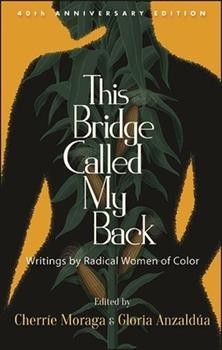
This Bridge Called My Back: Writings by Radical Women of Color by Cherríe Moraga and Gloria Anzaldúa is a 1981 history book about intersectionality, feminism, race and identity. Women of color occupy multiple, simultaneous identities — racial, gendered, classed — that cannot be analyzed one at a time without distorting their experience.
Summary
This Bridge Called My Back, first published in 1981 and edited by Cherríe Moraga and Gloria Anzaldúa, is a landmark anthology of writing by women of color in the United States. It collects essays, poems, letters, and personal testimonies from Black, Latina, Asian American, and Indigenous women who felt excluded from both mainstream feminist movements and movements organized around race alone. The book argues, in the editors' framing, that these women had to be bridges — spanning the gaps between struggles — and that this position was as exhausting as it was necessary.
The anthology's central argument is that identity cannot be neatly divided. The contributors write from experiences in which race, gender, class, and sexuality are inseparable. Audre Lorde's influence is palpable throughout, though the collection gives voice to writers less widely known at the time, including Barbara Smith, Cheryl Clarke, and Mitsuye Yamada. The book predates the term "intersectionality" — coined by Kimberlé Crenshaw in 1989 — but it describes the phenomenon with unusual precision and emotional force. The contributors are not interested in ranking their oppressions; they are interested in naming them all, and in the connections between them.
What distinguishes Bridge from academic texts on similar subjects is the intimacy of its form. Many pieces are written in the first person, addressed to other women of color, or to white feminists who had overlooked or appropriated their work. The anger is directed, not diffuse. Anzaldúa's introduction and her reflections on "the new mestiza consciousness" are among the most frequently cited passages in feminist and postcolonial studies, but the collection's power comes from its cumulative effect — the sheer number of voices insisting that their full selves matter.
The book has never been without controversy. Some critics find it too rooted in identity politics, too quick to place experience over argument. Its admirers, and they are many, point out that this objection misses the epistemological claim: for these writers, lived experience is evidence, and the failure to credit it is itself political. Four decades after its first publication, Bridge remains in print and on syllabi because the tensions it maps have not been resolved.
Talk to This Bridge Called My Back: Writings by Radical Women of Color like its author wrote you back.
Get the ideas that fit your life — not generic summaries.
- Chat with the book
- Audiobook-style main ideas
- Adapts to your life and goals
- Helps you take action
Key takeaways
- 1.
Women of color occupy multiple, simultaneous identities — racial, gendered, classed — that cannot be analyzed one at a time without distorting their experience.
- 2.
Mainstream feminism in the 1970s often reproduced the racial hierarchies it claimed to challenge, centering white women's concerns at the expense of the coalition.
- 3.
The 'bridge' metaphor captures both the value and the exhaustion of mediating between movements: always translating, rarely fully claimed by either side.
- 4.
Personal testimony is not merely emotional expression — for marginalized writers it functions as argument, evidence, and political act.
- 5.
Solidarity across difference requires more than goodwill; it requires white feminists to do the work of understanding their own complicity in systems they critique elsewhere.
- 6.
Anzaldúa's concept of the new mestiza consciousness proposes a way of living in the borderlands — between cultures, languages, and identities — as a source of radical creativity rather than only loss.
- 7.
The anthology form itself is a political choice: no single authority, many voices, cacophony as a feature rather than a flaw.
- 8.
Third World feminism, as articulated in Bridge, insists on the global context of domestic oppressions — U.S. racism cannot be understood without its colonial history.
Discussion questions
Use these on your own, with a book club, or as chat starters in Superbook.
- 1.
Moraga and Anzaldúa describe women of color as bridges between movements. What does that metaphor capture about their position, and what does it miss?
- 2.
The anthology predates the word 'intersectionality.' How useful is that term now, and what does it flatten that the original writers were more precise about?
- 3.
Several contributors direct their sharpest criticism at white feminists rather than at men. What is the political logic of that choice?
- 4.
Anzaldúa's concept of borderlands is both geographic and psychic. In what ways is it specific to her Chicana experience, and in what ways does it travel to other contexts?
- 5.
The book uses first-person essays, poems, and letters rather than academic argument. What does that formal choice allow, and what does it foreclose?
- 6.
Which piece in the anthology felt most unfamiliar to your experience, and what did that unfamiliarity tell you about your own subject position?
- 7.
The editors describe feeling the need to 'write ourselves into being.' What conditions produce that feeling, and what is lost when a group's experience has no canon to draw on?
- 8.
Bridge was first published in 1981. Which of its critiques feel resolved now, and which feel more urgent?
- 9.
How do the contributors handle internal disagreements among women of color — around class, sexuality, religion? Is the collection internally consistent?
- 10.
Several pieces are explicitly addressed to other women of color, not to a general reader. How does that affect the reading experience if you are not in the implied audience?
- 11.
The book argues that the revolution must include everyone or it will replicate the hierarchies it replaced. How does that argument hold up against movements that achieve partial gains?
- 12.
What would it mean to take the book's argument seriously in a contemporary social movement you care about?
Themes
Frequently asked questions
-
What is This Bridge Called My Back about?
It is an anthology of essays, poems, and personal testimonies by women of color in the United States who felt excluded from both white-dominated feminism and male-dominated racial justice movements. The book argues that race, gender, class, and sexuality are inseparable in the lives of its contributors.
-
Who should read This Bridge Called My Back?
Anyone trying to understand the foundations of intersectional feminist thought. It is essential reading for students of women's studies, ethnic studies, or American political history. Readers already familiar with Audre Lorde will find the anthology extends and complicates her arguments through many more voices.
-
Is This Bridge Called My Back still relevant?
Yes. The specific movement politics have changed but the structural tensions the book describes — between solidarity and difference, between personal experience and political argument — remain active. Many of the criticisms it levels at mainstream feminism are still debated today.
-
How long is This Bridge Called My Back?
Roughly six hours at average reading pace. The anthology form makes it easy to read in sections — individual essays and poems stand alone, though the cumulative effect of reading straight through is different from sampling.
-
What is the significance of the 'bridge' metaphor?
The editors use it to describe the position of women of color who mediate between racial justice movements and feminist movements — present in both but fully centered in neither. The metaphor captures both the utility and the exhaustion of that role.
Similar books
Between the World and Me
Ta-Nehisi Coates
Caste: The Origins of Our Discontents
Isabel Wilkerson
The New Jim Crow: Mass Incarceration in the Age of Colorblindness
Michelle Alexander
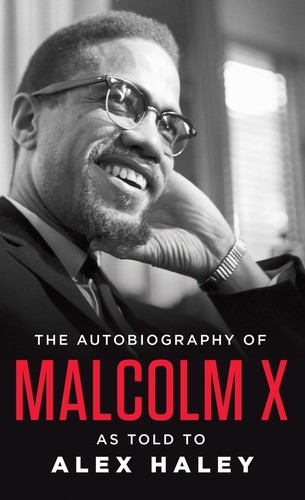
The Autobiography of Malcolm X
Malcolm X and Alex Haley
