Self-help · Book club
The Richest Man in Babylon book club questions
Here are 12 book club questions for The Richest Man in Babylon by George S. Clason, ordered to open easily and end somewhere worth arguing about. Copy them, print them, or bring them up one at a time.
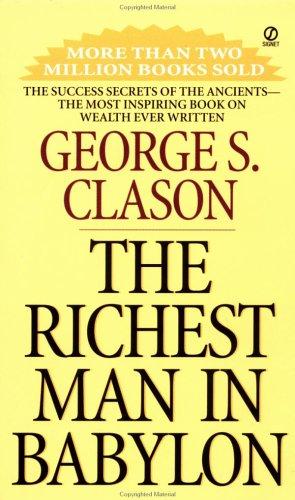
The Richest Man in Babylon is George S.
George S. Clason · 1926 · 3h 0m
Full summary and key takeaways →The 12 questions
- 1.
Clason's parables suggest that the principles of wealth are the same in ancient Babylon as in the modern world. Do you find that argument convincing, or has the financial landscape changed enough that the advice needs updating?
- 2.
The 'pay yourself first' principle — saving one-tenth before anything else — is simple. Why do you think most people who know this principle don't consistently follow it?
- 3.
The book treats financial responsibility and personal character as the same thing. Do you agree that they are, or is that a moralistic conflation of two distinct qualities?
- 4.
Arkad became the richest man in Babylon by applying principles he was taught, not through exceptional talent or luck. Is that story of wealth accumulation realistic, or does it underestimate the role of advantage and circumstance?
- 5.
The parable of the five laws of gold — save, invest, invest wisely, guard against loss, and don't be seduced by impossible returns — covers the same territory as modern personal finance. What has changed most in how those laws apply today?
- 6.
Clason recommends owning your home as a wealth-building step. Given current home prices and interest rates in many markets, is that advice still sound?
- 7.
The book frames debt as a trap that reduces your freedom to save and invest. How does that framing apply to different kinds of debt — mortgage, student loans, credit cards, business loans?
- 8.
The parables use the ancient world as a setting to strip away modern complexity. Does the simplification help you see the principles more clearly, or does it make the advice feel less applicable to your actual situation?
- 9.
Which of the seven principles in the book do you follow consistently right now, and which do you struggle with?
- 10.
Clason's book was originally distributed through banks and insurance companies. Does the origin affect how you read the advice? Are there principles it would be in those institutions' interests to promote?
- 11.
The improving-your-ability-to-earn principle suggests that investing in yourself often has better returns than investing in markets. What investment in your own skills or knowledge has produced the best return?
- 12.
The book's longevity — nearly a hundred years in print — is itself an argument for the universality of the principles. What would make a personal finance book irrelevant quickly versus relevant across generations?
How to run the discussion
- Pick six to eight, not all of them. An hour of real discussion covers fewer questions than anyone expects, and racing the list is what makes a book club feel like homework.
- Open with what people noticed, not what they concluded. Asking for a verdict first hardens opinions before anyone has heard each other.
- Let the disagreement run. The questions below that split a room are the ones worth the time; the ones everyone answers the same way can be skipped.
- Ask the quiet person a specific question. A direct, narrow question is far easier to answer than an open invitation to contribute.
Themes worth steering toward
If the conversation stalls, these are the threads that usually restart it.
Common questions
What are good book club questions for The Richest Man in Babylon?
Here are 12 book club questions for The Richest Man in Babylon by George S. Clason, ordered to open easily and end somewhere worth arguing about. The strongest openers ask what each reader noticed rather than what they concluded, and the discussion usually turns on saving, financial principles, wealth building.
How long should a book club discussion of The Richest Man in Babylon last?
Most groups run 60 to 90 minutes of actual discussion. That is roughly six to eight questions, not all of them, so pick the ones that suit your group rather than working down the list in order.
What are the main themes in The Richest Man in Babylon?
Saving, Financial principles, Wealth building, Budgeting, Personal responsibility. Those are the threads most likely to divide a room, which makes them the useful places to steer a discussion that has gone quiet.
Picking the next one? See books like The Richest Man in Babylon or questions for other book club picks.
