History · Book club
The Silk Roads: A New History of the World book club questions
Here are 12 book club questions for The Silk Roads: A New History of the World by Peter Frankopan, ordered to open easily and end somewhere worth arguing about. Copy them, print them, or bring them up one at a time.
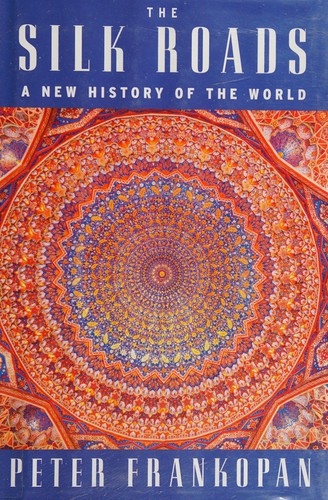
Peter Frankopan's The Silk Roads proposes a radical recentering of world history.
Peter Frankopan · 2015 · 13h 22m
Full summary and key takeaways →The 12 questions
- 1.
Frankopan argues Europe was a peripheral backwater for most of medieval history. Does that framing change how you think about the Renaissance and its significance?
- 2.
He centers Persia and Central Asia in the ancient world. What do you know about those civilizations independently of this book, and does Frankopan's treatment feel fair?
- 3.
The Silk Roads carried religion as well as goods. How does the trade-driven diffusion of Buddhism and Islam change how you think about those religions' universalism?
- 4.
The Mongol Empire appears here as a facilitator of exchange as much as a destructive force. How should historians balance those two aspects?
- 5.
The Black Death traveled the Silk Roads. What does it mean for our understanding of globalization that its worst consequences have always been epidemiological as much as economic?
- 6.
Frankopan argues that oil replaced silk as the commodity organizing geopolitical competition. What commodity might play that role in the next century?
- 7.
The book's title — 'A New History of the World' — is an ambitious claim. Did it deliver something genuinely new to you, or does the reframing feel overstated?
- 8.
Which chapter or period did you find most surprising, and why?
- 9.
Frankopan is more convincing on the ancient and medieval periods than on the modern. Did you notice the unevenness, and does it affect your overall assessment?
- 10.
He ends with China's growing economic presence in Central Asia and Africa. Does the book's historical frame help you understand that development?
- 11.
What does this book suggest about the relationship between geography and historical destiny?
- 12.
If you had to assign a core textbook for a world history course, would The Silk Roads be a better choice than a conventional Western-centered narrative? Why or why not?
How to run the discussion
- Pick six to eight, not all of them. An hour of real discussion covers fewer questions than anyone expects, and racing the list is what makes a book club feel like homework.
- Open with what people noticed, not what they concluded. Asking for a verdict first hardens opinions before anyone has heard each other.
- Let the disagreement run. The questions below that split a room are the ones worth the time; the ones everyone answers the same way can be skipped.
- Ask the quiet person a specific question. A direct, narrow question is far easier to answer than an open invitation to contribute.
Themes worth steering toward
If the conversation stalls, these are the threads that usually restart it.
Common questions
What are good book club questions for The Silk Roads: A New History of the World?
Here are 12 book club questions for The Silk Roads: A New History of the World by Peter Frankopan, ordered to open easily and end somewhere worth arguing about. The strongest openers ask what each reader noticed rather than what they concluded, and the discussion usually turns on world history, trade and exchange, geopolitics.
How long should a book club discussion of The Silk Roads: A New History of the World last?
Most groups run 60 to 90 minutes of actual discussion. That is roughly six to eight questions, not all of them, so pick the ones that suit your group rather than working down the list in order.
What are the main themes in The Silk Roads: A New History of the World?
World history, Trade and exchange, Geopolitics, East-West connections, Empire. Those are the threads most likely to divide a room, which makes them the useful places to steer a discussion that has gone quiet.
Picking the next one? See books like The Silk Roads: A New History of the World or questions for other book club picks.
