Health · Book club
The Sleep Revolution book club questions
Here are 12 book club questions for The Sleep Revolution by Arianna Huffington, ordered to open easily and end somewhere worth arguing about. Copy them, print them, or bring them up one at a time.
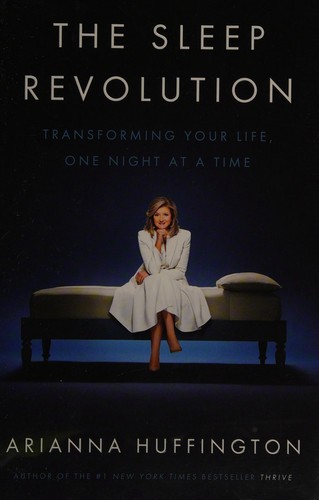
Arianna Huffington opens The Sleep Revolution with the incident that prompted it: collapsing from exhaustion at her desk in 2007, breaking her cheekbone on the way down.
Arianna Huffington · 2016 · 5h 30m
Full summary and key takeaways →The 12 questions
- 1.
Huffington argues that the glorification of sleeplessness is a form of collective delusion. Where have you seen this most clearly in professional or social environments you've been in?
- 2.
The research suggests people are often the last to know they're cognitively impaired from sleep loss. How would you even detect this in yourself?
- 3.
What trade-offs have you made with sleep in the past year that in retrospect look less defensible than they seemed at the time?
- 4.
Huffington's own catalyst was collapsing from exhaustion. What's the equivalent moment that would actually change your sleep behavior, and have you had it yet?
- 5.
The book argues that screens before bed delay sleep. Given how embedded evening screen use is in most households, what realistic change would actually help?
- 6.
Consistent sleep timing is presented as more important than total hours. How much does your schedule actually allow for consistency, and what would it cost to protect it?
- 7.
Huffington identifies Silicon Valley startup culture as a driver of sleep deprivation. To what extent is the problem cultural versus structural — impossible schedules, open offices, always-on communication?
- 8.
The nap chapters suggest short naps restore performance. What social or professional obstacles actually prevent people from napping, and are those obstacles worth challenging?
- 9.
Huffington is a high-profile executive writing partly from personal experience. Does that make her argument more or less persuasive to you than a researcher writing the same book?
- 10.
What would a workplace that genuinely valued employee sleep actually look like — in policies, scheduling, and culture?
- 11.
The book covers what to do at night. How much does what you do during the day — light exposure, exercise, caffeine timing — actually shape your sleep?
- 12.
If you could change one thing about how your household handles sleep, what would it be?
How to run the discussion
- Pick six to eight, not all of them. An hour of real discussion covers fewer questions than anyone expects, and racing the list is what makes a book club feel like homework.
- Open with what people noticed, not what they concluded. Asking for a verdict first hardens opinions before anyone has heard each other.
- Let the disagreement run. The questions below that split a room are the ones worth the time; the ones everyone answers the same way can be skipped.
- Ask the quiet person a specific question. A direct, narrow question is far easier to answer than an open invitation to contribute.
Themes worth steering toward
If the conversation stalls, these are the threads that usually restart it.
Common questions
What are good book club questions for The Sleep Revolution?
Here are 12 book club questions for The Sleep Revolution by Arianna Huffington, ordered to open easily and end somewhere worth arguing about. The strongest openers ask what each reader noticed rather than what they concluded, and the discussion usually turns on sleep, health, productivity.
How long should a book club discussion of The Sleep Revolution last?
Most groups run 60 to 90 minutes of actual discussion. That is roughly six to eight questions, not all of them, so pick the ones that suit your group rather than working down the list in order.
What are the main themes in The Sleep Revolution?
Sleep, Health, Productivity, Work culture, Stress. Those are the threads most likely to divide a room, which makes them the useful places to steer a discussion that has gone quiet.
Picking the next one? See books like The Sleep Revolution or questions for other book club picks.
