The Suspicions of Mr Whicher by Kate Summerscale is a 2008 historical fiction book about class and victorian respectability, family secrets and concealment, the birth of detective fiction. The Road Hill House murder directly influenced the explosion of Victorian detective fiction: Wilkie Collins and Charles Dickens both drew on it, and Summerscale traces this influence with care.
Summary
In 1860, three-year-old Saville Kent was found murdered in the privy of his family's comfortable Somerset home. The crime gripped Victorian England: it was intimate, domestic, and horribly inexplicable. Detective Inspector Jonathan Whicher of Scotland Yard — one of the Yard's first detective inspectors and a man of unusual gifts — was sent to investigate and quickly formed a theory. The problem was that acting on his theory would require accusing a member of the respectable middle-class family, in the full glare of press attention, on evidence that felt to the public like presumption rather than proof. Kate Summerscale follows Whicher's investigation, its failure, and its long aftermath.
The book's argument is that the Road Hill House murder was the template for the Victorian detective novel — and not coincidentally, because Wilkie Collins and Charles Dickens were both writing during the case. Summerscale traces the feedback loop between the actual detective work, the newspaper coverage, and the explosion of detective fiction in the 1860s. Mr. Whicher is himself part of that history: the methodical, observant, class-defying detective who sees through social pretension is a type that the Road Hill case helped crystallize.
Summerscale writes as a historian with a novelist's instinct for scene. The book is deeply researched but never pedantic — she renders Victorian England's obsession with privacy, its terror of exposure, and its layered class anxieties with economy and precision. The solution to the case, when it comes, is delayed until the final third, and Summerscale is careful to show why the truth took so long to surface and what forces kept it buried.
Readers who love Victorian history, the origins of crime fiction, or the intersection of real crimes with cultural history will find this enormously satisfying. It is not a thriller — the pacing is measured and the focus is as much cultural analysis as narrative. Readers who want plot-forward true crime will find it too digressive. But as a book that is simultaneously a crime investigation, a cultural history, and a meditation on what detection means, it is unusual and genuinely accomplished.
Talk to The Suspicions of Mr Whicher like its author wrote you back.
Get the ideas that fit your life — not generic summaries.
- Chat with the book
- Audiobook-style main ideas
- Adapts to your life and goals
- Helps you take action
Key takeaways
- 1.
The Road Hill House murder directly influenced the explosion of Victorian detective fiction: Wilkie Collins and Charles Dickens both drew on it, and Summerscale traces this influence with care.
- 2.
Whicher's failure was not a failure of reasoning but a failure of class politics — the jury, the press, and the public refused to believe that a respectable middle-class household could contain the crime he described.
- 3.
The Victorian obsession with privacy — the home as sanctuary, the inner life as inviolable — was precisely what made crimes like this so disturbing and so resistant to investigation.
- 4.
The detective figure Whicher embodies — methodical, observant, working-class in origin, seeing through pretension — is a historically specific invention of this period.
- 5.
Summerscale shows that confession, when it finally came, was shaped by religious and cultural forces that had nothing to do with Whicher's investigation: the case closed on its own terms.
- 6.
The long press coverage of the case trained Victorian readers to read real crimes as puzzles with solutions — a framework that detective fiction then exploited and refined.
- 7.
The delay between accusation and resolution — nearly five years — shows the limits of institutional justice when the suspect is protected by class, family, and social convention.
- 8.
The true culprit's eventual confession raises as many questions as it answers, and Summerscale is honest about the ambiguities that remain.
Discussion questions
Use these on your own, with a book club, or as chat starters in Superbook. Book club version, ready to copy or print →
- 1.
Whicher identifies the right suspect early on but fails because of class dynamics. What does this say about Victorian justice — was it the system working as intended or failing?
- 2.
The Victorian public was simultaneously fascinated by the murder and horrified by the investigation. What does that tell us about mid-19th century anxiety about privacy and the domestic sphere?
- 3.
Summerscale argues that this case helped create the template for the detective novel. Does knowing that feel like it changes how you read detective fiction, or does it feel like an academic connection?
- 4.
The real detective's story is one of professional failure and personal damage. How does Summerscale handle Whicher's trajectory after the case?
- 5.
The eventual confession was made in a specific religious context and to a religious authority before it reached the law. What does that suggest about where guilt and justice actually lived in this community?
- 6.
Dickens and Collins are both in the background of this story. Does knowing the real-world source material change how you read Bleak House or The Moonstone?
- 7.
The victim is a three-year-old child. Summerscale doesn't dwell on the physical details of his death. Is that restraint appropriate, or does it leave something essential unexamined?
- 8.
The press coverage turned a private family crime into a national obsession. Does that dynamic feel familiar? What's different about how we consume crime stories now?
- 9.
Summerscale writes as both historian and storyteller. Where do you see the tension between those roles most clearly?
- 10.
The suspect Whicher names was protected partly because of her gender and class. How does the novel's account of that protection land in the present day?
- 11.
The case remained officially unsolved for years despite many people knowing or strongly suspecting the truth. What kept the truth buried — fear, loyalty, or something else?
- 12.
By the end, is Summerscale asking you to admire Whicher, sympathize with him, or just understand him? What's your verdict on the man?
Themes
Frequently asked questions
-
Is The Suspicions of Mr Whicher fiction or non-fiction?
Non-fiction, though it reads with the pace and scene-setting of a novel. Summerscale is scrupulous about her sources — everything is documented — but she writes with narrative drive rather than academic detachment. It was marketed and reviewed as non-fiction history.
-
Do I need to know anything about Victorian England to enjoy it?
No, Summerscale provides all the context you need. Readers with a background in the period will catch additional resonances with Dickens, Collins, and Victorian social history, but the book is self-contained.
-
Is the mystery actually solved?
Yes, eventually — a confession came, years after the investigation failed. Summerscale discusses both the confession and the ambiguities it left behind. This is not an unsolved mystery book.
-
Who shouldn't read this?
Readers who want the pace of modern true crime or thriller fiction. The Suspicions of Mr Whicher is a measured, intellectually rich book that spends as much time on cultural history as on the investigation itself. Those who find historical digression frustrating will struggle.
-
Is there a TV adaptation?
Yes. A television film aired on ITV in 2011, with Paddy Considine as Whicher. It received positive reviews and led to several sequels with Considine in the role, though those subsequent films were original stories rather than adaptations of later Summerscale books.
Similar books
Dead Wake: The Last Crossing of the Lusitania
Erik Larson
The Splendid and the Vile: A Saga of Churchill, Family, and Defiance During the Blitz
Erik Larson
Agent Zigzag: A True Story of Nazi Espionage, Love, and Betrayal
Ben Macintyre
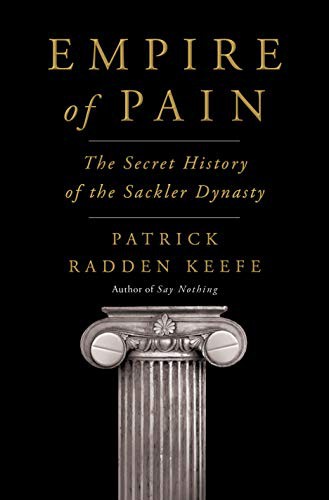
Empire of Pain: The Secret History of the Sackler Dynasty
Patrick Radden Keefe
