Psychology · Book club
The Tipping Point book club questions
Here are 12 book club questions for The Tipping Point by Malcolm Gladwell, ordered to open easily and end somewhere worth arguing about. Copy them, print them, or bring them up one at a time.
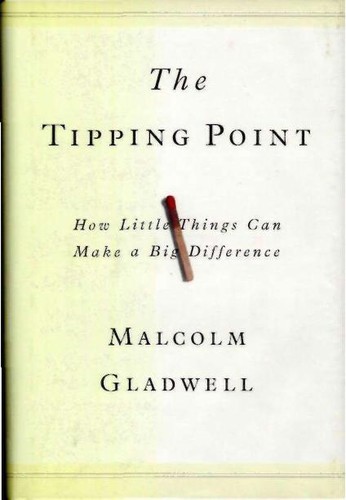
The Tipping Point is Malcolm Gladwell's argument that social change happens in sudden, dramatic ways — the same way a virus tips into an epidemic — and that understanding the mechanics of those tipping moments lets you engineer them.
Malcolm Gladwell · 2000 · 5h 15m
Full summary and key takeaways →The 12 questions
- 1.
Gladwell says a few people carry most of the weight in spreading ideas. Do you know a Connector, a Maven, and a Salesman in your own life? What distinguishes each?
- 2.
Think of a product, idea, or behavior that spread rapidly in your social circle. Which of the three rules — the Few, Stickiness, or Context — best explains why it caught on?
- 3.
The Broken Windows theory argues that small environmental signals matter enormously. What small signal in your own environment might be shaping your behavior without your noticing?
- 4.
Gladwell argues that the messenger often matters more than the message. When have you accepted an idea from one person that you would have dismissed from another?
- 5.
Is stickiness something you can engineer, or does it emerge after the fact? Think of an attempt you've seen to make an idea sticky that didn't work.
- 6.
The 150-person rule suggests there's a natural ceiling on functional group size. Does this match your experience with teams, communities, or organizations you've been part of?
- 7.
Gladwell profiles the New York crime drop as a context story. Do you find the Broken Windows explanation convincing, or does it leave important causes out?
- 8.
Mavens feel a compulsion to share information. Who in your life fills this role? What are the costs and benefits of being a Maven?
- 9.
The Tipping Point was published in 2000. Which of its case studies feel dated, and which still seem to explain something true about how things spread?
- 10.
Social media changed the mechanics of contagion after this book was written. Would Gladwell's three rules need to be revised to account for how Twitter or TikTok works?
- 11.
Gladwell distinguishes between social epidemics that are good (anti-smoking campaigns) and those that are not (teen suicide clusters). What responsibility comes with understanding these mechanics?
- 12.
If you were trying to tip an idea in your organization or community, which of the three rules would you focus on first and why?
How to run the discussion
- Pick six to eight, not all of them. An hour of real discussion covers fewer questions than anyone expects, and racing the list is what makes a book club feel like homework.
- Open with what people noticed, not what they concluded. Asking for a verdict first hardens opinions before anyone has heard each other.
- Let the disagreement run. The questions below that split a room are the ones worth the time; the ones everyone answers the same way can be skipped.
- Ask the quiet person a specific question. A direct, narrow question is far easier to answer than an open invitation to contribute.
Themes worth steering toward
If the conversation stalls, these are the threads that usually restart it.
Common questions
What are good book club questions for The Tipping Point?
Here are 12 book club questions for The Tipping Point by Malcolm Gladwell, ordered to open easily and end somewhere worth arguing about. The strongest openers ask what each reader noticed rather than what they concluded, and the discussion usually turns on social epidemics, word of mouth, influence.
How long should a book club discussion of The Tipping Point last?
Most groups run 60 to 90 minutes of actual discussion. That is roughly six to eight questions, not all of them, so pick the ones that suit your group rather than working down the list in order.
What are the main themes in The Tipping Point?
Social epidemics, Word of mouth, Influence, Behavior change, Networks. Those are the threads most likely to divide a room, which makes them the useful places to steer a discussion that has gone quiet.
Picking the next one? See books like The Tipping Point or questions for other book club picks.
