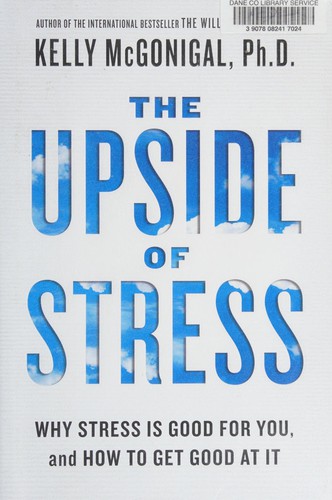
The Upside of Stress by Kelly McGonigal is a 2015 health book about stress, mindset, resilience. Believing that stress is harmful is itself a health risk: in a large longitudinal study, high-stress individuals who believed stress was harmful had increased mortality, while those who did not share that belief did not.
Summary
The Upside of Stress is Kelly McGonigal's evidence-based argument that the harm of stress is mediated less by stress itself than by the belief that stress is harmful. McGonigal, a health psychologist and Stanford lecturer, begins with a striking epidemiological finding: a study of 30,000 adults found that high stress was associated with increased mortality — but only for people who believed stress was harmful. High-stress individuals who did not believe stress was harmful had lower mortality rates than low-stress individuals, regardless of how much stress they reported experiencing. This opened a question she spent a book trying to answer: what if the problem is not stress but our relationship to it?
The book covers the biology of the stress response in some depth, noting that the conventional "fight-or-flight" description is incomplete. The stress response has multiple forms: challenge, threat, tend-and-befriend, and excite-and-delight responses engage different hormonal profiles with different downstream effects. The conventional version — cortisol and adrenaline, heart rate up, performance degraded — is only one pattern, and it tends to activate in people who interpret stress as threatening. People who interpret a stressor as a challenge they can handle activate a different profile with a better cognitive and cardiovascular outcome.
The practical center of the book is the "stress mindset intervention": rather than trying to reduce or eliminate stress, approach it as energy mobilized for something you care about. This is not a denial of difficulty but a reappraisal of its meaning. When you feel your heart pounding before a presentation, the reappraisal "my body is giving me energy" produces better performance outcomes than "I am anxious and shouldn't be here." McGonigal covers the research on how this reappraisal changes biology, not just experience.
The book also covers the social dimension of stress: stress that connects you to others — worry about your child, grief for a friend, anxiety about a team's performance — activates the tend-and-befriend response, which is associated with oxytocin release and prosocial behavior. McGonigal argues that this social dimension of stress is a resource to be cultivated rather than a problem to be solved. The overall message is not that stress is harmless or good but that how you relate to stress is a variable you can actually change.
Talk to The Upside of Stress like its author wrote you back.
Get the ideas that fit your life — not generic summaries.
- Chat with the book
- Audiobook-style main ideas
- Adapts to your life and goals
- Helps you take action
Key takeaways
- 1.
Believing that stress is harmful is itself a health risk: in a large longitudinal study, high-stress individuals who believed stress was harmful had increased mortality, while those who did not share that belief did not.
- 2.
The stress response has multiple biological profiles: the challenge response (mobilizing resources for a task) differs from the threat response in its hormonal composition and produces better cognitive and cardiovascular outcomes.
- 3.
Stress mindset reappraisal — interpreting stress arousal as energy rather than anxiety — changes biological stress response, not just subjective experience, improving performance and reducing physiological damage.
- 4.
The tend-and-befriend stress response, activated by social stress, promotes oxytocin release and prosocial behavior, turning stress into a connector rather than a divisor.
- 5.
Stress that arises from caring about something — work you value, relationships you're invested in, goals that matter to you — is qualitatively different from stress imposed by meaningless demands.
- 6.
Avoiding stress typically means avoiding challenge, growth, and the things that most matter to people — a cost that is rarely factored into the conventional advice to reduce stress.
- 7.
Social connection is both a buffer against stress and a product of certain kinds of stress — the people who rally around you when you're struggling are often activated by shared caring rather than absence of concern.
- 8.
Mindset interventions work not by eliminating the stress response but by redirecting its energy — the goal is to make the stress response serve you rather than harm you.
Discussion questions
Use these on your own, with a book club, or as chat starters in Superbook. Book club version, ready to copy or print →
- 1.
The central finding of the book is that believing stress is harmful is itself harmful. Does that claim feel like blaming the victim, or does it genuinely reframe your relationship with stress?
- 2.
McGonigal opens by admitting she spent her career teaching people that stress is harmful and then reversed that position. How do you evaluate a thinker who publicly changes their view?
- 3.
Have you ever experienced a stressor that felt different because you interpreted it as a challenge rather than a threat? What made that reappraisal possible?
- 4.
She covers the tend-and-befriend response — stress that connects you to others. Can you identify times in your life when shared stress strengthened a relationship?
- 5.
The book argues that avoiding stress means avoiding the things that matter most to you. Is that argument convincing? Does the evidence change how you make decisions about what to take on?
- 6.
McGonigal distinguishes between good stress (from things you care about) and bad stress (meaningless or imposed). Is that distinction coherent in practice? How do you tell them apart?
- 7.
The stress mindset intervention involves reappraising body sensations — racing heart as energy rather than anxiety. Have you tried something like this? Did it work?
- 8.
She covers how the stress of caring for others activates oxytocin and prosocial behavior. Does thinking about caretaking stress as a form of love rather than a burden change how you experience it?
- 9.
The book is sometimes categorized as positive psychology. Is there a risk that the 'upside of stress' message is used to normalize genuinely harmful levels of stress or exploitative working conditions?
- 10.
McGonigal argues that the stress-is-harmful message has been culturally absorbed and is doing damage. Where do you see that message operating in your own environment?
- 11.
The research she cites is real but the book's prescriptive claims are ambitious. How much confidence do you have that a mindset change can actually alter the physiological stress response significantly?
- 12.
If you applied the stress mindset reappraisal to the single most stressful thing in your life right now, what would change about how you experience it?
Themes
Frequently asked questions
-
Is the upside of stress message based on real science?
The epidemiological finding it's built on — that stress-harm beliefs predict mortality better than stress level alone — is real, from a well-conducted study. The biological mechanisms McGonigal proposes for how mindset changes stress physiology are supported by some research but the effect sizes are not as large as her argument implies. The core direction of the finding is credible; the prescriptive confidence somewhat exceeds the evidence.
-
Does The Upside of Stress say you should welcome all stress?
No. McGonigal distinguishes between meaningful stress arising from things you care about versus chronic, overwhelming, or imposed stress. The framework is about changing your relationship to unavoidable stress, not seeking out stress for its own sake or dismissing the harm of genuinely toxic situations.
-
What is the stress mindset intervention?
The practice of reappraising stress arousal — racing heart, tightened chest, elevated energy — as your body mobilizing resources for something that matters to you, rather than interpreting those sensations as evidence that you can't handle the situation. Research shows this reappraisal changes both performance and biology.
-
Is The Upside of Stress a form of toxic positivity?
That's a fair challenge. The book's argument is about reappraisal, not denial — it doesn't claim stress is harmless or that you should suppress negative feelings. But the risk of the message being used to justify ignoring genuinely harmful conditions is real, and the book would be stronger for engaging that concern more directly.
-
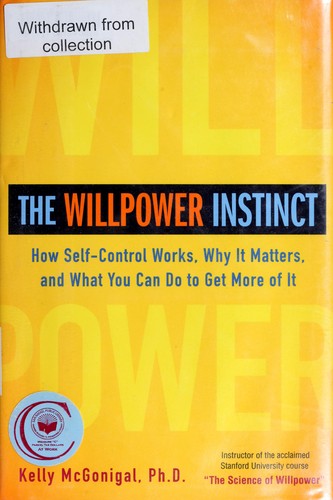
How does The Upside of Stress relate to McGonigal's other book, The Willpower Instinct?
The Willpower Instinct examines the science of self-control and how people manage competing impulses. The Upside of Stress examines how beliefs about stress shape its physiological and behavioral effects. Both are grounded in Stanford psychology research and aimed at practical application. The Willpower Instinct is narrower and more practically focused; The Upside of Stress is broader in its implications.