Religion & Spirituality · Book club
The Yoga Sutras of Patanjali book club questions
Here are 11 book club questions for The Yoga Sutras of Patanjali by trans. Sri Swami Satchidananda, ordered to open easily and end somewhere worth arguing about. Copy them, print them, or bring them up one at a time.
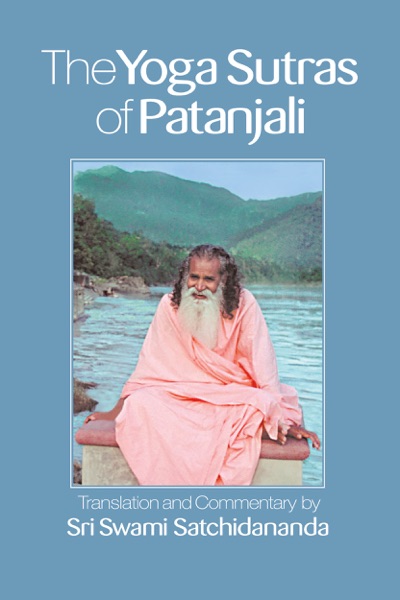
The Yoga Sutras is a foundational text of classical Indian philosophy, compiled by the sage Patanjali — likely around 400 CE, though some scholars place the compilation earlier or later.
trans. Sri Swami Satchidananda · 1978 · 4h 15m
Full summary and key takeaways →The 11 questions
- 1.
Patanjali defines yoga as the cessation of mental fluctuations, not physical practice. How does that definition compare to what you thought yoga was, and does it change how you think about the purpose of practice?
- 2.
The five yamas (ethical restraints) are presented as foundational to everything else in the path. How does non-violence function as the root from which the other restraints follow?
- 3.
Patanjali includes correct knowledge among the five mental modifications to be stilled. What does it mean that even accurate perception is a form of turbulence that yoga seeks to transcend?
- 4.
The eight limbs are presented as sequential prerequisites. Do you think it's actually possible to practice later limbs (meditation, samadhi) without firmly establishing the earlier ones (ethical restraints, posture)?
- 5.
Satchidananda's commentary frequently connects the sutras to daily life. Which of those connections did you find most useful or surprising?
- 6.
The siddhis (powers) are described and then explicitly dismissed as distractions. What does it mean that extraordinary ability can itself be an obstacle to deeper development?
- 7.
Patanjali's cosmology distinguishes purusha (pure awareness) from prakriti (matter). How does that distinction compare to mind-body distinctions you encounter in Western philosophy or religion?
- 8.
The sutras say that liberation is the recognition that awareness was never actually bound — it only appeared to be. Does that claim feel like a meaningful insight or a philosophical sleight of hand?
- 9.
Pratyahara (sense withdrawal) is the fifth limb — the bridge between the outer and inner practices. How do you understand the relationship between disciplining physical behavior and achieving inner stillness?
- 10.
The text was compiled around 400 CE but claims to describe a timeless technology of mind. Which aspects of the system seem genuinely universal, and which seem specific to a particular cultural and historical context?
- 11.
How does the Yoga Sutras' approach to suffering — as arising from the mind's mistaken identification with matter — compare with other frameworks for understanding and addressing human suffering that you know?
How to run the discussion
- Pick six to eight, not all of them. An hour of real discussion covers fewer questions than anyone expects, and racing the list is what makes a book club feel like homework.
- Open with what people noticed, not what they concluded. Asking for a verdict first hardens opinions before anyone has heard each other.
- Let the disagreement run. The questions below that split a room are the ones worth the time; the ones everyone answers the same way can be skipped.
- Ask the quiet person a specific question. A direct, narrow question is far easier to answer than an open invitation to contribute.
Themes worth steering toward
If the conversation stalls, these are the threads that usually restart it.
Common questions
What are good book club questions for The Yoga Sutras of Patanjali?
Here are 11 book club questions for The Yoga Sutras of Patanjali by trans. Sri Swami Satchidananda, ordered to open easily and end somewhere worth arguing about. The strongest openers ask what each reader noticed rather than what they concluded, and the discussion usually turns on yoga philosophy, mind and consciousness, meditation.
How long should a book club discussion of The Yoga Sutras of Patanjali last?
Most groups run 60 to 90 minutes of actual discussion. That is roughly six to eight questions, not all of them, so pick the ones that suit your group rather than working down the list in order.
What are the main themes in The Yoga Sutras of Patanjali?
Yoga philosophy, Mind and consciousness, Meditation, Liberation, Ethics. Those are the threads most likely to divide a room, which makes them the useful places to steer a discussion that has gone quiet.
Picking the next one? See books like The Yoga Sutras of Patanjali or questions for other book club picks.
