Psychology · Book club
Thinking, Fast and Slow book club questions
Here are 12 book club questions for Thinking, Fast and Slow by Daniel Kahneman, ordered to open easily and end somewhere worth arguing about. Copy them, print them, or bring them up one at a time.
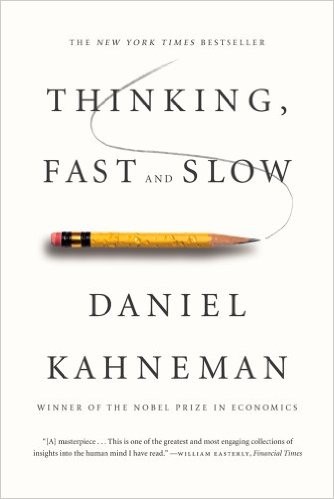
Thinking, Fast and Slow is Daniel Kahneman's account of the two cognitive systems that govern human thought.
Daniel Kahneman · 2011 · 8h 45m
Full summary and key takeaways →The 12 questions
- 1.
Kahneman argues that System 1 runs most of our decisions without our awareness. What's a recent decision you made quickly that might have benefited from System 2 engagement?
- 2.
Which cognitive bias from the book do you think has had the biggest practical effect on your financial or career decisions?
- 3.
The anchoring effect suggests that opening numbers in negotiations matter enormously. How has anchoring shaped your behavior as a buyer or seller?
- 4.
Kahneman distinguishes the experiencing self from the remembering self. Think of a vacation or project that was difficult throughout but ended well. Did the ending change how you evaluate the whole experience?
- 5.
The book argues that experts are far less reliable than they think. In what domain do you place trust in expert opinion that this research might cause you to reconsider?
- 6.
Prospect theory says losses feel about twice as heavy as gains. Can you identify a decision you avoided not because the upside was small but because the framing emphasized what you might lose?
- 7.
Kahneman says humans are pattern-seeking to a fault — we construct narratives from noise. Where in your professional life do you see this most clearly?
- 8.
The planning fallacy affects organizations as much as individuals. Does your team or company systematically underestimate project timelines? What would it take to use base rates more honestly?
- 9.
Kahneman is skeptical that knowing about biases does much to prevent them. Do you agree? Has reading about a bias ever noticeably changed your behavior in the moment?
- 10.
The book describes regression to the mean — extreme performances tend to be followed by more average ones. How does this affect how we should praise or criticize people at work or in parenting?
- 11.
The availability heuristic makes us overweight rare, dramatic risks and underweight common, dull ones. Which risks in your own life do you think you are systematically mis-ranking?
- 12.
Kahneman and Tversky's collaboration is described as unusually productive and eventually strained. What does their relationship suggest about how intellectual partnerships work?
How to run the discussion
- Pick six to eight, not all of them. An hour of real discussion covers fewer questions than anyone expects, and racing the list is what makes a book club feel like homework.
- Open with what people noticed, not what they concluded. Asking for a verdict first hardens opinions before anyone has heard each other.
- Let the disagreement run. The questions below that split a room are the ones worth the time; the ones everyone answers the same way can be skipped.
- Ask the quiet person a specific question. A direct, narrow question is far easier to answer than an open invitation to contribute.
Themes worth steering toward
If the conversation stalls, these are the threads that usually restart it.
Common questions
What are good book club questions for Thinking, Fast and Slow?
Here are 12 book club questions for Thinking, Fast and Slow by Daniel Kahneman, ordered to open easily and end somewhere worth arguing about. The strongest openers ask what each reader noticed rather than what they concluded, and the discussion usually turns on cognitive bias, decision-making, behavioral economics.
How long should a book club discussion of Thinking, Fast and Slow last?
Most groups run 60 to 90 minutes of actual discussion. That is roughly six to eight questions, not all of them, so pick the ones that suit your group rather than working down the list in order.
What are the main themes in Thinking, Fast and Slow?
Cognitive bias, Decision-making, Behavioral economics, Judgment, Dual-process thinking. Those are the threads most likely to divide a room, which makes them the useful places to steer a discussion that has gone quiet.
Picking the next one? See books like Thinking, Fast and Slow or questions for other book club picks.
