Where Are the Customers' Yachts? by Fred Schwed Jr. is a 1940 business book about wall street culture, investing skepticism, financial industry. The financial industry earns its income from activity — trading, products, advice — whether that activity helps clients or not. The conflict of interest is structural, not individual.
Summary
Where Are the Customers' Yachts? is Fred Schwed Jr.'s 1940 satirical account of Wall Street's habits, pretensions, and fundamental conflicts of interest. The title comes from an old joke about a visitor to New York who admires the financial industry's fine yachts and then asks where the customers' yachts are. Schwed worked as a Wall Street trader in the 1920s and 1930s, lost money in the crash, and wrote this book as both memoir and cultural critique.
The book's central observation is that the financial industry exists primarily to serve itself. Brokers, advisors, and investment firms earn their fees whether their clients make money or not. The incentive structure produces elaborate rationalizations for activity: trading generates commissions, new products generate fees, market timing generates excitement, and all of it generates the impression of expertise. Schwed punctures this pretension by observing that most of what passes for financial skill cannot be demonstrated to beat simple, passive approaches over time.
The specific characters and mechanisms Schwed describes are from the 1930s, but the reader in 2024 will recognize the same patterns: confident predictions that don't pan out, complex products whose complexity benefits the seller more than the buyer, and the persistent human desire to believe that someone out there has the system figured out. Schwed argues that people want to be taken in because certainty in an uncertain environment is emotionally comforting, regardless of its accuracy.
What makes the book enduring is the prose. Schwed is genuinely funny in a dry, self-aware way that most financial writing never achieves. He can describe the same self-delusion in three different ways without becoming repetitive, and his affection for the colorful eccentrics of Wall Street softens what could otherwise read as pure contempt. The book is short, reads fast, and is as relevant as anything written about finance since — possibly more, because the underlying human dynamics haven't changed in the decades since Schwed wrote it.

Talk to Where Are the Customers' Yachts? like its author wrote you back.
Get the ideas that fit your life — not generic summaries.
- Chat with the book
- Audiobook-style main ideas
- Adapts to your life and goals
- Helps you take action
Key takeaways
- 1.
The financial industry earns its income from activity — trading, products, advice — whether that activity helps clients or not. The conflict of interest is structural, not individual.
- 2.
Most market predictions are sincere but worthless. The future is genuinely uncertain, and the confidence with which financial professionals forecast it reflects marketing more than skill.
- 3.
Complex financial products usually benefit their designers more than their buyers. Simplicity in investment is not a sign of unsophistication; it's often the smartest choice.
- 4.
People want certainty and will pay for the performance of certainty even when no real certainty is available. This is the raw material the financial industry works with.
- 5.
Speculation is not investing. Schwed distinguishes between putting capital to work in businesses with reasonable prospects and betting on short-term price movements with borrowed money.
- 6.
The crash of 1929 revealed that much of the apparent wealth in financial markets was leverage on top of leverage, not real productive value. This pattern recurs.
- 7.
Wall Street has genuine eccentrics and genuine knowledge, but neither the eccentricity nor the knowledge reliably translates to client profits. Schwed documents both with affection.
- 8.
The question in the book's title is the real one: if your advisor is so smart, why are you not as wealthy as they are from following their advice? Asking this question is underrated.
Discussion questions
Use these on your own, with a book club, or as chat starters in Superbook. Book club version, ready to copy or print →
- 1.
Schwed wrote this in 1940 and the observations still apply. What does that durability tell you about the financial industry's capacity for or resistance to reform?
- 2.
The book argues that people want to believe someone has the market figured out. Have you experienced this impulse personally — seeking someone to provide financial certainty?
- 3.
Schwed's humor is a deliberate choice — he could have written the same critique without it. How does the humor affect your reception of the argument?
- 4.
The customer's yacht question is simple: if your advisor is so good, why aren't you as rich as their advice should have made you? Have you ever asked this question directly?
- 5.
Schwed distinguishes between speculation and investment. Where do most retail investors actually sit on that spectrum, and do they know which they're doing?
- 6.
Complex financial products that mostly benefit their creators are as common now as in the 1930s. What makes investors continue buying them despite access to cheaper, simpler alternatives?
- 7.
The book describes a Wall Street culture with distinctive rituals, jargon, and social dynamics. How much of modern financial media is performing the same function Schwed satirizes?
- 8.
Schwed lost real money in the 1929 crash. Does knowing he has skin in the game make his critique more or less persuasive to you?
- 9.
The conflict of interest in financial advice is structural — advisors earn from activity regardless of outcomes. What institutional or regulatory changes, if any, have genuinely addressed this?
- 10.
Schwed is fond of the people he's criticizing. Does that ambivalence make the book more or less useful as a guide to avoiding financial industry traps?
- 11.
The book is written in a specific historical moment — post-crash, pre-World War II. How does reading it in that context change how you apply its lessons to today's market environment?
- 12.
If a friend asked you whether to hire a financial advisor or manage their own investments with index funds, what would you say? How does Schwed's argument affect your answer?
Themes
Frequently asked questions
-
Is Where Are the Customers' Yachts? worth reading?
Yes, and it's one of the most enjoyable books in financial literature. Schwed makes a serious argument about how the financial industry operates, but the prose is dry and genuinely funny. It reads like a novel more than a finance book and holds up remarkably well despite being written in 1940.
-
How long does it take to read?
About three hours. The book is short and the writing is fast-moving. Most readers finish it in a single sitting or two short sessions.
-
What's the main point of the book?
That the financial industry's incentives are misaligned with clients' interests, that expert predictions are largely worthless, and that complexity in financial products usually benefits the seller more than the buyer. Schwed makes this case with humor rather than outrage.
-
Is this book dated?
The specific characters and mechanisms are from the 1930s, but the underlying dynamics Schwed describes — conflicted advisors, overconfident forecasters, products designed to generate fees — remain entirely current. That's actually the point of the book.
-
Who should read this book?
Anyone who invests or is considering a financial advisor. The skepticism Schwed instills about expert prediction and complex products is genuinely protective. It's also a good read for anyone who wants to understand Wall Street culture without wading through business school material.
Similar books
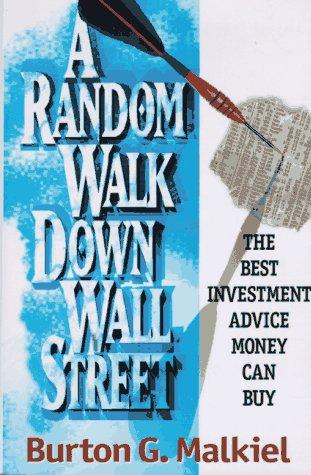
A Random Walk Down Wall Street
Burton G. Malkiel
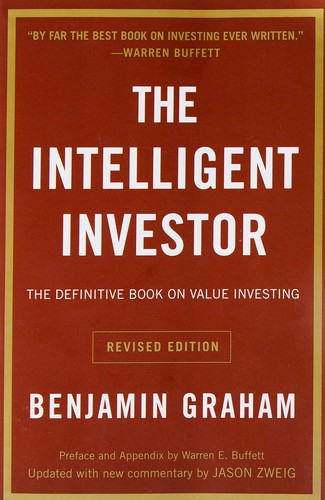
The Intelligent Investor
Benjamin Graham
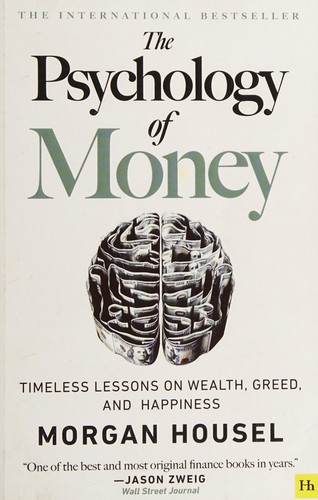
The Psychology of Money
Morgan Housel
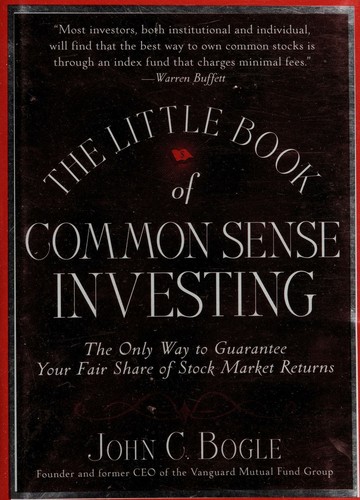
The Little Book of Common Sense Investing
John C. Bogle
