Business · Book club
Zero to One: Notes on Startups, or How to Build the Future book club questions
Here are 12 book club questions for Zero to One: Notes on Startups, or How to Build the Future by Peter Thiel, ordered to open easily and end somewhere worth arguing about. Copy them, print them, or bring them up one at a time.
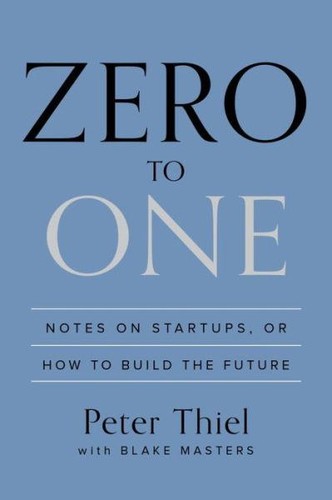
Zero to One began as notes from a Stanford course Thiel taught on startups in 2012, assembled into a book with co-author Blake Masters.
Peter Thiel · 2014 · 4h 15m
Full summary and key takeaways →The 12 questions
- 1.
Thiel's contrarian question is: what do you believe that almost nobody else believes? What's your answer, and how confident are you in it?
- 2.
He argues competition destroys value while monopoly creates it. Is there an industry you know well where this seems obviously true — or obviously wrong?
- 3.
Thiel says a startup should start with a very small market and dominate it before expanding. Can you think of a company that succeeded by doing this? One that failed by skipping it?
- 4.
What's a secret you believe is still undiscovered in your own field? What would it take to act on it?
- 5.
The book distinguishes between definite and indefinite optimism — believing the future will be good because of a specific plan versus just generally expecting things to improve. Which describes most people you work with?
- 6.
Thiel is critical of most cleantech companies. His critique is that they competed in a commodity market without proprietary technology. Does that argument hold up to you, or does it miss something?
- 7.
He argues that the founder's personality — often contrarian, slightly eccentric, with an unusual vision — is a feature, not a bug. Think of a company you admire. Does the founder fit that profile?
- 8.
Zero to One is skeptical of social enterprises that prioritize mission over differentiation. Is that skepticism fair, or does it leave out something important about why organizations exist?
- 9.
The book implies that most incremental businesses are not worth starting. Do you agree? What's lost if everyone tries to go from zero to one?
- 10.
Thiel distinguishes between luck and design in startup success. How much of what you've accomplished would you attribute to each, and does that split feel honest?
- 11.
His critique of the tech world's groupthink — the idea that everyone imitates the last successful company — is harsh. Where do you see that pattern in an industry you follow?
- 12.
The last chapter argues that we need new technology to survive as a civilization. Does that argument change how you think about your own work or career?
How to run the discussion
- Pick six to eight, not all of them. An hour of real discussion covers fewer questions than anyone expects, and racing the list is what makes a book club feel like homework.
- Open with what people noticed, not what they concluded. Asking for a verdict first hardens opinions before anyone has heard each other.
- Let the disagreement run. The questions below that split a room are the ones worth the time; the ones everyone answers the same way can be skipped.
- Ask the quiet person a specific question. A direct, narrow question is far easier to answer than an open invitation to contribute.
Themes worth steering toward
If the conversation stalls, these are the threads that usually restart it.
Common questions
What are good book club questions for Zero to One: Notes on Startups, or How to Build the Future?
Here are 12 book club questions for Zero to One: Notes on Startups, or How to Build the Future by Peter Thiel, ordered to open easily and end somewhere worth arguing about. The strongest openers ask what each reader noticed rather than what they concluded, and the discussion usually turns on monopoly, startups, innovation.
How long should a book club discussion of Zero to One: Notes on Startups, or How to Build the Future last?
Most groups run 60 to 90 minutes of actual discussion. That is roughly six to eight questions, not all of them, so pick the ones that suit your group rather than working down the list in order.
What are the main themes in Zero to One: Notes on Startups, or How to Build the Future?
Monopoly, Startups, Innovation, Technology, Contrarianism. Those are the threads most likely to divide a room, which makes them the useful places to steer a discussion that has gone quiet.
Picking the next one? See books like Zero to One: Notes on Startups, or How to Build the Future or questions for other book club picks.
