Book comparison
Extreme Ownership vs Leaders Eat Last
Read Extreme Ownership if you lead a team and want a method, and Leaders Eat Last if you are trying to understand why a culture has gone wrong — accepting that its science is loose.
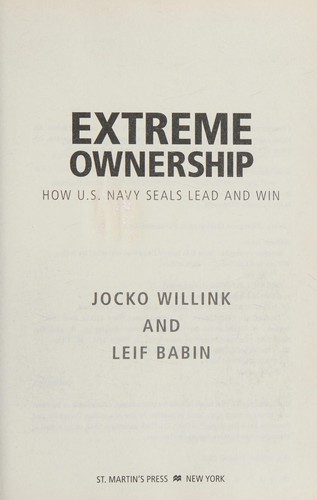
Extreme Ownership
Jocko Willink and Leif Babin
2015 · 5h 15m
Extreme Ownership is former Navy SEAL commanders Jocko Willink and Leif Babin's argument that the single most important principle in leadership is taking total responsibility for everything that…
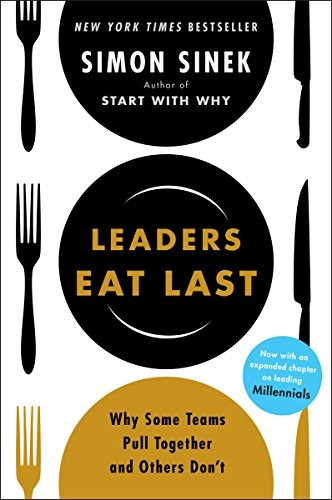
Leaders Eat Last
Simon Sinek
2014 · 5h 0m
Leaders Eat Last is Simon Sinek's argument that the best organizations run on a feeling he calls the Circle of Safety.
Where they agree
Both are leadership books built on military material and sold to business readers, and both argue that leadership is an obligation to the people you lead rather than authority over them. Both start from the same conviction: that when a team underperforms, the explanation is at the top rather than in the people, and both are written to be read by someone who has just been made responsible for others.
Where they differ
Willink and Babin write a manual of conduct, chapter by chapter — a combat account from Ramadi, the principle it illustrates, then the business application. The unit of analysis is your own behaviour, and the demand is total: everything inside your remit is yours to own, including your boss’s bad plan, which you are expected to question upward and then execute. Sinek writes an explanation rather than a manual, arguing that people perform when a leader builds a circle of safety and that most dysfunction comes from leaders who protect numbers instead of people. The weakness is the biology: his account of the chemistry driving human cooperation is simplified well past what the underlying science supports, and it is best read as a metaphor rather than as evidence.
Which to read first
Extreme Ownership. It is concrete, the principles are usable in your next difficult conversation, and its structure makes it hard to finish without a list of things to change. Leaders Eat Last reads better afterwards as a diagnosis of the organisation around you. Invert the order if you are senior enough that culture, not your own conduct, is the actual problem.
Read Extreme Ownership if
You lead a team directly and want an unsentimental method for planning, delegating, giving orders and taking the blame.
Read the summary →Read Leaders Eat Last if
You want to understand why people at a company feel unsafe and disengaged, and you are reading for the argument rather than the neuroscience.
Read the summary →Common questions
Should I read Extreme Ownership or Leaders Eat Last?
Read Extreme Ownership if you lead a team and want a method, and Leaders Eat Last if you are trying to understand why a culture has gone wrong — accepting that its science is loose.
What is the difference between Extreme Ownership and Leaders Eat Last?
Willink and Babin write a manual of conduct, chapter by chapter — a combat account from Ramadi, the principle it illustrates, then the business application. The unit of analysis is your own behaviour, and the demand is total: everything inside your remit is yours to own, including your boss’s bad plan, which you are expected to question upward and then execute. Sinek writes an explanation rather than a manual, arguing that people perform when a leader builds a circle of safety and that most dysfunction comes from leaders who protect numbers instead of people. The weakness is the biology: his account of the chemistry driving human cooperation is simplified well past what the underlying science supports, and it is best read as a metaphor rather than as evidence.
Which should I read first, Extreme Ownership or Leaders Eat Last?
Extreme Ownership. It is concrete, the principles are usable in your next difficult conversation, and its structure makes it hard to finish without a list of things to change. Leaders Eat Last reads better afterwards as a diagnosis of the organisation around you. Invert the order if you are senior enough that culture, not your own conduct, is the actual problem.
More like these: books like Extreme Ownership, books like Leaders Eat Last, or every comparison.
