Book comparison
The 4-Hour Workweek vs Rework
Read Rework if you want to run something small and profitable without wrecking your life, and The 4-Hour Workweek if your actual goal is getting out of a job.
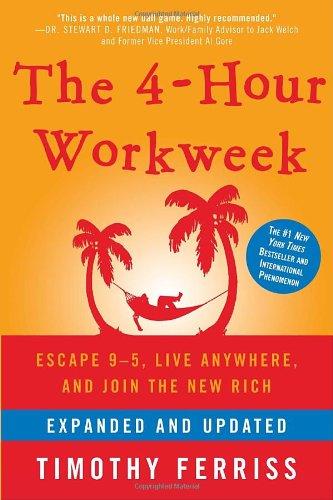
The 4-Hour Workweek
Timothy Ferriss
2007 · 4h 20m
The 4-Hour Workweek is Timothy Ferriss's argument that the standard model of working forty-plus hours a week until retirement is a bad deal.
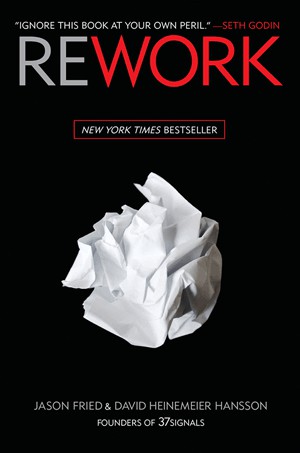
Rework
Jason Fried and David Heinemeier Hansson
2010 · 2h 40m
Rework is Jason Fried and David Heinemeier Hansson's deliberately provocative argument against most conventional wisdom about building a business.
Where they agree
Both are short, punchy, deliberately contrarian business books from the same brief window, and both attack the same assumption: that hours worked and value produced are the same thing. Both hold that most of what an office demands — the meetings, the presence, the busyness, the growth for its own sake — is theatre, and both are written in confident chapter-sized bursts you can read out of order.
Where they differ
Ferriss is writing to the individual, and his subject is personal freedom: detach income from hours, eliminate what does not matter, automate a small business, negotiate your way out of the building. Fried and Hansson are writing to someone who wants to build and run a real company, but a modest, profitable, unhurried one — their subject is judgement about product, hiring, meetings, funding and saying no. Ferriss wants you out; Rework wants you in charge of something sustainable. The dating differs too: the 4-Hour Workweek tactics are the part that has aged worst, tied to the tools, outsourcing markets and advertising tricks of their moment, while Rework holds up better because its essays are about how to decide rather than what to use.
Which to read first
Rework. It is shorter, less dated, and requires nothing of you before it becomes useful. Read The 4-Hour Workweek after it, and only if leaving employment is genuinely the plan, since half its value evaporates for anyone who is staying.
Read The 4-Hour Workweek if
You want out of a job, and want a concrete if now somewhat dated playbook for making income independent of the hours you sit at a desk.
Read the summary →Read Rework if
You are already running something, or about to, and want strong opinions about how to run it without a punishing schedule or outside money.
Read the summary →Common questions
Should I read The 4-Hour Workweek or Rework?
Read Rework if you want to run something small and profitable without wrecking your life, and The 4-Hour Workweek if your actual goal is getting out of a job.
What is the difference between The 4-Hour Workweek and Rework?
Ferriss is writing to the individual, and his subject is personal freedom: detach income from hours, eliminate what does not matter, automate a small business, negotiate your way out of the building. Fried and Hansson are writing to someone who wants to build and run a real company, but a modest, profitable, unhurried one — their subject is judgement about product, hiring, meetings, funding and saying no. Ferriss wants you out; Rework wants you in charge of something sustainable. The dating differs too: the 4-Hour Workweek tactics are the part that has aged worst, tied to the tools, outsourcing markets and advertising tricks of their moment, while Rework holds up better because its essays are about how to decide rather than what to use.
Which should I read first, The 4-Hour Workweek or Rework?
Rework. It is shorter, less dated, and requires nothing of you before it becomes useful. Read The 4-Hour Workweek after it, and only if leaving employment is genuinely the plan, since half its value evaporates for anyone who is staying.
More like these: books like The 4-Hour Workweek, books like Rework, or every comparison.
