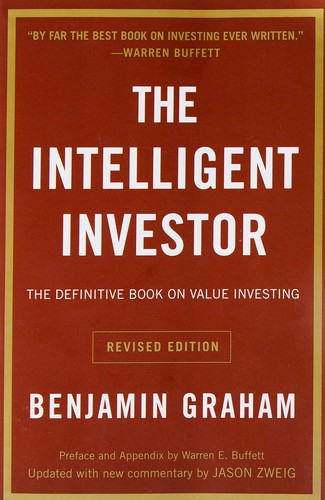
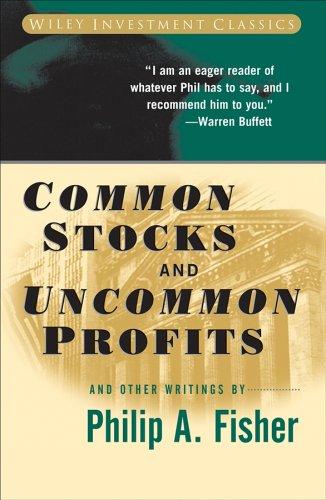
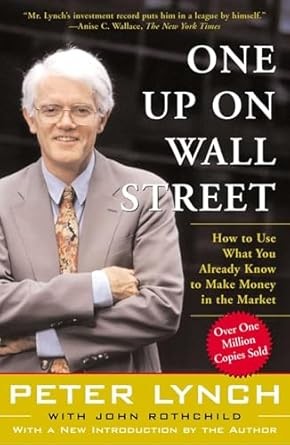
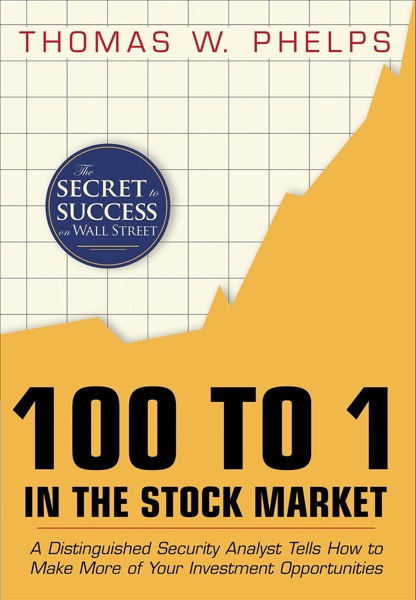
100 to 1 in the Stock Market by Thomas Phelps is a 1972 economics book about long-term investing, compounding, stock selection. 100-to-1 returns (100 baggers) are rarer than average stocks but more common than most investors assume. Phelps documented dozens of them in the postwar American market.
Summary
100 to 1 in the Stock Market, published in 1972 by Thomas Phelps, is a study of the conditions under which stocks return one hundred times an investor's original investment — and an argument that such stocks are more common and more identifiable in advance than most investors believe. Phelps spent his career as a broker and portfolio manager, and the book draws on his decades of observation of which companies produced extreme long-term returns and what they had in common.
Phelps's central argument is deceptively simple: the problem most investors face is not finding great companies — it's holding them long enough to realize their full potential. The investor who bought Xerox in the 1950s, Polaroid in the 1960s, or Walmart in the 1970s had many opportunities to sell at a good profit before the stock became a 100-bagger. Almost every great long-term investment goes through periods that justify selling — a poor quarter, a management change, a scary macro environment — and the investor who sells at any of those moments misses the compounding that follows.
The book catalogs historical examples of 100-to-1 returns with the kind of archival precision that requires knowing when a company was actually available as a public investment and at what price. Phelps is careful about this because the retrospective identification of great stocks is easy; the hard part is identifying the characteristics that were visible at the time. He argues the key requirements are: a business with strong reinvestment opportunities at high rates of return, management that is focused on long-term growth rather than near-term earnings, and a price that doesn't eliminate the return prospect at purchase.
The book occupies a specific niche in investing literature. It predates Peter Lynch's similar arguments in One Up on Wall Street and anticipates the "100 baggers" work Chris Mayer did in 2018, which credited Phelps as an inspiration. As investing wisdom, it is fundamentally about patience and the math of compounding — neither is complicated, but both are genuinely hard to execute in a market environment that rewards short-term attention. Phelps writes without academic apparatus and his examples are dated, but the core argument has not been superseded.
Talk to 100 to 1 in the Stock Market like its author wrote you back.
Get the ideas that fit your life — not generic summaries.
- Chat with the book
- Audiobook-style main ideas
- Adapts to your life and goals
- Helps you take action
Key takeaways
- 1.
100-to-1 returns (100 baggers) are rarer than average stocks but more common than most investors assume. Phelps documented dozens of them in the postwar American market.
- 2.
The hardest part of achieving a 100-bagger is not identifying it early — it's holding through the many plausible reasons to sell that appear long before the full return is realized.
- 3.
Businesses capable of 100-to-1 returns share common traits: high reinvestment rates, durable competitive advantages, and management that prioritizes long-term capital allocation over near-term earnings per share.
- 4.
Dividends are a mixed blessing for the long-term compounder: every dollar paid out as a dividend is a dollar not reinvested at the high returns the business can earn. The best compounders often pay no dividends.
- 5.
Price matters at the moment of purchase, but less than most investors believe over very long holding periods. A great business bought at a fair price will usually outperform a mediocre business bought cheaply.
- 6.
Most investors fail at long-term investing not from lack of intelligence but from lack of patience. The psychological difficulty of holding an investment through market crashes and disappointing years is not to be underestimated.
- 7.
Tax drag is compounding's enemy. Selling a stock at a gain triggers taxes that reduce the capital available for future compounding. The ideal is to find a great business and never sell it.
- 8.
The retail investor's advantage over institutional investors is the freedom to hold indefinitely. Institutions face quarterly performance pressure; individuals don't have to.
Discussion questions
Use these on your own, with a book club, or as chat starters in Superbook. Book club version, ready to copy or print →
- 1.
Phelps argues that finding 100-baggers is easier than holding them. Have you ever sold a stock too early that subsequently became a much larger return? What made you sell?
- 2.
He identifies reinvestment at high rates as the key engine of 100-bagger returns. Can you think of businesses in today's market that seem to have that characteristic?
- 3.
Phelps wrote in 1972 with examples from the preceding decades. Which parts of his argument seem likely to hold in today's market, and which seem most dated?
- 4.
The book argues that dividends work against maximum compounding. How does that sit with investment approaches that emphasize dividend income for wealth building?
- 5.
What is the psychological cost of the strategy Phelps recommends? How would you actually hold a stock that fell 50% in a market crash, knowing you believed in the long-term thesis?
- 6.
Phelps distinguishes the retail investor's advantage — no institutional pressure to perform quarterly — from the institutions' disadvantage. Is that advantage real, or do individual investors face equivalent psychological pressures?
- 7.
Price at time of purchase matters less than most investors think, Phelps argues, over very long holding periods. Is that claim convincing, or does it underweight the compounding of entry price?
- 8.
How do you distinguish a business worth holding for decades from one that looks good but will deteriorate? What signals would tell you that your long-term thesis is broken?
- 9.
The historical examples in the book are mostly American, mostly from a specific postwar era of US economic expansion. How much should that context affect how you apply the argument today?
- 10.
Phelps says the greatest risk to long-term compounding is taxes from selling. How do taxes actually affect the decision to hold or sell in your own investment thinking?
- 11.
What distinguishes the patience Phelps recommends from the mistake of holding a genuinely deteriorating business?
Themes
Frequently asked questions
-
What is 100 to 1 in the Stock Market about?
It's a study of stocks that returned one hundred times the original investment and what conditions made those returns possible. Phelps argues the key requirements are a business with high reinvestment rates, durable advantages, and an investor with the patience to hold through the many temptations to sell before the full compounding plays out.
-
Is this book still relevant given how much markets have changed since 1972?
The core argument about compounding, patience, and the difficulty of holding great businesses is timeless. The specific examples are dated, and US market conditions have changed. But the psychological insight — that most investors fail by selling too early rather than buying wrong — remains as applicable as ever.
-
Is 100 to 1 in the Stock Market hard to find?
It was out of print for decades and available only as an expensive used copy before print-on-demand editions became available. It's now more accessible, though still not widely stocked. The digital PDF circulates widely in the value investing community.
-
How does this book compare to Peter Lynch's One Up on Wall Street?
Phelps focuses more narrowly on the math and conditions of extreme long-term compounding. Lynch is broader, more accessible, and covers the identification of good stocks more thoroughly. Phelps is specifically about why investors fail to hold what they've found, which Lynch addresses less directly.
-
What's the single most important idea in the book?
That the question for a long-term investor is not 'should I buy?' but 'what would cause me to sell?' If you can't articulate a clear answer — if you'll sell every time the stock drops or the market gets scary — you'll never hold long enough to achieve the full compounding. Phelps argues you should decide your sell criteria before you buy, and make them strict.