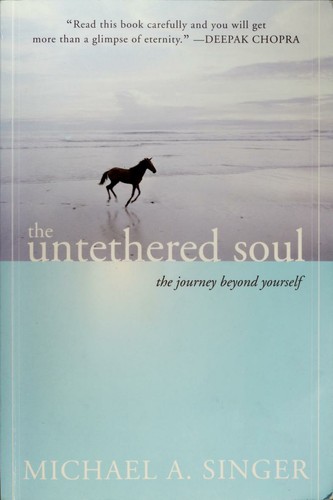
The Untethered Soul by Michael A. Singer is a 2007 religion & spirituality book about consciousness, the self, liberation. You are not the voice in your head — you are the one who is aware of the voice. This distinction is the foundation of genuine spiritual practice.
Summary
The Untethered Soul is Michael Singer's guide to liberation through the direct investigation of consciousness — specifically, the question of who or what is aware of the constant stream of thoughts, emotions, and sensations that constitute ordinary experience. Published in 2007 and gradually becoming a word-of-mouth bestseller, it does not belong to any formal religious tradition but draws on Vedantic, yogic, and Buddhist insights in a practical, accessible framework.
Singer's central insight is the distinction between the witnessing consciousness and its contents. The voice in the head — the narrator who comments on everything, who worries, plans, judges, and reminisces — is not you; it is something you observe. If you can witness the voice, you are the witness, not the voice. This simple observation, which Singer treats as the foundational move of all genuine spiritual practice, is the beginning of liberation. Once you see that you are the observer and not the observed, the tightening grip of compulsive thought loosens.
The book develops this through an analysis of what Singer calls the "seat of consciousness" — the quality of awareness that is always present regardless of what it is aware of. It then explores what blocks the free flow of inner energy: stored emotional experiences, defended vulnerabilities, and the habitual contraction of the heart when confronted with difficulty. The central practice Singer recommends is not suppression or analysis but what he calls "staying open" — allowing difficult experiences to pass through rather than blocking them, which would store them as psychological tightness.
The final section, on liberation and death, is the most demanding philosophically. Singer argues that the fear of death is rooted in identification with the limited self rather than with the eternal witness. The person who has genuinely shifted their identity to consciousness rather than its contents experiences ordinary life as a series of extraordinary events but is not disturbed by any of them. This is presented not as an exotic spiritual achievement but as the natural consequence of the shift in identity the book describes from the beginning.
Talk to The Untethered Soul like its author wrote you back.
Get the ideas that fit your life — not generic summaries.
- Chat with the book
- Audiobook-style main ideas
- Adapts to your life and goals
- Helps you take action
Key takeaways
- 1.
You are not the voice in your head — you are the one who is aware of the voice. This distinction is the foundation of genuine spiritual practice.
- 2.
The witnessing consciousness is always present, always the same quality, regardless of what it witnesses — pleasure, pain, boredom, exaltation.
- 3.
Stored emotional experiences block the free flow of inner energy; the practice is not suppression or analysis but staying open so that experiences can pass through.
- 4.
The heart closes automatically when confronted with pain; the practice of staying open — allowing rather than blocking — is the most fundamental liberation technique.
- 5.
Liberation does not require changing external circumstances but changing the relationship to consciousness — recognizing oneself as the witness rather than the content.
- 6.
Most humans spend their lives defending vulnerabilities that were created in childhood, arranging the external world to avoid encountering the stored pain.
- 7.
Inner energy — what Singer calls Shakti in the yogic tradition — flows freely when not blocked by psychological tightness; life becomes fuller and more alive.
- 8.
The fear of death is rooted in identification with the body-mind rather than with pure consciousness; shifting that identification dissolves the fear at its root.
Discussion questions
Use these on your own, with a book club, or as chat starters in Superbook. Book club version, ready to copy or print →
- 1.
Singer says you are not the voice in your head — you are aware of it. Can you verify that distinction right now in your own experience?
- 2.
He describes the practice as staying open rather than contracting when difficult emotions arise. What specifically happens in your body and mind when you 'close' in response to something painful?
- 3.
The book argues that most of our lives are organized around avoiding encountering stored psychological pain. If that is true, what would your life look like without that organizing principle?
- 4.
Singer distinguishes between the temporary contents of consciousness and the witnessing consciousness itself. Is the witness really unchanging, or is that an idealization?
- 5.
The heart stays open or closes — that is presented as the most fundamental choice. How often in an ordinary day are you making that choice consciously?
- 6.
He says liberation doesn't require changing external circumstances but changing your relationship to consciousness. Is that a liberating or a potentially quietist teaching?
- 7.
Singer compares blocked emotional energy to a thorn you arrange your entire life around not touching. Is there a specific 'thorn' in your own psychology that fits that description?
- 8.
The teaching on death — that fear of death dissolves when you identify with consciousness rather than body-mind — is the book's most demanding claim. Does it seem true or is it a consolation?
- 9.
Singer's framework draws on Vedanta, yoga, and Buddhism without formal affiliation. Does the non-denominational framing help or hinder the teaching?
- 10.
He describes 'Mickey Singer' as a character he observes rather than identifies with. Is that level of detachment from your own personality achievable or even desirable?
- 11.
What one practice from this book could you implement immediately that would genuinely test its claims?
Themes
Frequently asked questions
-
What is The Untethered Soul about?
The distinction between the witnessing consciousness and its contents — and the liberation that becomes available when you identify with the witness rather than the voice in your head. Singer provides a framework for understanding and releasing the psychological blocks that prevent that shift.
-
Is this a religious book?
It draws on Hindu yoga and Vedanta, Buddhist practice, and Christian mysticism without belonging formally to any tradition. Singer presents the teaching as a universal investigation of consciousness available to anyone.
-
How does this compare to Eckhart Tolle's books?
Both work with the distinction between the ego/thinking mind and a deeper awareness. Singer's framework is more grounded in the yogic tradition and is somewhat more systematic. Tolle's writing is arguably more poetic and accessible; Singer's is more clinical and methodical.
-
What is the central practice in the book?
Staying open — allowing difficult experiences, emotions, and thoughts to pass through rather than contracting around them. Singer describes this as the most fundamental practice and the one most likely to produce genuine transformation.
-
Who should read The Untethered Soul?
People interested in the nature of consciousness and its relationship to suffering. Also those who have found mindfulness or meditation approaches useful and want a more systematic framework for understanding what practice is actually pointing at.
Similar books
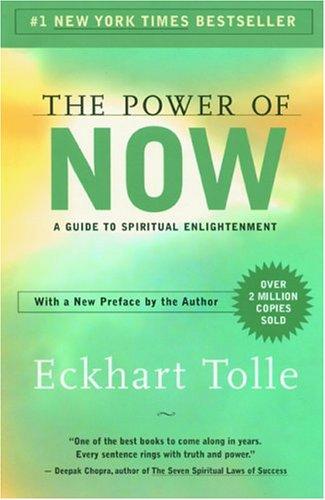
The Power of Now
Eckhart Tolle
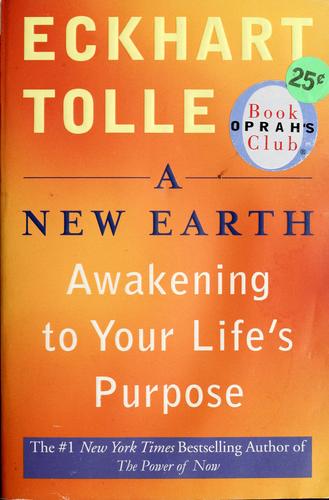
A New Earth: Awakening to Your Life's Purpose
Eckhart Tolle
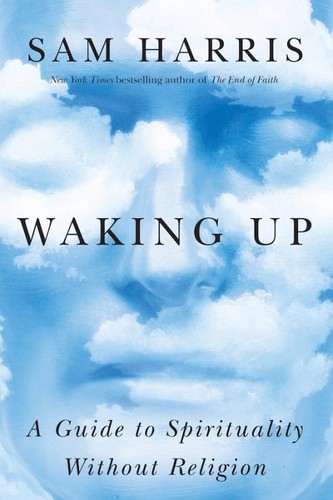
Waking Up: A Guide to Spirituality Without Religion
Sam Harris
Peace Is Every Step
Thich Nhat Hanh
