Against the Gods: The Remarkable Story of Risk by Peter L. Bernstein is a 1996 history book about risk, probability, financial history. Risk management is historically recent. Before the 17th century, probability theory did not exist, and the future was understood as fate beyond human calculation.
Summary
Against the Gods is Peter Bernstein's intellectual history of how humanity learned to measure, quantify, and manage risk — a story he traces from ancient gambling in the Mediterranean through the development of modern probability theory, statistics, and financial derivatives. The title comes from Bernstein's argument that the development of risk management is the defining achievement of modernity: before the mathematical tools for calculating probability existed, the future was understood as fate, subject to divine will. After them, the future became a domain where humans could act strategically.
The book moves through centuries of intellectual history: the Renaissance gamblers and mathematicians (Cardano, Pascal, Fermat) who first formalized probability; the Enlightenment statisticians who applied it to demography and insurance; the early twentieth-century economists who tried to quantify uncertainty itself; and the postwar finance theorists (Markowitz, Sharpe, Black, Scholes) who built the modern toolkit for pricing and hedging risk. Bernstein is a financial historian first, and his explanations of portfolio theory, options pricing, and modern risk management are careful and accurate without being condescending.
What makes the book more than a textbook is Bernstein's sustained curiosity about the limits of quantitative risk management. He is writing in 1996, before LTCM, before the dot-com bubble, before 2008, but he is already worried. The models work when the future resembles the past; when it doesn't — when there are genuinely novel events — the models break, often catastrophically. The tension between the power of quantitative tools and the irreducible uncertainty of the future runs through the entire book.
Against the Gods is dense, learned, and occasionally slow. It is not a quick read, and it assumes a reader interested enough in intellectual history to follow arguments through centuries. For readers with that patience, it is one of the best books ever written about how humans have learned to think about an uncertain future — and why that learning is both remarkable and incomplete.
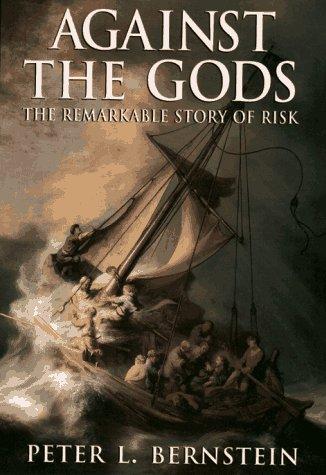
Talk to Against the Gods: The Remarkable Story of Risk like its author wrote you back.
Get the ideas that fit your life — not generic summaries.
- Chat with the book
- Audiobook-style main ideas
- Adapts to your life and goals
- Helps you take action
Key takeaways
- 1.
Risk management is historically recent. Before the 17th century, probability theory did not exist, and the future was understood as fate beyond human calculation.
- 2.
Pascal and Fermat's exchange about a gambling problem in 1654 is often cited as the birth of probability theory — the first systematic attempt to quantify uncertainty.
- 3.
The law of large numbers, developed by Bernoulli, showed that individual random events become predictable in aggregate. This underpins insurance, actuarial science, and modern statistics.
- 4.
Regression to the mean — discovered by Galton — describes the tendency of extreme outcomes to be followed by more moderate ones. It is one of the most misunderstood statistical concepts in everyday decision-making.
- 5.
Markowitz's portfolio theory showed that diversification is not just intuition but mathematics: combining assets that don't move together reduces risk without reducing expected return.
- 6.
Uncertainty — unmeasurable, irreducible unknowns — is distinct from risk, which can be quantified. Keynes and Knight drew this distinction clearly, and it matters enormously in practice.
- 7.
Behavioral economics shows that humans are systematically irrational about probability. We overweight vivid low-probability events and underweight dull high-probability ones.
- 8.
The models that price and hedge risk are built on historical data and assumptions that may not hold in novel conditions. The most dangerous moment for a risk management system is when it appears most reliable.
Discussion questions
Use these on your own, with a book club, or as chat starters in Superbook. Book club version, ready to copy or print →
- 1.
Bernstein argues that risk management is the defining achievement of modernity. Do you agree that learning to quantify and manage risk changed human civilization fundamentally?
- 2.
Before probability theory, the future was understood as fate or divine will. How much of that pre-scientific thinking persists in the way you personally think about uncertain outcomes?
- 3.
Pascal's wager — a probabilistic argument about belief in God — appears in the book. Do you find it compelling as an application of expected value reasoning?
- 4.
Regression to the mean is one of the most counterintuitive statistical ideas. Can you think of examples in your own life where you've been fooled by not accounting for it?
- 5.
Bernstein distinguishes between risk (measurable) and uncertainty (unmeasurable). How do you make decisions in the face of genuine uncertainty that can't be quantified?
- 6.
Markowitz's portfolio theory earns a Nobel Prize for formalizing what intuition suggested. How much of good investing is applied mathematics versus judgment that can't be reduced to numbers?
- 7.
The behavioral economics chapters show that humans are systematically bad at probability. In what domains do you think your own probability intuitions are most unreliable?
- 8.
Bernstein is writing in 1996 but already worried about the limits of financial models. His concerns proved prescient. What risks today might we be systematically underestimating?
- 9.
The history in this book covers gamblers, merchants, astronomers, and economists. Is risk thinking fundamentally the same across those domains, or does context change it fundamentally?
- 10.
Insurance is described as one of the first large-scale applications of probability. How do you personally think about insurance — as risk management or as waste when nothing goes wrong?
- 11.
The book ends with unresolved tension between the power of models and the irreducibility of genuine novelty. Has that tension been resolved since 1996, or is it the same problem we face today?
Themes
Frequently asked questions
-
What is Against the Gods about?
It's a history of how humans learned to understand and manage risk, from ancient dice games through the development of probability theory, statistics, portfolio theory, and modern financial derivatives. Bernstein argues that this intellectual history is the story of how humanity moved from understanding the future as fate to treating it as something that could be measured and planned for.
-
Is Against the Gods worth reading?
Yes, for readers with patience for intellectual history. It's dense and rewards careful reading. The payoff is a genuinely deep understanding of where modern risk management came from and why it sometimes fails. It's one of the best books in this genre.
-
How long does it take to read Against the Gods?
Seven to eight hours for most readers. It's not a quick read — the material is substantive and some chapters are quite dense. Readers interested in history and ideas will find the pace comfortable; those wanting a quick framework will not.
-
Do I need a math background to read this book?
No. Bernstein explains probability and statistics clearly for a general audience without requiring prior knowledge. The book is primarily narrative and historical rather than technical.
-
What is the book's main limitation?
It was written in 1996, before several major financial crises that validated Bernstein's concerns about the limits of quantitative models. The book does not cover the 1998 LTCM collapse, the dot-com bubble, or the 2008 financial crisis, which serve as footnotes to his central argument. Later books by other authors address those events using the framework Bernstein established.
Similar books
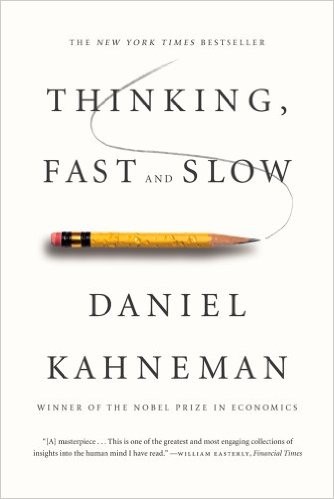
Thinking, Fast and Slow
Daniel Kahneman

Thinking in Bets: Making Smarter Decisions When You Don't Have All the Facts
Annie Duke
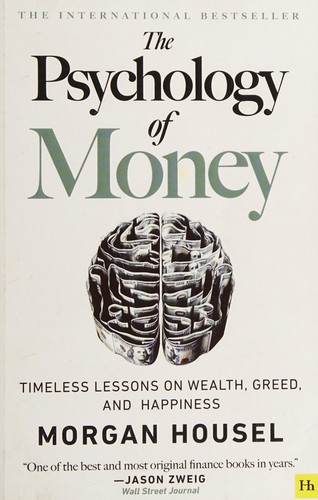
The Psychology of Money
Morgan Housel
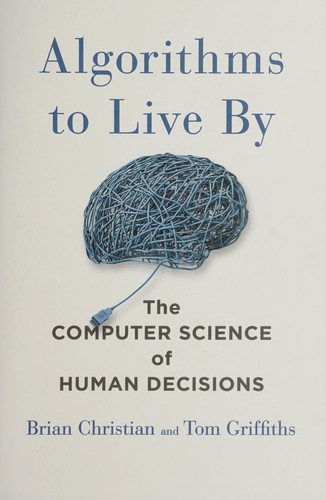
Algorithms to Live By: The Computer Science of Human Decisions
Brian Christian and Tom Griffiths
