Anything You Want by Derek Sivers is a 2011 business book about entrepreneurship, business philosophy, simplicity. A business is a tool to serve your life, not the other way around. Define what you want your life to look like first, then design the business to support that.
Summary
Anything You Want is Derek Sivers' account of building, running, and eventually selling CD Baby, the independent musician distribution company he founded accidentally in 1998 when a few friends asked him to sell their CDs online. The company grew to 150 employees and over $100 million in revenue before Sivers sold it in 2008 for $22 million and gave the proceeds to charity. The book is short—around 90 pages—and deliberately so. Sivers writes the way he thinks: plainly, directly, without filler.
The core argument is that business is a creative act, not a formula to execute, and that the measure of success is whether the business serves your own definition of what you want from life—not revenue, not headcount, not exit multiples. Sivers describes running CD Baby without seeking outside investment, without growth for its own sake, and without a conventional management structure, because those things would have required him to optimize for metrics he didn't care about.
The book is structured as a series of short lessons, each two or three pages, drawn from specific decisions Sivers made running the company. Some are operational—how he handled customer service, why he never took outside funding, why he gave his employees unusual autonomy. Others are philosophical—what it means to define success, whether you should start a business to get rich or because you care about what you're doing, how to recognize when you've outgrown a role you once loved.
Sivers is explicit about the book's limitations: these are his lessons from his specific business and his specific values. He doesn't argue that his approach is universally correct. A reader who wants to build a billion-dollar company will find the advice actively counterproductive. The value is in the clarity of his reasoning about why he made the choices he did—which forces you to ask yourself what choices you would make and why.
Key takeaways
- 1.
A business is a tool to serve your life, not the other way around. Define what you want your life to look like first, then design the business to support that.
- 2.
No funding means no investors to answer to and no external pressure to optimize for metrics you don't care about. CD Baby grew entirely from revenue.
- 3.
Customer service is a direct expression of company values. Sivers wrote personal, often funny emails to customers himself, and that voice became the company's identity.
- 4.
Delegation means real delegation—handing over authority, not just tasks. Sivers gave employees power to make real decisions and found the company ran better when he stepped back.
- 5.
The moment you realize you're no longer the right person to run the company is important and often missed. Sivers stayed too long and got in the way.
- 6.
Business plans and spreadsheets aren't what actually move companies forward. Execution, attention to customers, and clear values are.
- 7.
Giving away the proceeds of CD Baby's sale was, for Sivers, an act of consistency with the values he'd used to build it. Making the money was never the point.
Discussion questions
Use these on your own, with a book club, or as chat starters in Superbook. Book club version, ready to copy or print →
- 1.
Sivers defines success entirely by his own criteria. How do you define success for a business or project you care about, and where did that definition come from?
- 2.
The book is essentially an argument against raising outside funding. What would you lose, and what would you gain, by building something without investors?
- 3.
Sivers says he stayed too long running CD Baby after it stopped being fun. How do you recognize that moment in a project or role you've built?
- 4.
The company grew without a formal business plan. Is that a feature of Sivers' specific situation or a generalizable lesson?
- 5.
Sivers gave the sale proceeds to charity. Does that decision make his business philosophy more or less credible to you?
- 6.
He argues that most business advice assumes you want the same things everyone else wants. Which pieces of conventional business advice don't apply to what you actually want?
- 7.
The book was written quickly and is explicitly short. Does the format reinforce or undercut its argument about simplicity?
- 8.
CD Baby succeeded without a marketing strategy in the conventional sense. What does that suggest about the role of luck versus intention in small business outcomes?
- 9.
Sivers describes the moment when managing employees stopped feeling meaningful and started feeling like a burden. Have you had an equivalent moment in work you've done?
- 10.
What would it look like to apply Sivers' approach—serve your own definition of what you want—to a career path rather than a business?
- 11.
The book's core audience seems to be people who want to do something small and good rather than something large and scalable. Is that a coherent market, and is Sivers the right person to speak to it?
Themes
Frequently asked questions
-
How long is Anything You Want?
Around 90 pages — roughly an hour to 90 minutes to read. Sivers deliberately kept it short. It's a book you can finish in a single sitting and return to for specific lessons.
-
Is Anything You Want worth reading for someone building a startup?
It depends on what kind of startup. If you're building something venture-backed and aiming for scale, Sivers' advice is mostly irrelevant or actively counterproductive. If you're building something small, sustainable, and on your own terms, it's one of the most useful books available.
-
What is Anything You Want about?
How Derek Sivers built and sold CD Baby — and what he learned about running a business that serves your own definition of a good life rather than conventional metrics of success.
-
Did Derek Sivers really give away all the money from selling CD Baby?
Yes. He structured the sale so the proceeds went to a charitable trust for music education. He's been explicit that accumulating wealth was not his goal in building the company.
-
What's the most contrarian idea in the book?
That the best thing you can do for a business you've built is often to stop running it — to delegate fully, step back, and let the people you've hired actually do their jobs. Most founders find this nearly impossible.
Similar books
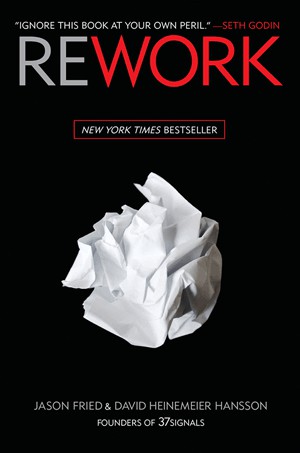
Rework
Jason Fried and David Heinemeier Hansson
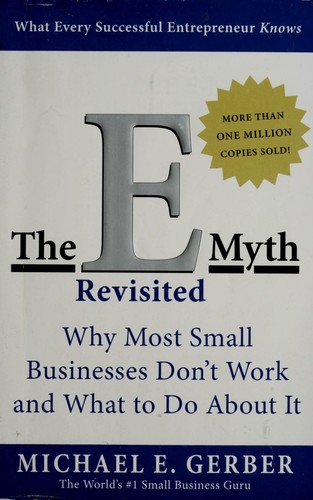
The E-Myth Revisited
Michael E. Gerber
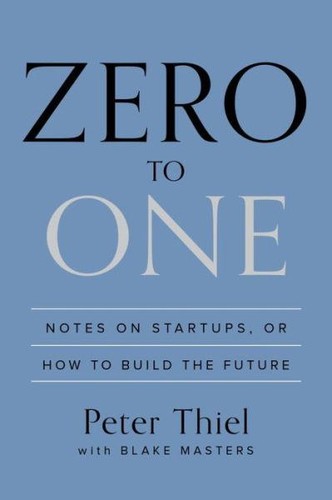
Zero to One: Notes on Startups, or How to Build the Future
Peter Thiel
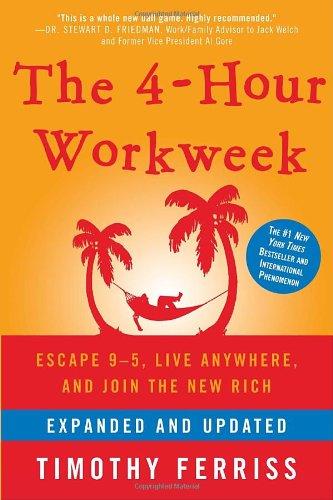
The 4-Hour Workweek
Timothy Ferriss
