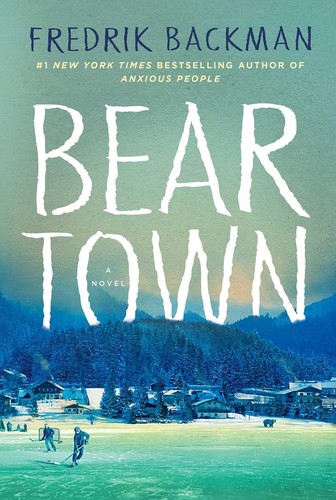
Beartown by Fredrik Backman is a 2016 contemporary fiction book about community and silence, sports culture and identity, sexual violence and accountability. Backman's central formal decision — to name the assault early and without ambiguity — refuses the reader the comfort of doubt and forces the novel's real question: not what happened, but what the community does with what happened.
Summary
Beartown is a dying town in rural Sweden whose only remaining source of identity and pride is its youth hockey program. The team has a chance at the national junior championships, and the town has placed its hopes — financial, social, emotional — on a group of teenage boys. When an assault occurs the night after a major playoff win, Beartown becomes a novel about what communities do when the thing they need to survive conflicts with the truth they need to face.
The assault — a rape — is not a mystery or a plot device. Backman names what happened early, gives both the perpetrator and the survivor interiority, and then turns his attention to the question the novel is actually asking: how does a community decide to see or not see what happened in its midst? The answer is rendered through dozens of characters — coaches, parents, players, administrators, a police officer, a priest — each of whom is given sufficient complexity that their choices feel earned rather than convenient. This is not a novel of heroes and villains; it is a novel of people under social pressure, which is more uncomfortable and more honest.
What Backman does better in Beartown than in any of his previous work is scale. The ensemble is large and the town functions as a character — its economic anxiety, its pride, its gender dynamics, its relationship to the outside world that is slowly abandoning it. The hockey itself is rendered with genuine understanding of what team sports mean to the people who love them: the belonging, the discipline, the way a game can carry the weight of a whole identity. And precisely because Backman makes you love hockey through his characters, the assault's contamination of that love is more devastating.
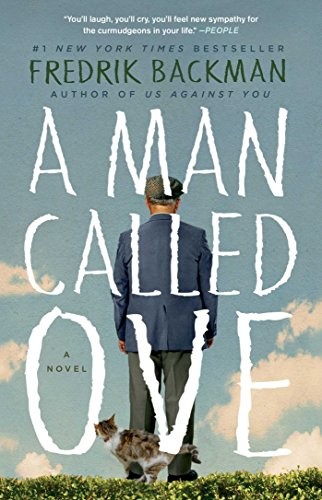
This is Backman's most serious novel, and it asks the most of its readers. It is darker than A Man Called Ove and more politically explicit than Anxious People. Readers who found his earlier work too sentimental will find Beartown rewarding; readers who come looking for the warmth of Ove will find it here too, but earned against harder material. The sequel, Us Against You, continues the story.
Talk to Beartown like its author wrote you back.
Get the ideas that fit your life — not generic summaries.
- Chat with the book
- Audiobook-style main ideas
- Adapts to your life and goals
- Helps you take action
Key takeaways
- 1.
Backman's central formal decision — to name the assault early and without ambiguity — refuses the reader the comfort of doubt and forces the novel's real question: not what happened, but what the community does with what happened.
- 2.
The hockey culture in Beartown is described with love and understood as a system: it creates belonging, demands loyalty, and teaches boys that dominance is its own justification. All three of those features are implicated in the assault.
- 3.
The survivor, Maya, is given as much interiority and agency as the perpetrator, Kevin — a choice that resists the genre tendency to treat victims as narrative functions rather than people.
- 4.
Every adult in the novel fails Maya in a slightly different way, and Backman makes the forms of that failure specific: cowardice, financial interest, loyalty, denial, and genuine inability to believe. None of these are identical, and the distinctions matter.
- 5.
Peter Andersson, the general manager, is the novel's moral fulcrum — a man who built the institution that produced the assault and who must decide whether to protect it or dismantle it.
- 6.
Small-town class anxiety is not background in Beartown — it is the force that makes the town so desperate to succeed that it cannot afford to see clearly.
- 7.
The novel tracks how silence spreads: how one person's decision not to speak makes it easier for the next person, until an entire community has organized itself around not-seeing.
- 8.
The boys who play hockey are not monsters — most of them are scared kids trying to belong — and Backman's refusal to simplify them into villains is what makes the novel's indictment of the system more rather than less severe.
Discussion questions
Use these on your own, with a book club, or as chat starters in Superbook. Book club version, ready to copy or print →
- 1.
Backman tells us what happened before most of the characters process it. How did knowing early change your reading of the subsequent chapters?
- 2.
Which character's failure to act disturbed you most? What would they have needed — courage, information, structural support — to act differently?
- 3.
Kevin is given extensive interiority. Did that make him more sympathetic, less sympathetic, or something more complicated? What is Backman trying to do by letting us inside his head?
- 4.
The town's economic desperation is a character in the novel. To what extent does Backman suggest that poverty and scarcity make sexual violence more likely to be covered up? Does that read as an excuse or an explanation?
- 5.
Peter builds the program, loves it, and then must decide what to do when it produces something he cannot defend. Does he make the right choices? When, and when not?
- 6.
The hockey culture is described in terms that make it genuinely appealing before the assault occurs. Was that important for how the novel's argument works?
- 7.
Maya goes through the novel largely without allies willing to speak publicly. Who in the novel comes closest to being that ally, and what stops them from going further?
- 8.
The novel ends without a resolution that feels complete — some things are reckoned with, some are not. Is that honest or is it evasion?
- 9.
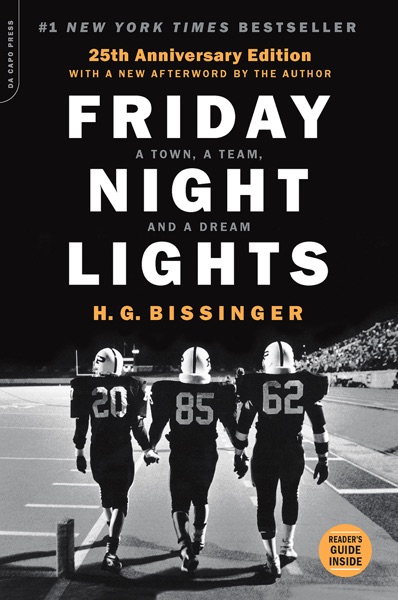
Beartown has been compared to Friday Night Lights (the book) in its portrait of a small town organized around a sport. What does Backman add to that genre that McMurtry or Bissinger didn't?
- 10.
The sequel, Us Against You, continues the story. Did Beartown feel complete to you, or did it feel like a first act?
- 11.
Silence in the novel is active — people choose it, protect it, build institutions around it. Can you identify a moment in your own community where that kind of protective silence was visible?
- 12.
What would Beartown need to actually change? Is the change Backman implies at the novel's end sufficient, or is it cosmetic?
Themes
Frequently asked questions
-
Is Beartown worth reading if I liked A Man Called Ove?
Yes, but prepare for a very different experience. Beartown is darker, angrier, and more politically direct than A Man Called Ove. It has the same warmth for its characters, but it earns that warmth against much harder material. Most readers who loved Ove find Beartown more difficult and more rewarding.
-
Does Beartown deal with sexual violence explicitly?
Yes. A rape occurs early in the novel and Backman handles it with clarity rather than euphemism. He does not describe the assault graphically, but he does not soften it or make its nature ambiguous. This is not a comfortable read, and it is not meant to be.
-
Do I need to know hockey to read Beartown?
No. The hockey is explained well enough that it functions as context even for non-fans. What matters is what the sport means to the people who play it and watch it, and Backman makes that legible for readers with no hockey background.
-
Is there a sequel?
Yes. Us Against You continues the story of Beartown and its characters. The Winners, a third book, concludes the trilogy. Most readers find Beartown works as a standalone, though Us Against You provides more resolution.
-
Who shouldn't read Beartown?
Readers who find assault narratives too difficult, or who want the uncomplicated warmth of Backman's earlier novels. Beartown is not a comfortable book. It is a good book, but it is not kind in the way A Man Called Ove is kind.