Candide by Voltaire is a 1759 classics book about optimism and disillusionment, religious hypocrisy, war and atrocity. Pangloss's optimism — 'all is for the best in the best of all possible worlds' — is the novel's punching bag, but Voltaire's target is not Leibniz specifically so much as any philosophical system that explains away present suffering by reference to a larger benevolent design.
Summary
Candide is a young man raised in a Westphalian castle on the philosophy of his tutor Pangloss: that everything is for the best in the best of all possible worlds. Over the course of about 150 pages, Voltaire subjects this proposition to a relentless empirical test. Candide is expelled from the castle, pressed into an army, survives a massacre, finds Pangloss in hideous condition from syphilis, witnesses the Lisbon earthquake (an actual 1755 catastrophe that killed tens of thousands), is flogged by the Inquisition, flees to the Americas, discovers and loses Eldorado, survives the Atlantic slave trade as an observer, is robbed, attacked, and otherwise catastrophized at a pace of roughly one disaster per page. At each turn, Pangloss insists the situation is optimal.
Voltaire is attacking Leibniz's philosophical optimism — the doctrine that this is the best of all possible worlds because God created it — but the satire reaches well beyond a single philosopher. The Inquisition, Jesuit missionaries, colonial exploitation, the Wars of the Austrian Succession, human slavery, and aristocratic privilege all receive treatment. The pace is farcical; the content is horrific; the gap between those registers is the satirical engine. Characters are killed and revived; the same people appear by improbable coincidences; logic is applied to monstrous conclusions with serene composure. This is Swift's mode, applied with French rationalist efficiency.
At 35,000 words, Candide is a novella rather than a novel — the whole thing can be read in an afternoon. This makes it unusual in this list but essential: Voltaire's compression is part of the argument. The accumulation of horrors is relentless precisely because he refuses to dwell on any of them. The tonal contrast between the lightness of the prose and the weight of what is described is where the moral force lives.
The ending — "we must cultivate our garden" — is the most debated conclusion in Enlightenment literature. It reads as withdrawal from metaphysical speculation into practical labor, a turn from theodicy to getting on with things. Whether this is wisdom, defeat, or irony has been argued for two and a half centuries. It is definitely not optimism.
Talk to Candide like its author wrote you back.
Get the ideas that fit your life — not generic summaries.
- Chat with the book
- Audiobook-style main ideas
- Adapts to your life and goals
- Helps you take action
Key takeaways
- 1.
Pangloss's optimism — 'all is for the best in the best of all possible worlds' — is the novel's punching bag, but Voltaire's target is not Leibniz specifically so much as any philosophical system that explains away present suffering by reference to a larger benevolent design.
- 2.
The pace is the argument. By refusing to dwell on any single atrocity, Voltaire implies that suffering is not episodic but systemic — the world's baseline condition, not an exception.
- 3.
The Lisbon earthquake, which killed approximately forty thousand people in 1755, was a genuine philosophical crisis for optimism in eighteenth-century Europe. Candide is the literary response to that event.
- 4.
'We must cultivate our garden' — Candide's conclusion — has been read as stoic resignation, practical wisdom, political withdrawal, and Voltairean irony. It resists a single reading, which is probably intentional.
- 5.
The Eldorado episode is the satirical mirror: a society without priests, without lawyers, without ambition, without poverty. Candide leaves it voluntarily. Voltaire's point is about human nature, not utopian possibility.
- 6.
Religious institutions — the Inquisition, Jesuit missionaries, corrupt monks — receive some of Voltaire's harshest treatment. The satire here is less philosophical and more directly polemical.
- 7.
Martin, the pessimist Candide acquires late in the novel, is not the answer either. Pessimism is the philosophical mirror of optimism: both are systems that flatten experience into a prior conclusion.
- 8.
The novella's compression is a formal argument: the brevity makes it impossible to treat any suffering as exceptional or deserving of special meditation. Everything happens at the same speed.
Discussion questions
Use these on your own, with a book club, or as chat starters in Superbook. Book club version, ready to copy or print →
- 1.
Pangloss maintains his optimism even after witnessing and suffering atrocities. Is he funny, monstrous, or a portrait of something true about human psychology?
- 2.
Candide voluntarily leaves Eldorado — a perfect society with gold in the streets — to return to a world of suffering. What does Voltaire mean by that choice?
- 3.
The ending: 'we must cultivate our garden.' Is this wisdom, resignation, irony, or defeat? Does Voltaire seem to endorse it?
- 4.
Martin the pessimist is just as wrong as Pangloss the optimist. What is Voltaire's actual position, if he has one?
- 5.
The pace of the satire — one catastrophe per page — is absurdist. Does the speed make the horror funnier, more bearable, or more disturbing?
- 6.
The Lisbon earthquake was a genuine theological crisis in 1755. Does knowing the historical context change how you read Candide's encounter with it?
- 7.
The treatment of slavery — Candide meets an enslaved man who has been mutilated by his owners — is presented with the same satirical composure as everything else. Is this the right tone for that material?
- 8.
Religious institutions take some of the harshest attacks in the novel. Does Voltaire's critique feel specifically anti-clerical or more broadly anti-institutional?
- 9.
The novella is 150 pages. Does its brevity feel like a strength or a limitation? What would be lost if it were five times longer?
- 10.
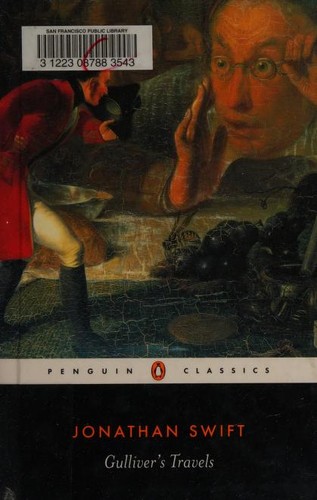
Compared to Gulliver's Travels, which is roughly contemporary and similarly satirical, where does Candide land differently? Which is darker?
- 11.
Voltaire was writing against philosophical optimism. What contemporary ideology would you subject to the same treatment Voltaire gives to Leibniz?
- 12.
The old woman in the novel has suffered more than anyone else — she catalogs her disasters with matter-of-fact acceptance. Is she a heroic figure?
Themes
Frequently asked questions
-
Is Candide worth reading?
Yes, and it's one of the few canonical works that can be finished in a single sitting. At 150 pages it makes almost no demand on your time. Whether you find it funny, disturbing, or both, you'll finish it with a clear sense of what philosophical optimism looks like when submitted to the facts.
-
Is Candide difficult to read?
No. It is one of the most accessible canonical works in the Western tradition. The prose (in a good translation — the Penguin Classics Theo Cuffe translation is excellent) is brisk, ironic, and witty. The main challenge is staying ahead of the satire — recognizing when Voltaire is being sincere versus deadpan.
-
What is Voltaire attacking?
Primarily Leibniz's philosophical optimism: the doctrine that God, being good, must have created the best of all possible worlds, so all apparent evil serves a higher purpose. By extension, any theodicy — any system that justifies present suffering by appeal to a larger design. Also: the Inquisition, Jesuit colonialism, slavery, aristocratic privilege, and human credulity in general.
-
What does 'cultivate our garden' actually mean?
It has been read as: withdrawal from metaphysics into practical work; rejection of utopian speculation in favor of small-scale improvement; stoic acceptance of limited agency; ironic deflation of all the grand systems the novel has destroyed. Voltaire doesn't resolve it, and the ambiguity is probably the point.
-
Who shouldn't read Candide?
Readers who need emotional engagement with characters will find the novella's flat satirical tone alienating — no one in Candide is a real person, they're satirical vehicles. Those who want their serious historical subjects (the Lisbon earthquake, slavery) treated with gravity rather than irony may find Voltaire's approach morally insufficient.