Citizens: A Chronicle of the French Revolution by Simon Schama is a 1989 history book about revolution, france, violence. The French Revolution was not the inevitable result of intolerable feudal oppression. France in the 1780s was economically dynamic and increasingly prosperous, but its rising expectations had outrun its institutions.
Summary
Simon Schama's Citizens was published to mark the bicentennial of the French Revolution in 1989 and immediately became one of the most controversial histories of the event in decades. Written against the grain of the dominant Marxist historiography, which interpreted the Revolution as a class struggle that expressed the rising bourgeoisie's conflict with a feudal aristocracy, Schama argues that the Revolution was not inevitable, not progressive in any simple sense, and that the Terror was not an aberration but an expression of tendencies present from the very beginning of the revolutionary impulse.
The book begins before 1789. Schama spends nearly a third of his pages on the last decades of the Ancien Régime, arguing that France in the 1770s and 1780s was actually modernizing — economically dynamic, culturally vibrant, increasingly literate and prosperous. The crisis that produced the Revolution was not a society at the end of its rope but a society in rapid, destabilizing change, whose expectations had outrun its institutions. This reverses the conventional story: what needed reforming was not intolerable stagnation but the failure of reform to keep pace with rising aspirations.
The narrative that follows is rich and novelistic. Schama is interested in the experience of the Revolution as much as its causes — in the pamphlets and festivals and denunciations and tribunals through which ordinary people lived and died under the successive phases of the revolutionary government. He is particularly sharp on the Revolution's relationship with violence: the way violence was aestheticized, ritualized, and converted into civic spectacle by the Jacobins, and the way the logic of the Terror followed from commitments made in the first euphoric months of 1789 rather than from a later corruption.
Citizens is long — over 800 pages — and the density of its narrative history requires patience. It has been criticized for its revisionist thesis, its occasional romanticization of the Ancien Régime, and its relative inattention to social history below the political class. But as a work of historical prose, it is among the finest of its generation, and its central argument — that the Revolution's violence was not an accident but a feature — remains worth arguing with forty years later.
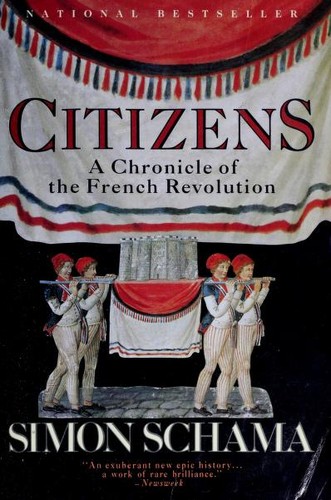
Talk to Citizens: A Chronicle of the French Revolution like its author wrote you back.
Get the ideas that fit your life — not generic summaries.
- Chat with the book
- Audiobook-style main ideas
- Adapts to your life and goals
- Helps you take action
Key takeaways
- 1.
The French Revolution was not the inevitable result of intolerable feudal oppression. France in the 1780s was economically dynamic and increasingly prosperous, but its rising expectations had outrun its institutions.
- 2.
The Terror was not an aberration from the Revolution's founding ideals but an expression of tendencies — the embrace of civic violence, the demand for ideological purity, the cult of the general will — present from 1789 itself.
- 3.
The Ancien Régime was more culturally and economically vital than the revolutionary narrative of corrupt decadence allows. Schama's revisionist starting point is that reform was possible and was being attempted.
- 4.
The Revolution's rhetoric of regeneration and rebirth had a violent underside from the start: it demanded the creation of a new citizen and implied the destruction of whoever embodied the old order.
- 5.
Robespierre and the Jacobins did not corrupt the Revolution; they represented one fully developed version of its logic. The descent into Terror was not a betrayal but a destination.
- 6.
The Revolution was experienced from inside — through festivals, pamphlets, denounciations, and executions — in ways that transformed the consciousness of participants before any political changes were consolidated.
- 7.
The political culture the Revolution created — the nation, the citizen, mass mobilization, the idea that politics touches everything — was genuinely modern and genuinely exported, reshaping every subsequent Western political tradition.
- 8.
Revisionist history is not the same as conservative history. Schama's challenge to Marxist teleology doesn't rehabilitate the Ancien Régime but insists on the contingency and human cost of the revolutionary outcome.
Discussion questions
Use these on your own, with a book club, or as chat starters in Superbook. Book club version, ready to copy or print →
- 1.
Schama argues the Terror was present in seed from 1789. Does that feel like a compelling reading of the evidence, or does it flatten the genuine contingency of revolutionary events?
- 2.
He spends nearly a third of the book on the pre-revolutionary decades. What does that choice of starting point commit him to in the argument that follows?
- 3.
Is there a meaningful difference between arguing that the Terror was 'implicit' in the Revolution's founding logic and arguing that it was inevitable?
- 4.
The book was published in 1989, the bicentennial year and the year of the Soviet collapse. How does that context shape what Schama seems to be arguing about revolution in general?
- 5.
Schama is critical of the Marxist historiography that dominated French Revolutionary studies. Is his own narrative framework — tragic, humanist, suspicious of ideological enthusiasm — any less ideologically shaped?
- 6.
The Revolution's language of citizenship, rights, and national belonging is still the dominant political language of the West. Does understanding its violent origins change how you relate to that vocabulary?
- 7.
He focuses heavily on political elites and the articulate classes. What do you think citizens further down the social scale — servants, peasants, artisans — would have said about the Revolution he describes?
- 8.
Schama writes novelistically, with attention to individuals and scenes. Does that narrative technique illuminate the Revolution or risk making it feel more coherent than it was?
- 9.
Is there a revolution in history that you think turned out significantly differently from how its architects imagined? What does that suggest about the relationship between intention and outcome in radical politics?
- 10.
The book argues that France in the 1780s was modernizing and reform was possible. If that's right, what does it say about the political failure that produced the Revolution?
- 11.
Citizens was controversial among professional historians when it appeared. How should a general reader evaluate historical revisionism when they can't assess the underlying evidence themselves?
- 12.
The Revolution created the template for modern radical politics — the idea that total transformation is possible and that resistance to it is treasonous. Is that template still operative today?
Themes
Frequently asked questions
-
Is Citizens worth reading for a general audience?
Yes, though it demands commitment. At over 800 pages, it is not a casual undertaking, but Schama's prose is genuinely engaging and the argument is clear throughout. It is the best single narrative account of the French Revolution available in English for readers who want the full story.
-
How long does it take to read Citizens?
Around nineteen hours at average reading pace, making it one of the longer books in serious popular history. Many readers find it worthwhile to read in sections, which the chapter structure accommodates.
-
What is Schama's argument in Citizens?
That the French Revolution was not inevitable, that the Ancien Régime was more vital than the revolutionary narrative admits, and that the Terror was not a betrayal of the Revolution's ideals but an expression of tendencies — the embrace of violence, ideological purity, the general will — present from its first moments.
-
Is Citizens biased?
It is explicitly revisionist, written against the Marxist social history that dominated French Revolutionary studies at the time. Schama does not pretend to neutrality, and critics have argued that his sympathy for certain Ancien Régime figures and his skepticism of revolutionary enthusiasm constitute their own ideological commitments. Read it as an argument, not a verdict.
-
What other histories of the French Revolution should I read alongside Citizens?
William Doyle's The Oxford History of the French Revolution provides a more conventional narrative against which Schama's arguments stand out more clearly. For a different perspective on the social history Schama underweights, Albert Soboul's work remains important, though it is more specialized.
Similar books
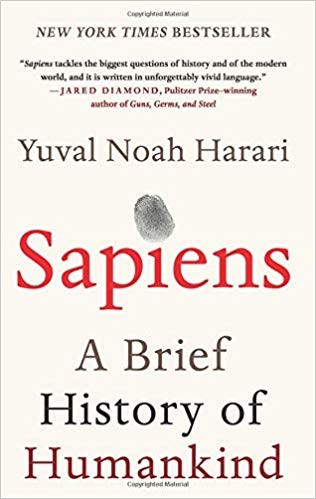
Sapiens: A Brief History of Humankind
Yuval Noah Harari

The Discovery of France: A Historical Geography from the Revolution to the First World War
Graham Robb
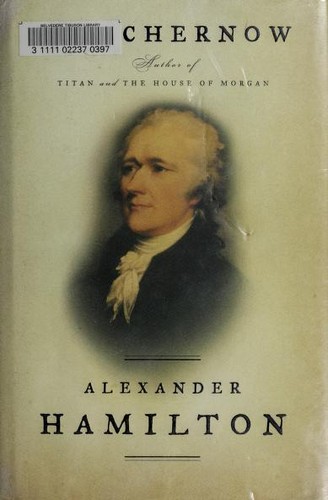
Alexander Hamilton
Ron Chernow
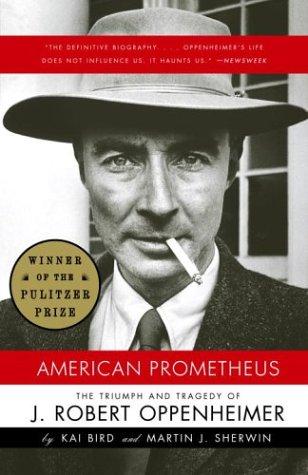
American Prometheus
Kai Bird and Martin J. Sherwin
