Complexity and Contradiction in Architecture by Robert Venturi is a 1966 philosophy book about architectural theory, postmodernism, historicism. Venturi's central thesis: complexity and contradiction in architecture are virtues, not failures. 'Messy vitality' beats 'obvious unity.'
Summary
Robert Venturi's 1966 manifesto opened with one of the most quoted sentences in architectural criticism: "I am for a messy vitality over obvious unity." Published by the Museum of Modern Art when high modernism was still orthodoxy, Complexity and Contradiction in Architecture made the case that the International Style's insistence on purity, clarity, and logical consistency had produced buildings that were boring — and that the supposedly inferior traditions it replaced, from Mannerism through Baroque to vernacular American commercial architecture, were actually richer and more humanly satisfying.
Venturi builds his argument through images. The book reproduces hundreds of architectural photographs and plans, ranging from Michelangelo's Laurentian Library to Alvar Aalto's Finnish churches to the Las Vegas Strip. The method is comparative and somewhat musical: Venturi places a clean modernist box beside a Baroque facade dripping with contradiction and asks which one is actually more alive. He introduces a critical vocabulary — the inflected element, the double-functioning element, the vestigial element — to describe the ways historical architecture managed to be multiple things at once without collapsing into chaos.
The core categories are "both-and" versus "either-or." Modernism, Venturi argues, was allergic to ambiguity. A wall was either load-bearing or decorative. A column either structural or symbolic. The historical buildings he admires refuse these clean separations. A facade can be both entrance and advertisement. A room can be both sacred and domestic. This tolerance for overlapping programs, contradictory signs, and irresolution is not a failure of nerve — it is a more honest response to the complexity of actual human use and meaning.
The book is short and dense. Venturi writes in an aphoristic, slightly combative style that rewards slow reading. Some passages require familiarity with specific buildings. But the argument is not esoteric: it is essentially that architecture's job is to contain and express the full messiness of human life, and that anything that achieves this in a "difficult whole" is superior to buildings that achieve only a "simple unity." Forty years later, having lived through the excesses of postmodernism, a careful reading reveals that Venturi's original argument was more disciplined than its legacy suggests. He was not calling for decoration for its own sake but for architecture that meant something.
Key takeaways
- 1.
Venturi's central thesis: complexity and contradiction in architecture are virtues, not failures. 'Messy vitality' beats 'obvious unity.'
- 2.
The 'both-and' principle: good architecture allows an element to function and mean multiple things simultaneously, rather than the modernist insistence on pure, single-purpose form.
- 3.
Historical architecture — Mannerist, Baroque, vernacular — repays attention precisely because it was not afraid of contradiction, scale shifts, irony, and ambiguity.
- 4.
A 'difficult whole' — a complex building that achieves coherence despite internal tension — is more valuable than an easy whole achieved by suppressing complexity.
- 5.
Context matters. Buildings exist in relation to adjacent buildings, to urban fabric, to historical memory. Ignoring context in favor of pure formal logic produces buildings that feel unmoored.
- 6.
The decorated shed and the duck are Venturi's two models for commercial architecture: one communicates through signs applied to a neutral form, the other makes the whole building a symbol. Both are honest about what architecture does.
- 7.
Modernism's rejection of ornament and historical reference was not neutral progress but ideological. Venturi reframes it as a loss of expressive range, not a gain in honesty.
Discussion questions
Use these on your own, with a book club, or as chat starters in Superbook. Book club version, ready to copy or print →
- 1.
Venturi opens with 'I am for a messy vitality over obvious unity.' Do you find yourself drawn to buildings that embody that, or do you prefer clarity?
- 2.
He argues that modernism was ideological rather than inevitable. Looking at mid-century buildings you know, does that framing ring true?
- 3.
The 'both-and' principle is about tolerance for ambiguity. Where else — in design, writing, or your own work — does that tolerance produce better results?
- 4.
Venturi rehabilitates the Las Vegas Strip as a serious subject of architectural attention. What does that move say about the relationship between high and low culture in design?
- 5.
The book was written as a polemic, meant to unsettle a dominant orthodoxy. Does it read that way now, or has postmodernism become its own orthodoxy?
- 6.
He relies heavily on images. Which building in the book most changed how you think about a formal problem?
- 7.
The 'difficult whole' is coherent despite internal tensions. Can you think of buildings, books, or pieces of music that achieve this? What makes them hold together?
- 8.
Venturi distinguishes between meaningful complexity and mere chaos. How do you make that distinction in practice?
- 9.
His argument implicitly critiques buildings that resolve too neatly — that don't allow contradiction. Does that apply to the design work you encounter day to day?
- 10.
The book is critical of Mies van der Rohe and the Miesian tradition. Is that critique fair?
- 11.
Postmodernism in architecture went in directions Venturi didn't intend. How do you separate his original argument from the kitsch and pastiche that followed?
Themes
Frequently asked questions
-
What is Complexity and Contradiction in Architecture about?
It is Venturi's argument that good architecture embraces ambiguity, historical reference, and contradiction rather than pursuing the pure logical clarity of modernism. It is considered the founding text of architectural postmodernism.
-
Do I need an architecture background to read this book?
Some familiarity with architectural history helps, particularly knowledge of the buildings Venturi discusses. But the core argument is accessible to any reader interested in design, aesthetics, or cultural criticism. The images carry much of the argument.
-
How long is Complexity and Contradiction in Architecture?
The main text is around 130 pages, with extensive plates. It reads in two to three hours, though the density of the argument rewards re-reading specific chapters.
-
Is this book still relevant?
Yes — perhaps more than ever, as the pendulum has swung back toward a kind of neo-minimalism. Venturi's core defense of complexity, meaning, and contextual responsiveness in architecture remains a useful corrective to reductive formalism.
-
What is the difference between a 'duck' and a 'decorated shed'?
A duck is a building whose entire form is a symbol — the building shaped like a duck stand near Flanders, New York. A decorated shed is a neutral form to which signs and decoration are applied. Venturi and Scott Brown argue the decorated shed is more honest about how architecture actually communicates.
Similar books
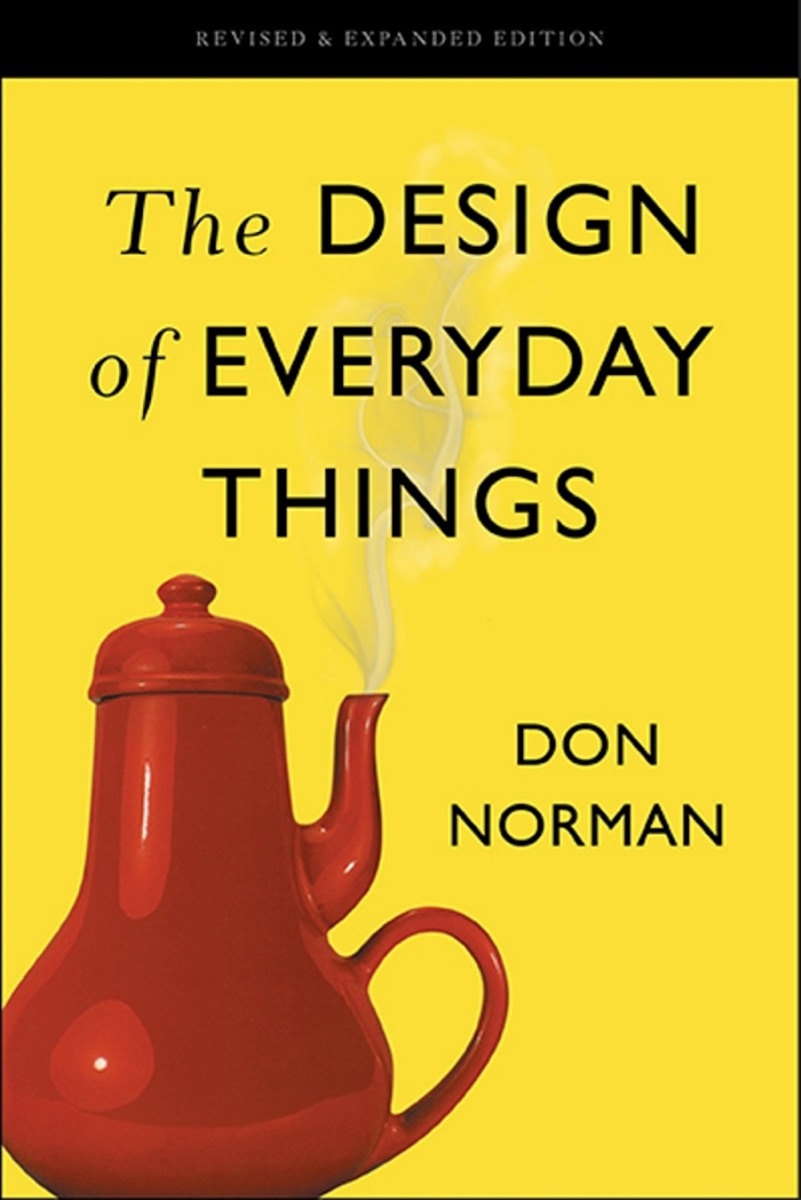
The Design of Everyday Things
Donald Norman
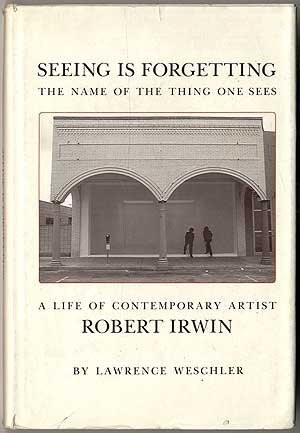
Seeing Is Forgetting the Name of the Thing One Sees
Lawrence Weschler
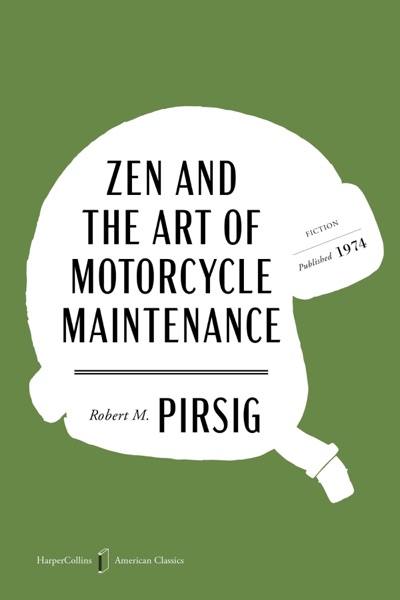
Zen and the Art of Motorcycle Maintenance
Robert Pirsig
The Creative Habit
Twyla Tharp
