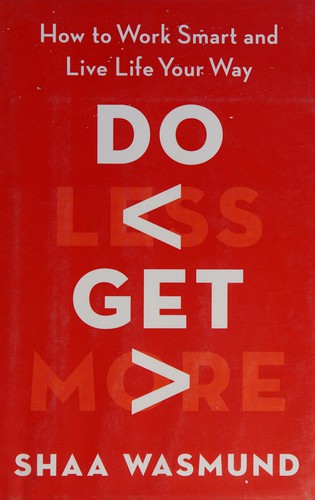
Do Less, Get More by Shaa Wasmund is a 2014 self-help book about focus, simplicity, productivity. Busyness is not the same as productivity. Filling a calendar signals commitment but rarely correlates with the output that actually matters.
Summary
Do Less, Get More is Shaa Wasmund's argument that most people's productivity problem is not a shortage of effort or time but an excess of wrong activity. Wasmund, a British entrepreneur and business advisor, writes from the perspective of someone who spent years in high-visibility busyness before realizing that her highest-value work occupied only a fraction of her calendar. The book is short and direct: it makes the case for ruthless prioritization, then gives practical tools to do it.
The central idea is that busyness has become a social currency — a way of signaling importance and commitment that has little relationship to actual output. Wasmund argues that the first step is distinguishing between activity and achievement, and that most people avoid this distinction because inactivity feels like failure even when the activity is generating noise rather than value. She introduces what she calls the 80/20 audit applied to daily work: identifying the 20 percent of tasks that produce 80 percent of meaningful results, and systematically eliminating or delegating the rest.
A significant portion of the book deals with saying no — to commitments, meetings, requests, and habits that occupy time without earning it. Wasmund is frank that this is harder than it sounds because much of what fills a calendar is driven by other people's needs rather than your own priorities. She gives specific scripts and frameworks for declining gracefully, and addresses the psychological cost of saying yes to everything out of conflict avoidance or people-pleasing.
The book does not pretend to be comprehensive. Wasmund's tone is conversational and entrepreneurial, aimed primarily at small business owners and self-employed professionals rather than corporate employees. Readers looking for a deep systems framework will find the book too light. Those looking for permission to stop and a practical push to start cutting will find it useful and fast to act on.
Talk to Do Less, Get More like its author wrote you back.
Get the ideas that fit your life — not generic summaries.
- Chat with the book
- Audiobook-style main ideas
- Adapts to your life and goals
- Helps you take action
Key takeaways
- 1.
Busyness is not the same as productivity. Filling a calendar signals commitment but rarely correlates with the output that actually matters.
- 2.
An 80/20 audit of your daily tasks — identifying the 20 percent that produces 80 percent of your results — is the starting point for meaningful simplification.
- 3.
Saying no is a skill that requires practice, scripts, and the willingness to accept short-term discomfort to protect long-term focus.
- 4.
Most calendars are filled by other people's priorities rather than your own. The default is drift; deliberate scheduling is an active choice.
- 5.
Delegation is not about offloading work you dislike — it is about returning time to the work only you can do and that produces the most value.
- 6.
Clarity about your one or two most important goals transforms the daily prioritization problem into a simple filter: does this move me toward those goals or away from them?
- 7.
Perfectionism is often a form of avoidance: a reason to keep doing small things rather than attempting the large ones where failure would be visible.
Discussion questions
Use these on your own, with a book club, or as chat starters in Superbook. Book club version, ready to copy or print →
- 1.
If you applied a strict 80/20 audit to how you spent your last week, what would the top 20 percent look like? Would you want to see that answer?
- 2.
Wasmund argues that busyness is social currency. Where in your professional or personal life do you trade busyness for status or approval?
- 3.
What is the hardest no you have had to say in the last year? What made it hard, and what happened after you said it?
- 4.
The book is aimed primarily at entrepreneurs and self-employed professionals. How well does the advice transfer to people inside organizations with less control over their schedule?
- 5.
What single commitment in your current life, if removed, would free the most meaningful time or energy?
- 6.
Wasmund suggests perfectionism is often avoidance. Is there a project you've been 'perfecting' that you're actually afraid to finish and release?
- 7.
What does your ideal week look like, and how far is the current reality from it? What specific changes would close that gap?
- 8.
The book encourages delegation as returning time to highest-value work. What would you need to let go of — control, quality standards, visibility — to delegate more than you do now?
- 9.
What are the two or three things that, if you did them consistently, would most change your results? Are they in your schedule right now?
- 10.
How do you distinguish between the discomfort of genuinely important, hard work and the discomfort of simply doing the wrong things?
- 11.
Wasmund writes from an entrepreneurial context. If you work in a large organization, how do you carve out protected time for your highest-value work?
Themes
Frequently asked questions
-
Is Do Less, Get More worth reading?
It depends on what you need. If you want permission to stop doing things that don't matter and a push to prioritize ruthlessly, it delivers. If you want a comprehensive productivity system or deep theoretical framework, it will feel too brief and light.
-
How long does it take to read Do Less, Get More?
Around two to three hours. It is a short, conversational book designed to be read in a single sitting and acted on immediately rather than studied.
-
What is the main idea of Do Less, Get More?
That most people are busy doing the wrong things, and that applying a simple 80/20 filter — identifying and protecting the work that produces the most value, cutting or delegating the rest — is more effective than any time management system.
-
Who is this book for?
Primarily entrepreneurs, freelancers, and small business owners who control their own schedule. Corporate employees will find some ideas transferable but less directly applicable. The voice and examples are aimed at people running their own work rather than navigating an organization.
-
What is the most actionable idea in Do Less, Get More?
The 80/20 audit: go through your last week task by task, identify which 20 percent of activities produced 80 percent of your meaningful results, and start protecting that time while systematically cutting or delegating the rest.
Similar books
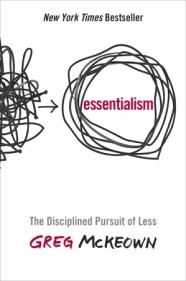
Essentialism: The Disciplined Pursuit of Less
Greg McKeown

The One Thing
Gary Keller and Jay Papasan
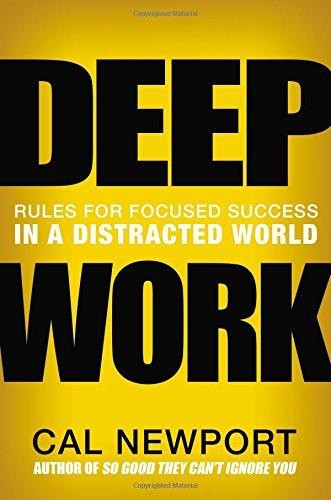
Deep Work
Cal Newport
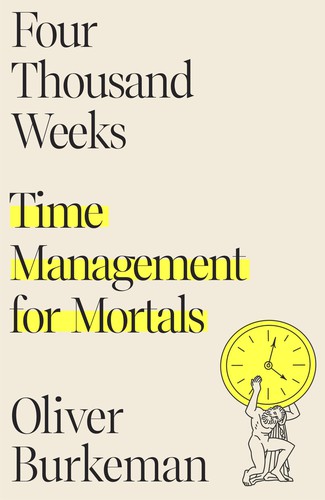
Four Thousand Weeks: Time Management for Mortals
Oliver Burkeman
