East of Eden by John Steinbeck is a 1952 literary fiction book about good and evil, freedom and timshel, family legacy. Timshel — 'thou mayest' — is the novel's central claim: not that humans will overcome their nature, but that they may. The possibility of choice is the only thing that makes morality meaningful.
Summary
East of Eden is Steinbeck's self-declared masterwork, a long and ambitious novel published in 1952 that traces two families — the Trasks and the Hamiltons — across two generations in California's Salinas Valley. It is a retelling of the Cain and Abel story, and Steinbeck is upfront about this; he discusses the Genesis narrative in the novel itself, through the character of Lee, a Chinese American servant of exceptional wisdom and learning. The central argument is encoded in a single Hebrew word, timshel — "thou mayest" — which Steinbeck and his characters take to mean that human beings are not condemned to their natures. They may choose to overcome them.
The two narrative threads are the Trask family, whose story echoes the Bible — Charles and Adam as Cain and Abel, then Adam's twin sons Cal and Aron repeating the pattern in the next generation — and the Hamiltons, who are based on Steinbeck's own family. The Hamiltons are warmer and more episodic; the Trasks carry the novel's mythic weight. At the center of the Trask story is Cathy Ames, one of the most fully developed villains in American fiction: cold, manipulative, capable of genuine evil, and given a psychological interiority that Steinbeck treats with unsettling seriousness. She is not merely a plot mechanism but an argument about whether some people are simply born wrong.
The novel is uneven in the way that very long books often are — some chapters move slowly, some are overwritten, the authorial voice occasionally lectures rather than shows — but its high points are genuinely extraordinary. The chapter in which Lee explains the Hebrew scholars' debate over timshel is one of the great set-pieces in American fiction. Cal and Aron's dynamic in the second half is one of Steinbeck's finest sustained character studies. And the final lines deliver one of literature's most compressed and powerful endings.
East of Eden is a book you make time for rather than pick up casually. At 600+ pages it asks a real commitment, and readers who bounce off its leisurely early sections miss the novel it becomes. But readers willing to give it a week — or two, or three — tend to carry it for years. Steinbeck considered it the book he had spent his life building toward, and it shows.
Talk to East of Eden like its author wrote you back.
Get the ideas that fit your life — not generic summaries.
- Chat with the book
- Audiobook-style main ideas
- Adapts to your life and goals
- Helps you take action
Key takeaways
- 1.
Timshel — 'thou mayest' — is the novel's central claim: not that humans will overcome their nature, but that they may. The possibility of choice is the only thing that makes morality meaningful.
- 2.
Cathy Ames is presented as a near-psychopathic figure, but Steinbeck resists making her purely symbolic — her psychology is examined, not simply deployed. This makes her more disturbing than a stock villain.
- 3.
The Cain and Abel pattern repeats across generations (Charles/Adam, Cal/Aron) to argue that the inheritance of family dynamics is not destiny. The second generation may choose differently.
- 4.
Lee is one of the most original characters in American fiction: a Chinese American man who performs the 'coolie' persona to manage white expectations while maintaining a rich inner life. The novel is aware of the performance.
- 5.
The Salinas Valley is a character in the novel — its soil, seasons, and light are documented with the precision of someone who grew up there and left feeling ambivalent about it.
- 6.
Adam Trask's love for Cathy, despite overwhelming evidence of who she is, is not stupidity — it is the novel's examination of what chosen blindness costs and what it protects.
- 7.
The Hamilton chapters, based on Steinbeck's own family, are the novel's emotional relief valve. Sam Hamilton's wisdom and good humor make the Trask tragedy bearable by contrast.
- 8.
Cal's final act of giving Adam the money earned from war speculation, and Adam's rejection of it, is the novel's most Cain-like moment — the gift refused, the wound reopened.
- 9.
The ending — Adam's last word 'timshel' to Cal — is the entire argument of the novel in a single syllable. Whether you find it earned or convenient tells you something about how you read the 600 pages before it.
Discussion questions
Use these on your own, with a book club, or as chat starters in Superbook. Book club version, ready to copy or print →
- 1.
Steinbeck argues that the correct translation of 'timshel' changes the entire moral structure of the Cain and Abel story. Do you find that argument convincing? Does it matter whether you do?
- 2.
Cathy Ames is presented as someone who was born without a conscience. Does the novel ultimately treat this as a real explanation for her behavior, or does it undercut that reading?
- 3.
Lee performs 'Chinaman' pidgin for white characters while thinking and speaking in precise English. Is this a survival strategy, a critique, or a form of degradation? How does Steinbeck navigate it?
- 4.
Adam loves Cathy past all reason and evidence. Is this portrayed as weakness, as a kind of dignity, or as another form of Steinbeck's 'chosen blindness' theme?
- 5.
The Cain and Abel pattern repeats in two generations. Does the repetition feel like argument (these patterns are inescapable until broken) or like plot convenience?
- 6.
Cal and Aron: which brother has your sympathy by the end? Does Steinbeck want you to feel guilty about your answer?
- 7.
The novel is 600+ pages and moves slowly in places. Which sections did you find least necessary, and which did you find the book could not exist without?
- 8.
Sam Hamilton is based on Steinbeck's grandfather and is the warmest figure in the novel. Does his warmth make the Trask darkness harder or easier to bear?
- 9.
The Hamilton sections interrupt the Trask narrative. What do they give the novel that a pure Trask focus would not?
- 10.
Steinbeck explicitly addresses the reader in places, stepping outside the fiction to discuss the Cain and Abel story. Does this strengthen the novel's argument or break its spell?
- 11.
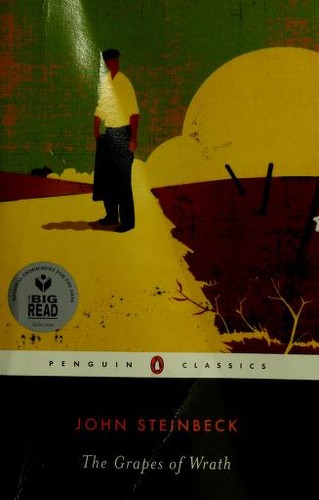
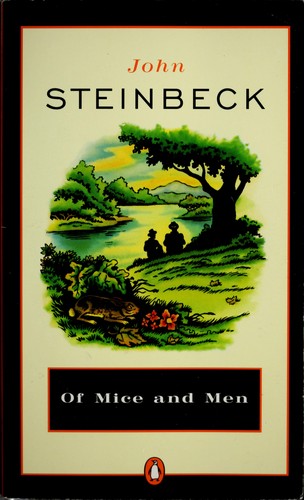
East of Eden was Steinbeck's self-declared masterpiece. Looking at his full body of work, do you agree? Is it better than The Grapes of Wrath or Of Mice and Men, or just more ambitious?
- 12.
The final word is 'timshel.' Does that ending feel earned after 600 pages? Or does it ask you to project more resolution onto the novel than it has actually provided?
Themes
Frequently asked questions
-
Is East of Eden worth the time commitment?
Yes, if you are willing to give it 15-20 hours. It is uneven — the early sections are slow, the Hamilton chapters are tonally different from the Trask narrative — but it pays off in the second half. Readers who finish it tend to rank it among their most significant reading experiences.
-
Is East of Eden hard to read?
Not technically difficult — Steinbeck's prose is accessible. The challenge is patience. The novel takes a long time to assemble its argument. Readers who need plot momentum in the first hundred pages may struggle before the book finds its stride.
-
What is timshel and why does it matter?
It is the Hebrew word translated variously as 'thou shalt' (imperative — you will overcome sin), 'do thou' (permissive — you may try), and 'thou mayest' (possibility — the choice exists). Steinbeck argues that 'thou mayest' is correct and that this changes the entire moral structure of the Cain story — free will exists, and with it, genuine responsibility.
-
Who shouldn't read East of Eden?
Readers who want narrative economy. The novel is expansive, digressive, and occasionally self-indulgent. The authorial voice intrudes more than in Steinbeck's shorter work. If The Grapes of Wrath felt too long, East of Eden is more ambitious and more demanding.
-
Is there a film adaptation?
A celebrated 1955 film directed by Elia Kazan, covering only the second half of the novel, with James Dean in one of his three major film roles as Cal Trask. The film captures the Cal/Aron dynamic but sacrifices most of the novel's philosophical argument.