Farewell, My Lovely by Raymond Chandler is a 1940 thriller book about race and power in america, nostalgia and loss, corruption at every level. Moose Malloy gives the novel an emotional center that sets it apart from most detective fiction: his absolute fidelity to a woman who betrayed him is both foolish and genuinely tragic.
Summary
Philip Marlowe witnesses a giant ex-convict named Moose Malloy walk into a Black jazz club that has changed since Malloy was last free, and inadvertently watches him commit murder in search of a woman named Velma who has vanished from his life. Marlowe takes a separate case — bodyguard to a man buying a stolen jade necklace — and the two cases converge. But Farewell, My Lovely is less about its plot than about the world Marlowe moves through: a Los Angeles stratified by race, money, and the gulf between what people pretend to be and what they actually are.
Widely considered Chandler's best novel, it benefits from being assembled with greater care than The Big Sleep. The two main plotlines connect more satisfyingly, the characters are more fully drawn, and the central figure — Moose Malloy, searching for Velma with an obsessive fidelity that costs him everything — gives the novel an emotional core that detective fiction rarely manages. Malloy is both dangerous and pathetic: a man defined entirely by devotion to someone who never deserved it.
Chandler is more directly engaged with race here than in any other Marlowe novel. The novel opens in a Black neighborhood that Malloy treats with casual violence and contempt; the police are worse. Chandler does not turn Marlowe into an avatar of racial justice — he is a product of his time and place — but he records the texture of Los Angeles's racial geography with unusual precision for a 1940 crime novel. Scholars have argued about how much Chandler is critiquing and how much he is simply reflecting.
If you read one Chandler novel, this is the one. The prose has the same aphoristic quality as The Big Sleep but the plot is tighter and the emotional stakes are higher. Moose Malloy's doomed love is genuinely moving in a way that detective fiction rarely aspires to be. The ending is earned and bitter in equal measure.

Talk to Farewell, My Lovely like its author wrote you back.
Get the ideas that fit your life — not generic summaries.
- Chat with the book
- Audiobook-style main ideas
- Adapts to your life and goals
- Helps you take action
Key takeaways
- 1.
Moose Malloy gives the novel an emotional center that sets it apart from most detective fiction: his absolute fidelity to a woman who betrayed him is both foolish and genuinely tragic.
- 2.
Chandler's Los Angeles is racially mapped, and Farewell, My Lovely is the most explicit about that geography: the novel opens in a Black neighborhood and the racial stratification of the city is a structural fact, not backdrop.
- 3.
The hardboiled detective story, as Chandler practices it, is not about solving crime but about exposing the city's moral topography — crime is the tool that reveals what is ordinarily hidden.
- 4.
Velma, the absent woman at the center of the novel, is one of Chandler's most carefully constructed femmes fatales: she is not present for most of the book, but her absence shapes everyone in it.
- 5.
Marlowe's code becomes most visible in the scenes where he refuses to participate in corruption even when the cost to him is high — the psychic clinic sequence tests him more directly than The Big Sleep.
- 6.
The novel's dual-plot structure — Malloy's search and the jade necklace case — connects more satisfyingly than The Big Sleep's parallel threads, giving the final reveal more weight.
- 7.
Chandler's similes here are at their most economical: the observation-to-image ratio is tighter than in Big Sleep, which makes the prose feel more controlled and more devastating.
- 8.
The title is the emotional key to the novel: it is a line Moose Malloy might have said to Velma, or Marlowe might say about Los Angeles, or the novel might say about the possibility of love in a corrupt world.
Discussion questions
Use these on your own, with a book club, or as chat starters in Superbook. Book club version, ready to copy or print →
- 1.
Moose Malloy kills people in pursuit of a woman who clearly doesn't want to be found. At what point did your sympathy for him run out — if it ever did?
- 2.
The novel opens in a Black jazz club and Chandler records the racial geography of Los Angeles with unusual directness for 1940. How do you read his engagement with race — critical observer, complicit chronicler, or something more complicated?
- 3.
Velma is offstage for most of the novel. How does her absence shape the other characters, and is the final revelation of what she became satisfying or deflating?
- 4.
Marlowe is taken captive and drugged in the psychic clinic sequence. Does that vulnerability — his loss of control — change how you read his competence throughout the rest of the novel?
- 5.
The corruption in this novel extends from street criminals through the police to the highest levels of the city's social structure. Is Chandler making an argument about institutional rot, or is he simply describing the world he observes?
- 6.
Compared to The Big Sleep, which is more famous, Farewell, My Lovely has a more complete emotional arc. Which do you find more satisfying — and what distinction are you drawing between 'better prose' and 'better novel'?
- 7.
The title comes from a line Moose Malloy might have said to Velma. How does framing the entire novel as a goodbye change the way you read the action?
- 8.
Marlowe's personal code forbids certain things regardless of payment. Is that admirable, or is it a kind of luxury available only to someone with nothing to lose?
- 9.
Chandler wrote that the detective must be 'a man who is not himself mean, who is neither tarnished nor afraid.' Does Marlowe in this novel live up to that description — or does the novel complicate it?
- 10.
The novel ends with Marlowe in a specific emotional state. Did you find that ending satisfying, or does the hardboiled tradition's requirement for cool detachment frustrate a genuine emotional payoff?
- 11.
Compared to Patricia Highsmith's Ripley, who lacks any code but thrives — and Marlowe, who has a code and frequently suffers for it — what does each author seem to believe about whether integrity is worth anything in a corrupt world?
- 12.
If you've read The Big Sleep: which Marlowe would you rather spend time with — the Marlowe of Big Sleep who is cooler and more controlled, or the Marlowe of Farewell who shows more vulnerability?
Themes
Frequently asked questions
-
Is Farewell, My Lovely the best Chandler novel?
Most readers and critics think so. The Big Sleep has more famous sentences, but Farewell, My Lovely has a more complete emotional arc, tighter plotting, and the most moving character in the series — Moose Malloy — whose obsession gives the novel genuine heart. Start here if you're reading Chandler for the first time.
-
Do I need to read The Big Sleep first?
No — each Marlowe novel stands alone. If anything, Farewell, My Lovely is a better introduction because the plot is more coherent. The Big Sleep is more celebrated but harder to follow.
-
Is there a film adaptation?
Several. The most notable are the 1944 Murder, My Sweet (with Dick Powell) and the 1975 Robert Mitchum version. Neither is a faithful adaptation, but the Mitchum film is worth watching for atmosphere. The source novel is better than either.
-
Is Chandler's treatment of race worth engaging with in 2026?
Yes, though with care. Chandler records racial geography in 1940 Los Angeles with more precision than most writers of his era, and his police characters are sometimes more racist than Marlowe himself. But it is not a post-civil-rights consciousness. The novel is historically situated, and reading it as such is more productive than either ignoring the context or condemning the whole.
-
Who shouldn't read this?
Readers who need moral resolution and clean justice. Chandler's world is too corrupt for tidy endings — the good guys suffer, the corrupt sometimes survive, and Marlowe's code costs him more than it earns. If that feels like a broken promise rather than an honest account, this isn't the right book.
Similar books
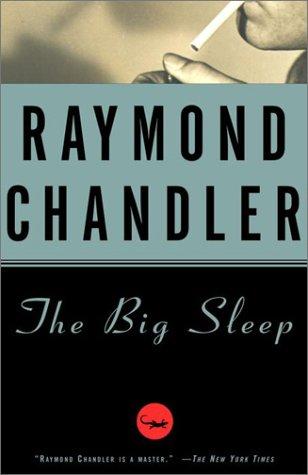
The Big Sleep
Raymond Chandler
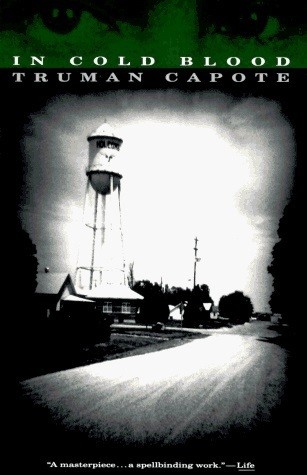
In Cold Blood
Truman Capote
The Confidence Game: Why We Fall for It Every Time
Maria Konnikova
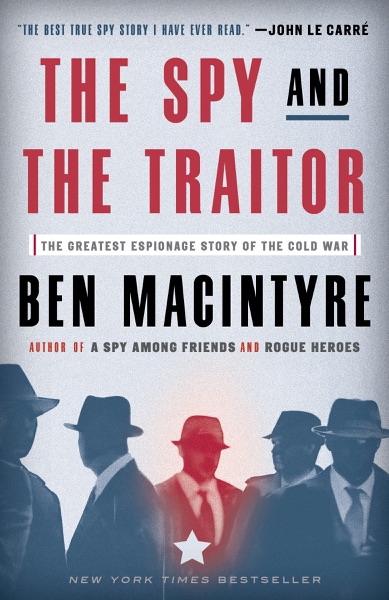
The Spy and the Traitor: The Greatest Espionage Story of the Cold War
Ben Macintyre
