The Confidence Game: Why We Fall for It Every Time by Maria Konnikova is a 2016 psychology book about deception, trust, persuasion. Con artists exploit the social instincts that make civilization possible, not specific stupidity or greed. The same trust mechanisms that allow cooperation enable fraud.
Summary
Maria Konnikova has a PhD in psychology and writes about it for a wide audience. The Confidence Game is her study of confidence fraud — the con — and what it reveals about the fundamental vulnerabilities of human psychology. The book is part true crime, part social psychology, and part argument: that the con artist exploits not stupidity or greed but the basic social instincts that make cooperative civilization possible.
Konnikova organizes the book around the stages of a con: the put-up (selecting a mark), the play (establishing rapport and trust), the convincer (giving the mark a taste of success), the blow-off (keeping the mark quiet after the con). Each stage exploits specific psychological tendencies. The put-up works because people trust too fast based on superficial cues — appearance, warmth, apparent social proof. The play exploits the human need to believe that we have been seen and understood; con artists are skilled at the illusion of deep understanding. The convincer exploits loss aversion and commitment — once you have invested, you are committed to the story.
The social psychology running through the book draws on Milgram, Cialdini, and the literature on trust, persuasion, and motivated reasoning. Konnikova argues that intelligence and education are not reliable protections against a skilled con. The targets of confidence fraud include scientists, judges, lawyers, and executives alongside more expected marks. What makes someone vulnerable is not stupidity but a specific configuration of desire, trust, and need that a skilled con artist can identify and exploit.
The book ends by examining why people often resist reporting fraud or acknowledging they have been conned. Self-blame, embarrassment, and sunk cost all operate, and the emotional aftermath of a successful con often includes a kind of grief for the relationship that the con constructed. Konnikova treats her subjects with genuine empathy. The Confidence Game is one of the better popular treatments of how trust works — and fails — under pressure.
Talk to The Confidence Game: Why We Fall for It Every Time like its author wrote you back.
Get the ideas that fit your life — not generic summaries.
- Chat with the book
- Audiobook-style main ideas
- Adapts to your life and goals
- Helps you take action
Key takeaways
- 1.
Con artists exploit the social instincts that make civilization possible, not specific stupidity or greed. The same trust mechanisms that allow cooperation enable fraud.
- 2.
The stages of a con — selecting the mark, building rapport, the convincer, the blow-off — each exploit specific and well-documented psychological tendencies.
- 3.
Intelligence and education are not reliable protections against a skilled con. What matters is vulnerability at a specific moment: desire, need, and the story the mark needs to believe.
- 4.
Trust is established rapidly through superficial cues — appearance, warmth, shared identity, apparent competence. These heuristics are usually efficient and sometimes catastrophically wrong.
- 5.
The convincer exploits commitment and sunk cost. Once a mark has invested, they are psychologically committed to the story and more resistant to disconfirming evidence.
- 6.
Self-serving credulity means people are more willing to accept a story that confirms what they want to be true. The best con is one where the mark believes they are getting one over on someone else.
- 7.
Recovery from being conned involves not just financial loss but grief for a relationship and identity that turned out to be fraudulent. The emotional aftermath is often more damaging than the material loss.
Discussion questions
Use these on your own, with a book club, or as chat starters in Superbook. Book club version, ready to copy or print →
- 1.
Konnikova argues that the targets of con artists are not specifically stupid or greedy. What does that suggest about your own vulnerability to sophisticated deception?
- 2.
The con exploits the same mechanisms that make trust and cooperation possible. Is there a cost to becoming more protective of trust, and what would that cost be?
- 3.
She describes the rapid trust formation that con artists exploit. What cues do you use to establish trust quickly, and which of them could be faked most easily?
- 4.
The convincer works partly through sunk cost — once you have invested, you are committed. Can you think of a belief or relationship in your life where sunk cost is maintaining a commitment that evidence no longer supports?
- 5.
Con artists are often described as exceptionally empathetic and skilled at understanding what people need to hear. What is the relationship between empathy and manipulation?
- 6.
Konnikova shows that many victims blame themselves and do not report fraud. What would reduce this barrier, and who has the incentive to build those structures?
- 7.
She argues that intelligence and education offer less protection than we assume. Which protective factors are actually reliable, if any?
- 8.
The book describes the grief of discovering a long-term con — grief for a relationship that turned out to be entirely constructed. How does that compare to grief for genuine relationships that end?
- 9.
Many con artists end up as repeat offenders and are compelled to keep running cons even when they no longer need the money. What is the psychology behind that compulsion?
- 10.
The best cons, Konnikova argues, work because the mark believes they are the one getting away with something. Where does that dynamic appear in fraud, politics, or ordinary social life?
- 11.
After reading this book, what change in your own behavior or practices, if any, do you think would actually reduce your vulnerability to sophisticated deception?
Themes
Frequently asked questions
-
Is this a true crime book?
Partly. Konnikova tells the stories of real cons and real victims in detail. But the structure is psychological rather than true crime — she uses the cases to illuminate mechanisms rather than to narrate events for their own sake.
-
What makes someone a mark?
Konnikova argues it is not stupidity or greed but a specific configuration of desire, need, and trust. Anyone can be a mark in the right circumstances. The key is having something you want badly enough that you are willing to overlook warning signs.
-
What is the most common con Konnikova describes?
The romantic con — building a false relationship and exploiting the victim's emotional investment — is among the most damaging and most under-reported. It exploits the most fundamental social need and produces the deepest shame.
-
How has the internet changed confidence fraud?
Dramatically. Digital communication allows access to many more potential marks, permits more sophisticated research on individuals, and enables international operations that are difficult to prosecute. The psychological mechanisms are the same; the scale and speed have changed.
-
Can you recognize when you are being conned?
Unlikely, in the moment. Konnikova's argument is that skilled con artists remove the usual warning signs while activating our trust mechanisms. The best protection is structural — verification of claims, advice from trusted outsiders, pause before any irreversible commitment.
Similar books
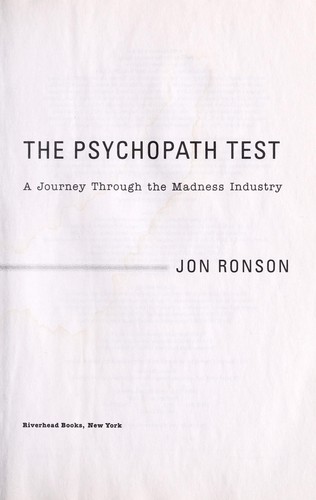
The Psychopath Test
Jon Ronson
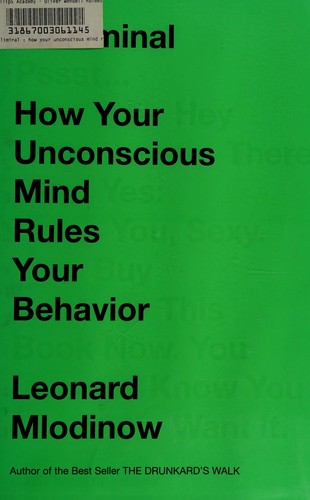
Subliminal: How Your Unconscious Mind Rules Your Behavior
Leonard Mlodinow
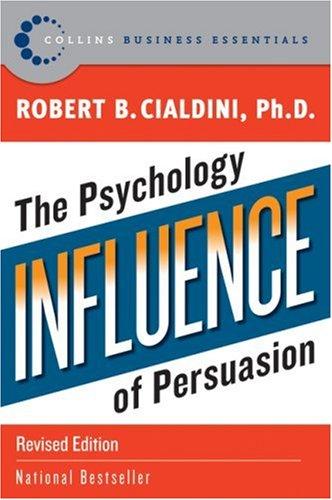
Influence: The Psychology of Persuasion
Robert B. Cialdini
Pre-Suasion: A Revolutionary Way to Influence and Persuade
Robert B. Cialdini
