Fiasco: The American Military Adventure in Iraq by Thomas E. Ricks is a 2006 history book about iraq war, military strategy, political decision-making. The decision to invade Iraq was made without serious planning for the post-Saddam political vacuum. Senior leadership assumed the situation would manage itself.
Summary
Thomas Ricks was the Pentagon correspondent for the Washington Post when he wrote Fiasco, and the book reflects years of direct access to the military officials, planners, and soldiers involved in the Iraq War. Published in 2006, while the war was still ongoing, it was immediately controversial: its central argument is that the Iraq invasion and occupation were not merely unfortunate but the product of specific, identifiable failures of planning, strategy, and leadership that could have been avoided.
Ricks traces the disaster from its roots in the neoconservative ambition to remake the Middle East, through the intelligence manipulations that built the case for invasion, to the occupation decisions that transformed a military victory into a political catastrophe. He argues that the decision to invade was made with minimal serious analysis of what would follow — that senior military and civilian leadership simply assumed the post-Saddam political vacuum would fill itself. The disbanding of the Iraqi army by L. Paul Bremer in May 2003, against the advice of most military commanders on the ground, appears in the book as a defining moment: it created a large, armed, unemployed population with every reason to join an insurgency.
The book's second half covers the early occupation and the emergence of the insurgency in exhaustive detail. Ricks draws on after-action reports, military documents, and extensive interviews to show a pattern of tactical competence combined with strategic incoherence. American units that performed their immediate missions well — clearing a town, killing insurgent cells — often left behind conditions that regenerated opposition. The failure to understand the political dynamics of Iraqi society, particularly the sectarian tensions between Sunni and Shia, was systematic rather than accidental.
Ricks takes care to distinguish between the institution of the Army and specific leaders who failed it. Some commanders understood the situation clearly and adapted; others did not. The book identifies both. For anyone trying to understand how the most powerful military in history managed to bog itself down in a protracted insurgency it had neither planned for nor understood, Fiasco remains the essential account.
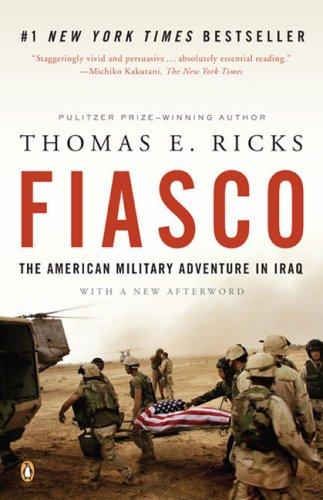
Talk to Fiasco: The American Military Adventure in Iraq like its author wrote you back.
Get the ideas that fit your life — not generic summaries.
- Chat with the book
- Audiobook-style main ideas
- Adapts to your life and goals
- Helps you take action
Key takeaways
- 1.
The decision to invade Iraq was made without serious planning for the post-Saddam political vacuum. Senior leadership assumed the situation would manage itself.
- 2.
Disbanding the Iraqi army in May 2003 was the single most consequential occupation decision. It created hundreds of thousands of armed, unemployed men with grievances and organizational experience.
- 3.
The intelligence used to build the public case for invasion was shaped to support a predetermined conclusion. The dissents within the intelligence community were suppressed rather than adjudicated.
- 4.
American military units repeatedly succeeded tactically — clearing areas, killing insurgent leaders — while failing strategically, because their operations generated political costs that outweighed the tactical gains.
- 5.
The failure to understand Iraqi society's sectarian structure meant American forces repeatedly took sides in local power struggles they did not recognize as such, generating new enemies with each intervention.
- 6.
A significant fraction of the Army officer corps understood the strategic situation more clearly than civilian leadership and were systematically ignored or marginalized when they raised concerns.
- 7.
By 2005-2006, some commanders were developing counterinsurgency approaches that showed results, but the institutional military had spent years suppressing the doctrine and training that would have made those approaches available earlier.
- 8.
The Iraq War generated a generation of combat-experienced junior officers who developed adaptive approaches to counterinsurgency largely outside the official doctrine, and whose influence shaped subsequent American military thinking.
Discussion questions
Use these on your own, with a book club, or as chat starters in Superbook. Book club version, ready to copy or print →
- 1.
Ricks argues the invasion was the product of specific, avoidable decisions rather than bad luck. Which decision does he identify as most consequential, and do you find that argument persuasive?
- 2.
The Army officers who understood the strategic situation most clearly were often marginalized. What institutional incentives produce that pattern in large organizations?
- 3.
Ricks draws a distinction between tactical competence and strategic incoherence. Can an institution be genuinely good at one while failing at the other?
- 4.
The disbanding of the Iraqi army is presented as a turning point. What information was available at the time that should have prevented that decision?
- 5.
How does the book's portrait of civilian leadership — particularly Rumsfeld and Bremer — compare to how those figures have characterized their own decisions?
- 6.
Ricks was embedded with American forces and had extensive access to military officials. How does that access shape what he can and cannot see in the story?
- 7.
The book was published in 2006, while the war was ongoing. How does writing contemporary history while events are still unfolding differ from writing retrospectively?
- 8.
Ricks identifies specific commanders who performed well and others who did not. What differentiates the two groups in his account?
- 9.
The intelligence manipulation before the invasion involved many people who knew the evidence was being distorted. What explains the silence of those individuals?
- 10.
The book's title is a judgment, not a description. Do you think the word 'fiasco' is accurate, or does it oversimplify a more complicated outcome?
- 11.
What lessons from Fiasco are applicable to institutional failures in non-military contexts — corporations, governments, nonprofits?
- 12.
Ricks followed Fiasco with The Gamble, covering the surge. How does knowing the subsequent history change how you read the ending of this book?
Themes
Frequently asked questions
-
Is Fiasco worth reading?
Yes, for anyone trying to understand how the Iraq War unfolded and why it went so badly. Ricks had unparalleled access to military officials and documents, and the book is rigorously sourced. It remains one of the most credible and detailed accounts of institutional failure under conditions of extreme stakes.
-
How long is Fiasco?
Around 480 pages of text plus notes. Expect nine to eleven hours at average pace. The middle sections on the early occupation are densely detailed; the chapters on specific commanders and units are more narrative.
-
What does Ricks mean by 'fiasco'?
He means that the gap between the stated objectives of the invasion and what was actually achieved was so large, and so clearly the product of avoidable errors, that 'mistake' or 'miscalculation' understates the case. The word implies preventable catastrophe rather than hard luck.
-
Is the book fair to the military?
Ricks is consistently respectful of the institution and of individual soldiers while being scathing about specific leadership decisions. He distinguishes between the Army that went to Iraq and the senior civilian and military leaders who sent it there without a coherent plan.
-
Does the book cover the surge?
No. Fiasco ends roughly in 2006 as the surge is being debated. Ricks covered the surge in his follow-up book, The Gamble, published in 2009. The two books are best read together.
Similar books
The Looming Tower: Al-Qaeda and the Road to 9/11
Lawrence Wright
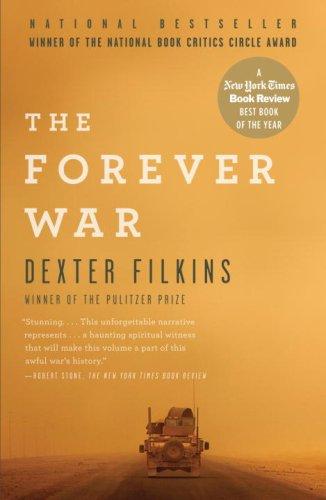
The Forever War
Dexter Filkins
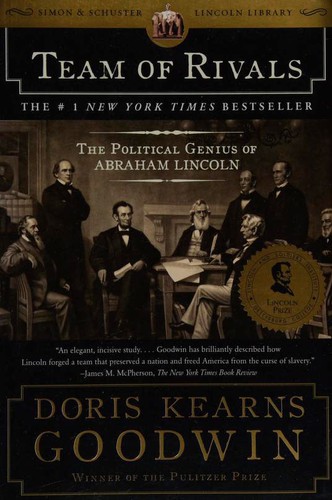
Team of Rivals: The Political Genius of Abraham Lincoln
Doris Kearns Goodwin
Sapiens: A Brief History of Humankind
Yuval Noah Harari
