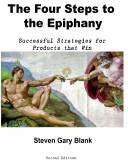
The Four Steps to the Epiphany by Steve Blank is a 2005 business book about customer development, startups, product-market fit. Most startups fail not because they can't build the product but because they build the wrong product. Customer development exists to catch that mistake early.
Summary
Steve Blank wrote The Four Steps to the Epiphany after watching hundreds of startups fail the same way: they built products based on untested assumptions, then discovered too late that no one wanted them. His answer is customer development, a parallel process to product development that forces founders to treat their business model as a hypothesis and their early customers as a source of data rather than a revenue stream.
The four steps are customer discovery, customer validation, customer creation, and company building. The first two are about finding a repeatable and scalable business model. Customer discovery means getting out of the building — literally — to understand whether the problem the startup is solving is real and painful enough to pay for. Customer validation tests whether a sales process can be constructed around whatever the founders learned. Together these two steps define whether a startup has found product-market fit. Customer creation and company building come after, not before.
Blank's core argument against the conventional startup playbook is that the product development model — requirements, design, code, test, release — works fine for known markets where customers, problems, and competitors are understood. Most startups don't have that. They're searching for a business model, not executing a known one. Applying the wrong process to the wrong stage is the primary reason startups run out of money before finding fit.
The book is dense and prescriptive, written more as a manual than a narrative. It was published in 2005 before the lean startup movement it would inspire, and some of the language and frameworks have since been refined by Blank himself and by Eric Ries. But the foundational insight — that startups need a process for learning, not just building — remains the most important idea in the entrepreneurship literature of the last twenty years.
Talk to The Four Steps to the Epiphany like its author wrote you back.
Get the ideas that fit your life — not generic summaries.
- Chat with the book
- Audiobook-style main ideas
- Adapts to your life and goals
- Helps you take action
Key takeaways
- 1.
Most startups fail not because they can't build the product but because they build the wrong product. Customer development exists to catch that mistake early.
- 2.
A startup is not a small version of a big company. It's a temporary organization searching for a repeatable and scalable business model.
- 3.
Get out of the building. Founders' assumptions about customers are almost always wrong. The only way to test them is to talk to real people before building.
- 4.
Customer discovery and customer validation must happen before customer creation. Spending on sales and marketing before finding fit burns money on a process that doesn't yet work.
- 5.
Pivots are not failures. Discovering that an assumption is wrong and changing direction based on evidence is the customer development process working correctly.
- 6.
Earlyvangelists — customers who have the problem, know they have it, and are willing to pay to solve it — are the only people worth selling to in the early stage.
- 7.
The business model is the hypothesis. The market is the lab. Every decision before product-market fit is an experiment, not a plan.
- 8.
Company building, the fourth step, should not begin until the startup has a validated, repeatable sales process. Scaling a broken model just accelerates the failure.
Discussion questions
Use these on your own, with a book club, or as chat starters in Superbook. Book club version, ready to copy or print →
- 1.
Blank says most founders never leave the building to test their assumptions. What assumptions about your customers or market have you been treating as facts?
- 2.
The customer development model treats the business plan as a hypothesis. How comfortable are you with that frame, and where does it create friction with how your organization works?
- 3.
What would your earlyvangelists look like — the people who have the problem, know they have it, and would pay today even for an imperfect solution?
- 4.
Blank distinguishes between a startup searching for a business model and a company executing one. At what stage is the organization you're part of, and is the management approach matched to that stage?
- 5.
Which of the four steps — discovery, validation, creation, or building — does your company rush through or skip entirely? What's the cost?
- 6.
How do you currently distinguish between a pivot (a structured change based on learning) and a random change based on anxiety or investor pressure?
- 7.
Blank argues you should not hire a VP of Sales until you have a validated sales process. What organizational decisions have you made too early, before the underlying process was proven?
- 8.
How do you know when you've achieved customer validation? What does 'repeatable and scalable' look like as a concrete signal rather than a feeling?
- 9.
What would change in how you run your next planning cycle if you treated every item in the product roadmap as a hypothesis to be tested rather than a feature to be built?
- 10.
Blank wrote this before the lean startup movement. Which ideas have aged well and which have been superseded by what you now know?
- 11.
The book is process-heavy. What's the minimum viable version of customer development that would be useful in your specific context?
- 12.
If you had to spend the next 30 days doing nothing but customer discovery, what would you learn that you don't know now?
Themes
Frequently asked questions
-
What is The Four Steps to the Epiphany about?
It introduces the customer development methodology: a systematic process for testing startup assumptions by talking to customers before building, with the goal of finding a repeatable business model before scaling. Blank argues most startups fail because they skip this step.
-
Is The Four Steps to the Epiphany still relevant?
Yes, especially as a foundational text. Some language and tools have been updated in The Startup Owner's Manual and by the lean startup movement, but the core insight — that startups are searching for a model, not executing one — remains the most important framing in early-stage entrepreneurship.
-
How does this book relate to The Lean Startup?
This book directly inspired it. Eric Ries worked for Steve Blank and built the lean startup methodology on top of customer development. Reading both shows the lineage: Blank provides the framework, Ries adds the build-measure-learn loop and popularizes it for a broader audience.
-
Who should read The Four Steps to the Epiphany?
First-time founders, product managers, and investors who want to understand why startups fail to find product-market fit. It's most valuable before starting a company or at the earliest stages. Operators at growth-stage companies will find the later chapters on company building more relevant.
-
How long is The Four Steps to the Epiphany?
Around six hours at average reading pace. It reads as a manual more than a business narrative, so the second half benefits from slow reading and applying each framework to your specific context.
Similar books
Zero to One: Notes on Startups, or How to Build the Future
Peter Thiel
Traction: Get a Grip on Your Business
Gino Wickman

Blitzscaling: The Lightning-Fast Path to Building Massively Valuable Companies
Reid Hoffman and Chris Yeh
Competing Against Luck
Clayton M. Christensen
