Good Reasons for Bad Feelings: Insights from the Frontier of Evolutionary Psychiatry by Randolph M. Nesse is a 2019 psychology book about evolutionary psychology, mental health, emotions. Most negative emotions — anxiety, sadness, jealousy, guilt — are adaptations shaped by natural selection, not design flaws or pathologies by default.
Summary
Randolph Nesse spent forty years as a psychiatrist and evolutionary biologist asking a question most of his colleagues found strange: why did natural selection leave us so vulnerable to anxiety, depression, and other forms of suffering? His answer, built over decades of clinical practice and research, is that most negative emotions aren't design flaws. They're adaptations that evolved because they solved problems in ancestral environments, and understanding that shift changes how clinicians and patients should think about treatment.
The book's central argument is the smoke detector principle. A smoke detector set to minimize false alarms would let your house burn down. One set to minimize false positives would go off whenever you make toast. The brain's threat-detection system is calibrated like the latter: false alarms are cheap, missed threats can be fatal. So anxiety, fear, and vigilance get expressed at levels that look like overreaction in ordinary modern life, because they were calibrated for an environment where danger was immediate and costly. What looks like a disorder may be a highly tuned system responding exactly as designed.
Nesse extends this framework through grief, low mood, jealousy, guilt, and even some cases of psychosis. Each chapter asks what selection pressure would have favored this trait, what it's trying to signal or solve, and when it tips into genuine malfunction. His answer to the central clinical question — when is a negative emotion a disorder requiring treatment rather than a normal response requiring understanding? — turns out to be subtle and uncomfortable. Treatment that simply suppresses the signal without addressing what's causing it may not serve the patient's real interests.
The book is aimed at clinicians as much as general readers. Nesse argues that mainstream psychiatry lacks a theoretical foundation comparable to the germ theory of infectious disease or the cell biology of cancer. Evolutionary biology could provide that foundation. Whether or not you accept every piece of the argument, the framework forces harder thinking about what it means for an emotion to be disordered, and why so many people in modern wealthy societies suffer despite having everything their ancestors could have wanted.

Talk to Good Reasons for Bad Feelings: Insights from the Frontier of Evolutionary Psychiatry like its author wrote you back.
Get the ideas that fit your life — not generic summaries.
- Chat with the book
- Audiobook-style main ideas
- Adapts to your life and goals
- Helps you take action
Key takeaways
- 1.
Most negative emotions — anxiety, sadness, jealousy, guilt — are adaptations shaped by natural selection, not design flaws or pathologies by default.
- 2.
The smoke detector principle: the brain is calibrated to produce many false alarms (unnecessary anxiety) to avoid the catastrophic cost of a missed real threat.
- 3.
Low mood often functions as a signal that a situation isn't working and a prompt to disengage from an unachievable goal. Treating it as pure malfunction may short-circuit useful information.
- 4.
Grief's intensity is proportional to the value of the lost attachment. A grief-free organism would form fewer bonds, and fewer bonds reduce fitness.
- 5.
Psychiatry currently lacks a foundational theory of why mental disorders exist at all. Evolutionary biology could provide one, the way germ theory did for infectious disease.
- 6.
The question 'when does normal anxiety become an anxiety disorder?' is harder than it looks. Nesse argues that treating every excess emotion medically risks eliminating useful signals.
- 7.
Social competition and rank anxiety are probably the primary drivers of much human suffering in modern societies — problems no pill can fix.
- 8.
Evolutionary medicine reframes the clinical goal: not to eliminate negative emotion but to identify when the signal is appropriate and when the system has genuinely malfunctioned.
Discussion questions
Use these on your own, with a book club, or as chat starters in Superbook. Book club version, ready to copy or print →
- 1.
Nesse argues that anxiety is often a useful signal rather than a malfunction. Has there been a time in your life when anxiety turned out to be accurate rather than excessive?
- 2.
The smoke detector principle says false alarms are the price of not missing real threats. Does that framing change how you think about your own anxious tendencies?
- 3.
Nesse suggests that low mood can be a signal to disengage from a blocked goal. Can you identify a time when persisting versus disengaging was genuinely ambiguous?
- 4.
If grief's intensity tracks the value of the lost attachment, does that change how you think about its appropriate duration or depth?
- 5.
Nesse criticizes psychiatry for treating symptoms without a theory of why those symptoms exist. Does that critique seem fair to you from your own experience with the healthcare system?
- 6.
Social rank anxiety is presented as a major driver of modern suffering. Does that ring true in your own life, and what would it look like to address the cause rather than the symptom?
- 7.
The book distinguishes useful negative emotions from true disorders requiring treatment. Where would you draw that line, and does it feel like a judgment call or a clear distinction?
- 8.
Nesse argues that emotions are information. Which negative emotion in your life are you most likely to suppress rather than listen to?
- 9.
Modern life is often materially comfortable but psychologically difficult. What does the evolutionary framework suggest about why that might be?
- 10.
How does framing mental illness through an evolutionary lens change your attitude toward people you know who are struggling with anxiety or depression?
- 11.
Nesse says clinicians need a better theoretical foundation for psychiatry. What foundations do you think currently fill that gap for most practitioners?
- 12.
If natural selection can't eliminate suffering because suffering is sometimes adaptive, what are the implications for how we should organize healthcare around mental illness?
Themes
Frequently asked questions
-
What is Good Reasons for Bad Feelings about?
It applies evolutionary biology to psychiatry, arguing that negative emotions like anxiety, depression, and grief are mostly adaptations shaped by natural selection rather than defects. Nesse asks why these states exist at all and what conditions transform a useful emotional response into a disorder requiring treatment.
-
Is Good Reasons for Bad Feelings worth reading?
Yes, especially if you've ever felt that standard psychiatric explanations of mental suffering are incomplete. Nesse's framework doesn't replace clinical treatment but adds a layer of understanding that most self-help and popular psychology books skip entirely. It's rigorous without being inaccessible.
-
Who should read this book?
Clinicians, therapists, and anyone interested in why mental suffering is so common despite material prosperity. It's also valuable for people who have experienced anxiety or depression and want a richer framework than 'your brain chemistry is off.'
-
How long does it take to read?
Around six hours at average pace. The chapters are organized by emotion type, so readers can skip to the states most relevant to them, though the cumulative argument benefits from reading the book in order.
-
What is the smoke detector principle?
Nesse's term for why the brain produces so many false alarms. A system calibrated to minimize false positives (unnecessary fear) would miss real threats at catastrophic cost. So the brain errs on the side of over-alerting, producing anxiety that often looks like overreaction in normal modern life.
Similar books
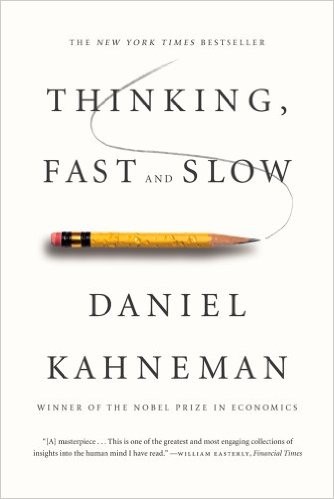
Thinking, Fast and Slow
Daniel Kahneman
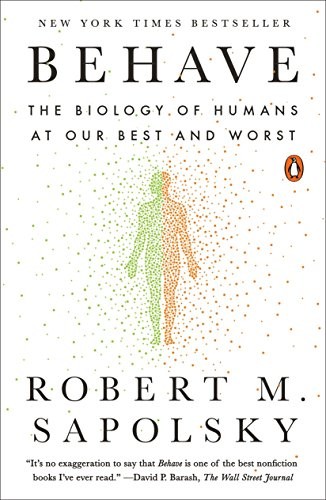
Behave: The Biology of Humans at Our Best and Worst
Robert M. Sapolsky
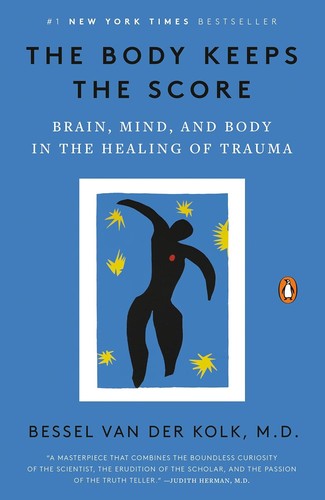
The Body Keeps the Score
Bessel van der Kolk
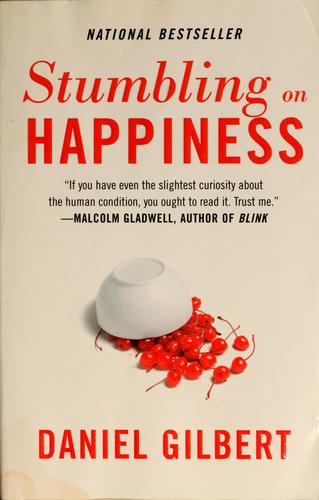
Stumbling on Happiness
Daniel Gilbert
