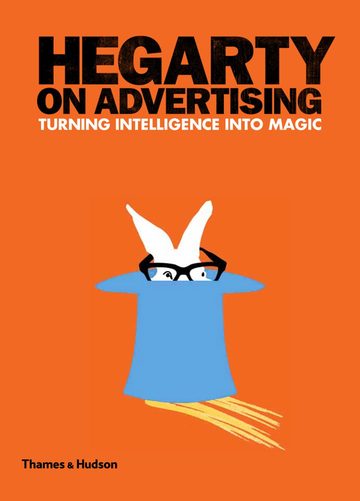
Hegarty on Advertising: Turning Intelligence into Magic by John Hegarty is a 2011 business book about advertising, creativity, brand building. Advertising's job is to create desire, and desire is created by ideas. Targeting and measurement are amplifiers, not replacements for compelling creative work.
Summary
John Hegarty co-founded Bartle Bogle Hegarty in 1982 and spent four decades creating advertising that, at its best, genuinely shifted how people thought about brands. Hegarty on Advertising is his account of how that work happens — not a how-to manual but a set of principles and convictions organized around the idea that great advertising requires genuine creative thinking, not process optimization.
The book's central argument is that advertising's job is to create desire, and that desire is created by ideas, not by data. Hegarty is skeptical — sometimes militantly so — of the tendency in contemporary marketing to treat targeting and measurement as substitutes for compelling communication. His position is that knowing exactly who to show something to is worth nothing if what you're showing them is forgettable. The intelligence in the subtitle is real: he respects research, strategy, and insight. But the magic — the idea that makes someone feel something — is what actually does the work.
Hegarty structures the book loosely around craft, clients, and culture. On craft, he is specific about what makes visual and verbal ideas land: the tension between familiar and unexpected, the role of simplicity, the difference between cleverness and clarity. He discusses the Levi's "Laundrette" ad, the Audi "Vorsprung durch Technik" campaign, and other BbH work in a way that illuminates the thinking behind them rather than simply celebrating the results. On clients, he is honest about the adversarial dimension of creative relationships — the brief that asks for everything and commits to nothing, the client who approves the mediocre version and kills the brave one.
The book is personal and opinionated in a way that may frustrate readers looking for a systematic framework. Hegarty is describing how he thinks, not constructing a universal theory. Some of his opinions on digital advertising and social media feel like generational preferences more than principled analysis. But on the core question of what makes creative work matter — how an idea moves from competent to resonant — the book is unusually direct and worth reading for anyone who makes things intended to be seen by other people.
Talk to Hegarty on Advertising: Turning Intelligence into Magic like its author wrote you back.
Get the ideas that fit your life — not generic summaries.
- Chat with the book
- Audiobook-style main ideas
- Adapts to your life and goals
- Helps you take action
Key takeaways
- 1.
Advertising's job is to create desire, and desire is created by ideas. Targeting and measurement are amplifiers, not replacements for compelling creative work.
- 2.
The best creative ideas operate at the intersection of the familiar and the unexpected. Pure novelty confuses; pure familiarity bores. The tension between them creates engagement.
- 3.
Simplicity is not the same as being simple-minded. Reducing an idea to its essential form requires more intelligence, not less.
- 4.
The brief is where most campaigns fail. A vague brief produces average work because average work can satisfy any brief. Clarity about what you're trying to do is the first creative act.
- 5.
Clients who kill brave work in favor of safe work are not protecting their brand — they're ensuring it stays invisible. The mediocre is expensive because it produces nothing.
- 6.
Brand consistency over time is more valuable than any single campaign. Hegarty's long-running campaigns for Audi and Levi's accumulated meaning that no single execution could have built.
- 7.
Hegarty distinguishes between being interesting and being noticed. Being noticed is easy — a loud noise, a controversy. Being interesting means someone actually wants to spend time with what you've made.
Discussion questions
Use these on your own, with a book club, or as chat starters in Superbook. Book club version, ready to copy or print →
- 1.
Hegarty argues that data and targeting are amplifiers, not substitutes for creative ideas. Where do you see this argument playing out in current digital advertising?
- 2.
He says the best ads operate at the intersection of familiar and unexpected. Can you think of advertising — or any creative work — that has struck you that way recently?
- 3.
Hegarty is openly skeptical of social media as a brand-building medium. Is that skepticism well-founded, or is it a generational preference he's dressing up as principle?
- 4.
The brief is where most campaigns fail, he argues. What does a genuinely useful brief look like, and why is writing one so hard?
- 5.
Hegarty talks about clients who kill good work. If you've been on either side of a creative approval process, how accurate is his account of what happens?
- 6.
He argues that consistency over time is one of the most valuable things a brand can build. What brands do you think model this well, and what makes them different from brands that don't?
- 7.
The book is built around Hegarty's personal experience and convictions rather than a systematic framework. Does that make it more or less useful than a more structured account would be?
- 8.
He distinguishes between being noticed and being interesting. What's an example from your own experience of each, and why does the distinction matter?
- 9.
Hegarty spent his career in television and print advertising. How much of his creative framework transfers to formats he wasn't making work in — apps, branded content, TikTok?
- 10.
The book's subtitle is 'Turning Intelligence into Magic.' What does he mean by magic, and is it a useful concept or a way of mystifying craft?
- 11.
If you were building a brand from scratch with a small budget, what would you take from this book as practical guidance?
Themes
Frequently asked questions
-
Is Hegarty on Advertising worth reading for non-advertisers?
Yes, if you make anything intended to communicate with an audience. The book's arguments about simplicity, the relationship between intelligence and creative intuition, and what makes ideas resonate apply well beyond traditional advertising.
-
What is the main argument of Hegarty on Advertising?
That great advertising requires genuine creative thinking — ideas that create desire — and that no amount of targeting, data, or measurement substitutes for an idea that actually moves people. Craft and intelligence are necessary but not sufficient; the idea is the thing.
-
How does this book compare to other advertising classics?
It's closer in spirit to David Ogilvy's Confessions of an Advertising Man — personal, opinionated, built on cases — than to more analytical treatments like Byron Sharp's How Brands Grow. Hegarty and Ogilvy share a conviction that craft matters, though they sometimes disagree on specifics.
-
Is the book dated?
On digital and social media, somewhat. Hegarty's skepticism of platforms as brand-building environments reflects views formed before those platforms became dominant. On the core creative principles — simplicity, tension, consistency — the arguments are still sharp.
-
Who is this book for?
Creative directors, brand managers, marketing strategists, and anyone who hires, bribes, or manages creative people. Also useful for anyone curious about how famous campaigns were actually thought about, not just the polished retrospective narrative.