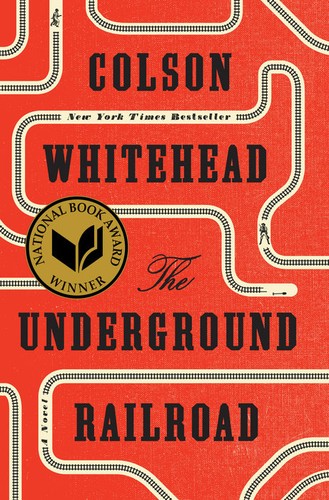
The Underground Railroad by Colson Whitehead is a 2016 historical fiction book about slavery and its legacy, freedom and its cost, american myth and american reality. Making the Underground Railroad literal transforms a metaphor into a physical infrastructure of freedom — Whitehead uses this to ask what the actual conditions of Black freedom in America have ever looked like.
Summary
The Underground Railroad takes a central metaphor of American history — the network of safe houses and abolitionists that helped enslaved people flee north — and makes it literal: Colson Whitehead imagines the railroad as an actual underground train system, with tunnels, platforms, and conductors. The novel follows Cora, enslaved on a Georgia cotton plantation, as she escapes on this railroad and moves through a series of American states that each represent a different facet of the country's relationship to race, freedom, and violence.
The novel is not a historical novel in the conventional sense. Each state Cora passes through is a kind of alternate-history tableau: South Carolina has a progressive surface veneer concealing medical experimentation on Black bodies; North Carolina has abolished slavery by eliminating Black people entirely; Indiana allows a Black community to exist precariously while white resentment builds. Whitehead is mapping American history across Cora's journey — the shifting forms that white supremacy takes, the inadequacy of liberal reform, the persistence of the catcher Ridgeway who pursues her throughout.
The prose is controlled and precise in a way that makes the horror more rather than less effective. Whitehead doesn't flinch from the brutality of slavery, but he also doesn't wallow. He trusts the subject's weight and focuses on Cora — her decisions, her interior life, her accumulating knowledge of what America actually is and what it costs to survive in it. Ridgeway, the slave catcher, is the novel's most interesting secondary figure: a true believer in the American spirit as he defines it, which is to say a man who has made a coherent ideology out of cruelty.
This is a novel that demands engagement with American history while refusing to be simply a historical document. It won the Pulitzer Prize in 2017 and the National Book Award in 2016. Readers who want comforting arcs will struggle; readers who want a novel that takes American mythology seriously and dismantles it carefully will find this essential. The magical realism element is relatively restrained — it's a premise, not an atmosphere — so readers nervous about the genre have less to fear than the description implies.
Talk to The Underground Railroad like its author wrote you back.
Get the ideas that fit your life — not generic summaries.
- Chat with the book
- Audiobook-style main ideas
- Adapts to your life and goals
- Helps you take action
Key takeaways
- 1.
Making the Underground Railroad literal transforms a metaphor into a physical infrastructure of freedom — Whitehead uses this to ask what the actual conditions of Black freedom in America have ever looked like.
- 2.
Each state in the novel represents a different American historical strategy for managing Blackness: overt violence, liberal reform concealing exploitation, extermination, conditional tolerance. None of them offers actual freedom.
- 3.
Ridgeway embodies the American spirit as Whitehead defines it — a true believer who has made ideological peace with cruelty, which makes him more dangerous than a merely self-interested villain.
- 4.
Cora's grandmother, mother, and Cora herself represent three generations of response to slavery: endurance, attempted escape, and something more complex. The generational structure is deliberate.
- 5.
The novel refuses both tragedy and triumph as its register. Cora survives, but the novel doesn't let survival mean victory or resolution.
- 6.
Whitehead is interested in white liberal complicity as much as in overt white supremacy — the most insidious states are the ones that think they are helping.
- 7.
The alternate-history structure lets Whitehead compress multiple historical eras into a single journey, mapping Reconstruction, the eugenics era, and contemporary race politics onto the antebellum South.
- 8.
The final image of the novel is deliberately ambiguous about what direction Cora is traveling. The openness is not evasion; it is an honest statement about what freedom has ever meant in America.
Discussion questions
Use these on your own, with a book club, or as chat starters in Superbook. Book club version, ready to copy or print →
- 1.
Whitehead makes the Underground Railroad literal. Does this choice clarify or distort our understanding of the actual historical network? What does the literalization allow him to do that realism couldn't?
- 2.
Each state represents a different American approach to race. Which of them felt most contemporary to you? Which one did you find most disturbing, and why?
- 3.
Ridgeway argues that he embodies the American spirit. Does the novel agree with him? Is he wrong, or is he just honest about something the novel suggests is true?
- 4.
Cora's mother Mabel escaped alone, leaving her daughter behind. How does the novel want us to judge that choice? How do you judge it?
- 5.
The South Carolina section depicts a kind of liberal progressivism that conceals something much worse. Is Whitehead suggesting that reform is always a cover, or something more nuanced?
- 6.
Caesar is the person who first persuades Cora to escape. What does his fate mean for the novel's argument about solidarity and individual survival?
- 7.
The novel won the Pulitzer and National Book Award. Does that institutional recognition change how you read it, or how you think it will age?
- 8.
Compare The Underground Railroad to Toni Morrison's Beloved (if you've read it). Both deal with slavery and its trauma. What different claims do they make? Which feels more essential to you?
- 9.
Freedom in the novel is always conditional and always precarious. Is there any moment in the novel where Cora is actually free? What would freedom even mean in her world?
- 10.
The alternate history means some readers approach this as a kind of dystopian fiction. Does that frame help or hurt? Is the novel more useful as history, as fantasy, or as something else?
- 11.
Whitehead's prose is restrained and controlled throughout. Do you think a more emotionally heightened style would have been more or less effective for this material?
- 12.
The ending is ambiguous. What do you think happens to Cora? Does the novel's argument require an open ending, or is it a cop-out?
Themes
Frequently asked questions
-
Is The Underground Railroad worth reading?
Yes. It is one of the most important American novels of the past decade — not because it is important in a dutiful way, but because it is formally inventive and emotionally devastating in ways that make it unforgettable. The Pulitzer was deserved.
-
Is the magical realism in the novel off-putting if I don't usually like that genre?
The literal underground railroad is established early as a premise and then mostly treated as a fact rather than a persistent magical element. The novel is realistic in feel; the alternate-history aspect is more like speculative fiction than magical realism. Readers who bounced off One Hundred Years of Solitude should be fine here.
-
Is there an adaptation?
Yes. Barry Jenkins directed a ten-episode Amazon Prime series in 2021. It received strong reviews and is considered one of the more faithful and artistically serious adaptations of recent literary fiction.
-
How does The Underground Railroad compare to The Nickel Boys?
The Underground Railroad is broader in scope and more formally ambitious. The Nickel Boys is tighter, less overtly stylized, and possibly more emotionally direct. Both won the Pulitzer. Readers who find the alternate-history conceit distancing sometimes prefer The Nickel Boys.
-
Who shouldn't read this novel?
Readers who cannot engage with depictions of slavery's violence — the novel is not gratuitous but it is honest. Also readers who need narrative resolution — the ending is deliberately open and will frustrate those expecting a triumphant conclusion.
Similar books
Twelve Years a Slave
Solomon Northup
Between the World and Me
Ta-Nehisi Coates
The Warmth of Other Suns
Isabel Wilkerson
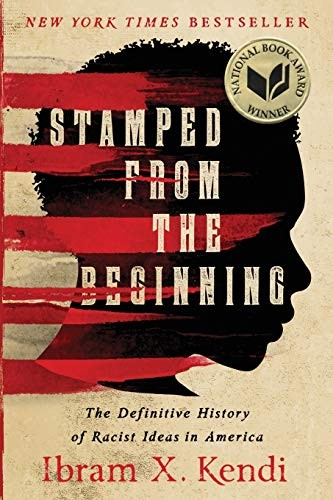
Stamped from the Beginning: The Definitive History of Racist Ideas in America
Ibram X. Kendi
