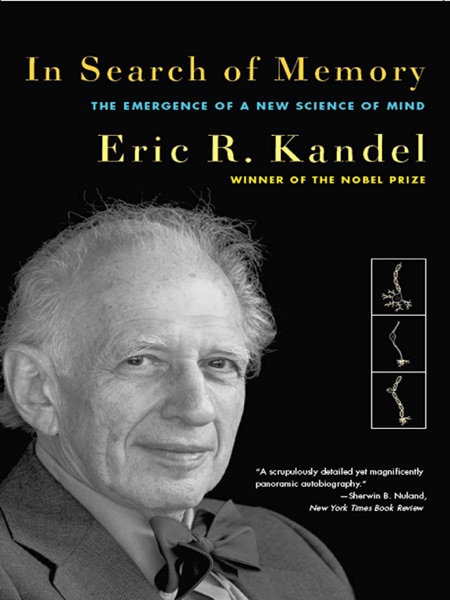
In Search of Memory by Eric R. Kandel is a 2006 memoir book about memory and neuroscience, scientific discovery, identity and history. Long-term memory requires gene expression and the growth of new synaptic connections, not just changes in synaptic strength. This distinction between short- and long-term memory has profound biological implications.
Summary
In Search of Memory is Eric Kandel's autobiography interleaved with the history of neuroscience, organized around his own central scientific achievement: the cellular and molecular mechanisms of memory storage in the sea slug Aplysia. Kandel won the Nobel Prize in Physiology or Medicine in 2000 for this work. The book is his account of how he came to the question of memory, what the science showed, and what it means for our understanding of who we are.
The autobiography begins in Vienna, where Kandel was born into a Jewish family in 1929 and from which his family escaped just before World War II. The experience of Kristallnacht — being expelled from their apartment by a Nazi neighbor while he watched, at the age of nine — became for Kandel a defining puzzle: how could ordinary people become perpetrators of such violence? The question drove an early interest in psychology and psychoanalysis, which he pursued at Harvard before concluding that the reductionist tools of biology offered more tractable paths to understanding the mind.
The scientific chapters trace the logic of Kandel's research program. He chose Aplysia — a sea slug with large, identifiable neurons — precisely because it was simple enough to work with and because the mechanisms of learning and memory in simpler organisms, he bet, would illuminate the same mechanisms in more complex ones. The bet paid off: Kandel's work showed that short-term memory involves changes in synaptic strength, while long-term memory requires gene expression and the growth of new synaptic connections. Memory is biology, not metaphysics.
What makes the book unusual is the integration of the personal and the scientific. The opening story about Vienna is not incidental — it sets up a lifelong inquiry into how experience shapes who we become, and how the brain's capacity to be modified by experience (what neuroscientists call synaptic plasticity) is the physical substrate of that shaping. Kandel returns repeatedly to the question of what the biology of memory means for psychoanalytic concepts, for identity, and for the nature of the self. The book is both a scientific primer and a genuinely moving account of a life shaped by displacement, curiosity, and the good fortune of having found exactly the right question at exactly the right time.
Talk to In Search of Memory like its author wrote you back.
Get the ideas that fit your life — not generic summaries.
- Chat with the book
- Audiobook-style main ideas
- Adapts to your life and goals
- Helps you take action
Key takeaways
- 1.
Long-term memory requires gene expression and the growth of new synaptic connections, not just changes in synaptic strength. This distinction between short- and long-term memory has profound biological implications.
- 2.
Kandel's choice to work on Aplysia — a simple organism with large, identifiable neurons — exemplifies the reductionist strategy: find the simplest system in which a phenomenon occurs.
- 3.
Synaptic plasticity — the ability of synaptic connections to strengthen or weaken based on activity — is the physical basis of learning and memory in all animals studied so far.
- 4.
Memory is not a filing cabinet. Retrieval is reconstructive: what we remember is partly what actually happened and partly what we've remembered before.
- 5.
The brain is continuously shaped by experience throughout life, not just in early development. This has direct implications for how we think about education, therapy, and aging.
- 6.
Kandel's early interest in psychoanalysis never fully left him. His mature view is that psychotherapy works, in part, by producing structural changes in the brain analogous to those caused by drug treatment.
- 7.
The question of how the same neurons that encode memory also encode identity — how biology becomes self — is one Kandel raises explicitly and does not fully resolve, which is part of the book's honesty.
- 8.
Scientific careers are shaped by historical contingencies: the teachers you find, the organisms you choose, the questions that are tractable at the moment you arrive in a field.
Discussion questions
Use these on your own, with a book club, or as chat starters in Superbook. Book club version, ready to copy or print →
- 1.
Kandel connects his scientific interest in memory to the traumatic experience of Kristallnacht. How much of any scientific career do you think is traceable to specific biographical questions?
- 2.
The choice to work on Aplysia rather than mammals was a strategic bet. What bets in your own field — or life — have you made based on tractability rather than direct relevance?
- 3.
Kandel argues that psychotherapy and drug therapy both work by changing the brain, and that the distinction between psychological and biological treatment is therefore partly artificial. Does that argument hold for you?
- 4.
What does it mean for identity that long-term memory requires physical changes — new synaptic connections — each time it is formed or retrieved?
- 5.
Memory is reconstructive rather than archival. Does that change how you think about the reliability of your own memories, or about the reliability of witness testimony?
- 6.
Kandel worked on the same organism for most of his career. What is gained by that kind of sustained focus, and what is lost?
- 7.
The Vienna chapters raise questions about how ordinary people become perpetrators. Kandel never fully answers the question. Does the neuroscience he developed elsewhere illuminate it?
- 8.
The Nobel comes late — Kandel was seventy when he received it in 2000. What does the timeline of scientific recognition suggest about how science values different kinds of work?
- 9.
Kandel describes the reductionist program in neuroscience. What questions about memory and mind does that program seem structurally unable to answer?
- 10.
The book is both autobiography and scientific exposition. Does the personal narrative make the science more accessible, or does it sometimes feel like separate books in the same cover?
- 11.
If memory is the biological substrate of identity, what does Alzheimer's disease represent at the level of personhood, not just cognition?
- 12.
Kandel ended up at a major American research university after fleeing Europe as a refugee. What does his story suggest about the role of geographic and institutional luck in scientific achievement?
Themes
Frequently asked questions
-
What is In Search of Memory about?
It's Eric Kandel's memoir combined with an account of the neuroscience of memory — specifically, his decades of work on how memories are stored at the cellular and molecular level, which earned him the 2000 Nobel Prize. The book weaves his personal history as a Jewish refugee from Vienna with the intellectual history of neuroscience.
-
How much science does the book require to follow?
Less than you might expect. Kandel is an unusually clear explainer, and the scientific sections build from basics. No prior biology background is required, though some familiarity with basic neuroscience helps. The personal sections are straightforwardly readable by anyone.
-
How long is In Search of Memory?
About 510 pages — roughly ten hours of reading. The book is long but the alternation between autobiography and science keeps it moving.
-
Is this a book for scientists or general readers?
Both. General readers will find the memoir compelling and the science clearly explained. Scientists in adjacent fields will find the intellectual history of neuroscience unusually well-told by someone at the center of it.
-
What is the most important thing Kandel discovered about memory?
That long-term memory requires gene expression and the growth of new synaptic connections — the brain physically changes when memories are formed. Short-term memory involves changes in synaptic strength that don't require new protein synthesis. This distinction helps explain why disrupting protein synthesis blocks long-term memory but not immediate recall.
Similar books
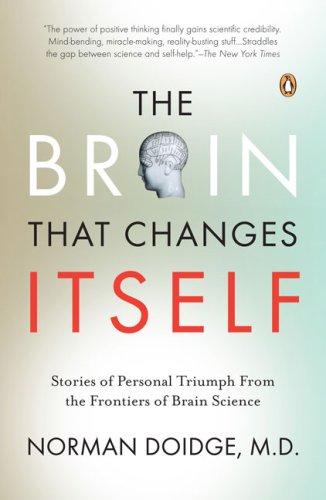
The Brain That Changes Itself
Norman Doidge

Seven and a Half Lessons About the Brain
Lisa Feldman Barrett
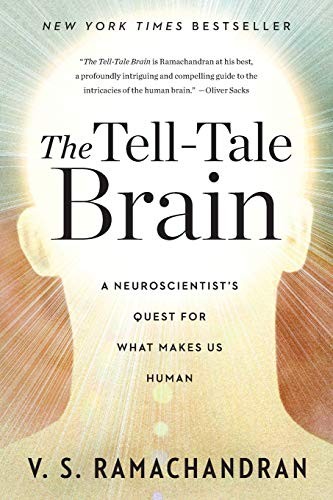
The Tell-Tale Brain: A Neuroscientist's Quest for What Makes Us Human
V. S. Ramachandran
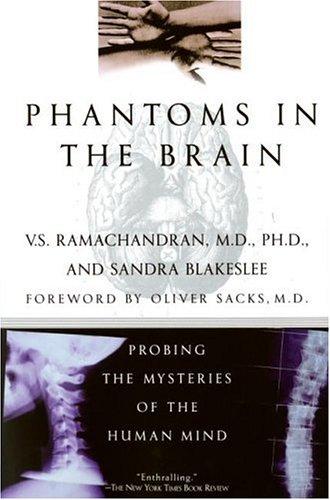
Phantoms in the Brain: Probing the Mysteries of the Human Mind
V. S. Ramachandran and Sandra Blakeslee
