Religion & Spirituality · Book club
Insight Meditation: The Practice of Freedom book club questions
Here are 11 book club questions for Insight Meditation: The Practice of Freedom by Joseph Goldstein, ordered to open easily and end somewhere worth arguing about. Copy them, print them, or bring them up one at a time.
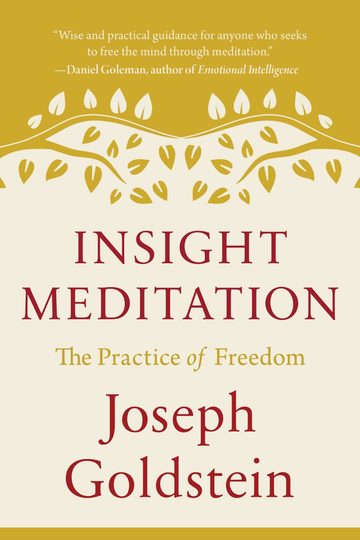
Insight Meditation: The Practice of Freedom is Joseph Goldstein's distillation of vipassana — the Theravada Buddhist practice of direct investigation into the nature of mind and experience.
Joseph Goldstein · 1993 · 3h 45m
Full summary and key takeaways →The 11 questions
- 1.
Goldstein says insight meditation is not about relaxation but about clear seeing. Before reading this book, what did you think meditation was for? How has that understanding shifted?
- 2.
The practice involves observing thoughts and emotions as passing events rather than facts about the world. Have you ever experienced a moment of stepping back from a strong emotion in this way? What produced it?
- 3.
The three characteristics — impermanence, unsatisfactoriness, and non-self — are meant to be discovered in practice, not believed as doctrines. Does that distinction make them more or less compelling to you?
- 4.
Goldstein is careful not to over-promise what meditation delivers. What aspects of his description of freedom — reduced reactivity, less grip of craving and aversion — do you find genuinely appealing, and which feel remote?
- 5.
The sense of a fixed self is offered as an object of investigation rather than a premise. What would it actually mean to your daily experience if you took that seriously?
- 6.
Lovingkindness practice involves directing a felt wish for wellbeing toward people you find difficult. Is that a practice you can imagine committing to? What stops it?
- 7.
Goldstein says the book is a map, not the territory. What's the difference between understanding a practice intellectually and actually doing it? Where else in your life does that distinction show up?
- 8.
Vipassana practice asks practitioners to face experience directly rather than avoid it. What experiences do you most habitually avoid noticing, and what do you think you'd find if you turned toward them?
- 9.
The tradition Goldstein teaches comes from Theravada Buddhism. Does the religious framing affect how you receive the practice? Is it necessary to have any belief in Buddhist doctrine to do this kind of meditation?
- 10.
The book was written before the current mainstream mindfulness movement. How does what Goldstein describes compare to the mindfulness apps and programs most people encounter today?
- 11.
If you practice meditation, what is your current relationship to the three characteristics Goldstein describes? If you don't, what would it take to establish a serious practice?
How to run the discussion
- Pick six to eight, not all of them. An hour of real discussion covers fewer questions than anyone expects, and racing the list is what makes a book club feel like homework.
- Open with what people noticed, not what they concluded. Asking for a verdict first hardens opinions before anyone has heard each other.
- Let the disagreement run. The questions below that split a room are the ones worth the time; the ones everyone answers the same way can be skipped.
- Ask the quiet person a specific question. A direct, narrow question is far easier to answer than an open invitation to contribute.
Themes worth steering toward
If the conversation stalls, these are the threads that usually restart it.
Common questions
What are good book club questions for Insight Meditation: The Practice of Freedom?
Here are 11 book club questions for Insight Meditation: The Practice of Freedom by Joseph Goldstein, ordered to open easily and end somewhere worth arguing about. The strongest openers ask what each reader noticed rather than what they concluded, and the discussion usually turns on meditation, mindfulness, buddhist practice.
How long should a book club discussion of Insight Meditation: The Practice of Freedom last?
Most groups run 60 to 90 minutes of actual discussion. That is roughly six to eight questions, not all of them, so pick the ones that suit your group rather than working down the list in order.
What are the main themes in Insight Meditation: The Practice of Freedom?
Meditation, Mindfulness, Buddhist practice, Liberation, Attention. Those are the threads most likely to divide a room, which makes them the useful places to steer a discussion that has gone quiet.
Picking the next one? See books like Insight Meditation: The Practice of Freedom or questions for other book club picks.
