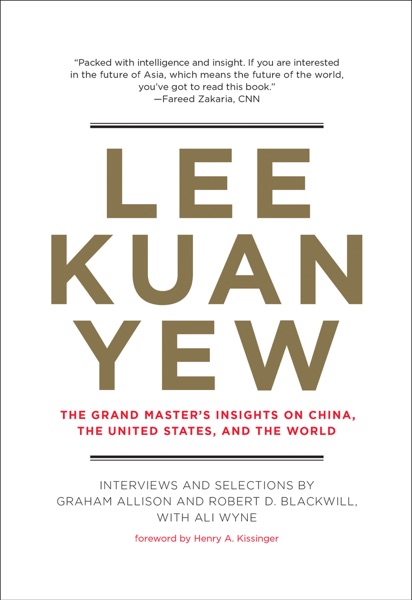
Lee Kuan Yew: The Grand Master's Insights by Graham Allison et al. is a 2012 politics book about geopolitics, leadership, asian development. China's rise is structural and will reshape the global order. Lee viewed it as the most significant geopolitical shift of the twenty-first century, comparable to the emergence of the United States as a great power.
Summary
Lee Kuan Yew: The Grand Master's Insights compiles the views of Singapore's founding prime minister on the major strategic questions of the early twenty-first century. The book's editors — Graham Allison and Robert Blackwill of Harvard's Belfer Center, with Ali Wyne — organized Lee's statements and interviews around eight questions: the future of China, the United States, relations between the two powers, India, Islamic extremism, geopolitics, democracy and governance, and Lee's own leadership philosophy.
Lee's voice is the book's main draw. He was widely considered one of the most clear-eyed strategic analysts of his era — a leader who had taken a resource-poor island from third world to first world in a single generation and who had observed the full sweep of Cold War and post-Cold War geopolitics from a vantage point that few Western leaders matched. His assessments are blunt: China's rise is real and will reshape the international order, but the Chinese Communist Party's need for legitimacy through economic performance is a structural constraint on how it exercises power. America's decline relative to Asia is real but not terminal, provided Washington maintains the institutional and educational foundations that enable innovation.
On governance, Lee is unapologetic about Singapore's model: political stability, meritocracy, rule of law, and economic openness were the foundations, not liberal democracy in the Western sense. He is dismissive of the idea that any single model of governance applies universally, and skeptical that Western democracies can consistently produce the kind of long-term thinking that effective statecraft requires.
This is not a biography or an argument built around evidence — it's a curated collection of views. Readers looking for a traditional analytical work will find the format thin. The value is in Lee's directness: he says things that few officials in the Western world would say on the record, and that bluntness is itself a lens through which to examine assumptions about how the world works.
Talk to Lee Kuan Yew: The Grand Master's Insights like its author wrote you back.
Get the ideas that fit your life — not generic summaries.
- Chat with the book
- Audiobook-style main ideas
- Adapts to your life and goals
- Helps you take action
Key takeaways
- 1.
China's rise is structural and will reshape the global order. Lee viewed it as the most significant geopolitical shift of the twenty-first century, comparable to the emergence of the United States as a great power.
- 2.
The Chinese Communist Party's legitimacy depends on continued economic growth. This creates a genuine constraint on Chinese adventurism — leaders who destabilize the economy undermine their own position.
- 3.
America remains formidable because of its institutions, universities, and culture of innovation — but its political dysfunction and inability to execute long-term strategy are real vulnerabilities.
- 4.
Lee was skeptical that Western liberal democracy is a universal model. He believed governance must be adapted to each society's history, culture, and stage of development.
- 5.
Meritocracy in governance — selecting leaders on ability rather than popularity — was central to Singapore's success and Lee's own model. He considered it non-negotiable.
- 6.
India's diversity and democracy make it slower and messier than China, but also more resilient. Lee expected India to eventually grow significantly but at a much lower rate than optimistic projections assumed.
- 7.
Islamic extremism is a long-term civilizational conflict, not a problem that can be addressed primarily through military force. Lee emphasized the need to protect moderate Muslim majorities from radicalization.
- 8.
Great leadership requires the willingness to make unpopular decisions and to maintain positions under pressure. Lee was openly dismissive of leaders who governed by poll.
Discussion questions
Use these on your own, with a book club, or as chat starters in Superbook. Book club version, ready to copy or print →
- 1.
Lee's predictions about China were largely made before Xi Jinping consolidated power and before the trade war era. How have events since 2012 validated or undermined his assessments?
- 2.
Lee argues that liberal democracy is not universally applicable. What is your response to that claim — is it an honest observation about institutional context, or an apology for authoritarianism?
- 3.
Singapore's model is sometimes described as 'soft authoritarianism' — high rule of law and economic freedom combined with constraints on political opposition. Is that a coherent long-term model?
- 4.
Lee's view of America is both admiring and critical — he respects its foundations and doubts its current execution. What would he make of the United States in 2026?
- 5.
The book argues India will grow but more slowly than optimistic projections suggest. How do you assess that prediction given what has happened since the book was published?
- 6.
Lee valued meritocracy over popularity in governance. What are the best arguments for and against this position?
- 7.
The book's format — curated quotations around strategic questions — means you're reading Lee's views without seeing the interviewer's challenges or the context. Does that limit its usefulness?
- 8.
Lee built Singapore into a prosperous city-state with a population roughly the size of a large Western city. How much of his framework scales to larger, more diverse polities?
- 9.
What single observation from Lee do you most agree with? What observation do you most resist?
- 10.
Lee was a contemporary of figures like Deng Xiaoping, Mahathir Mohamad, and Henry Kissinger. What does comparing those careers reveal about the conditions that produced effective statecraft in the post-war era?
- 11.
The book covers Islamic extremism, democracy, and US-China competition — topics that have all evolved significantly since 2012. Which of Lee's views has aged best?
Themes
Frequently asked questions
-
What is this book about?
It presents Singapore's founding prime minister Lee Kuan Yew's views on eight strategic questions: China, the United States, US-China relations, India, Islamic extremism, geopolitics, democracy, and his own leadership philosophy. It's organized as curated quotations with editorial context.
-
Is the book still relevant given how much has changed since 2012?
Largely yes. Lee's structural arguments about China's rise, American institutional strengths and weaknesses, and governance generally have held up better than most Western analysts' predictions from the same period. Specific predictions vary.
-
Is this a biography of Lee Kuan Yew?
No. It's a strategic reader organized around policy questions. For a fuller account of Lee's life and Singapore's development, his own memoir Hard Truths to Keep Singapore Going is the primary source.
-
Who should read this book?
People interested in Asian geopolitics, US-China relations, and comparative governance. It's short enough to read in a few sittings and valuable as a direct introduction to Lee's analytical framework, which influenced policymakers and strategists across the world.
-
What is the book's biggest weakness?
The format means Lee's views are presented without challenge or counterargument. The editors add context but don't push back. Readers who want to evaluate rather than absorb Lee's positions need to supply their own critical resistance.
Similar books
On Tyranny: Twenty Lessons from the Twentieth Century
Timothy Snyder
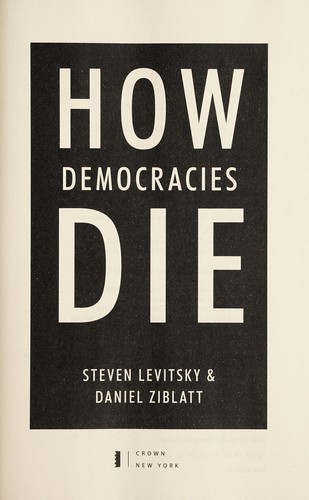
How Democracies Die
Steven Levitsky and Daniel Ziblatt
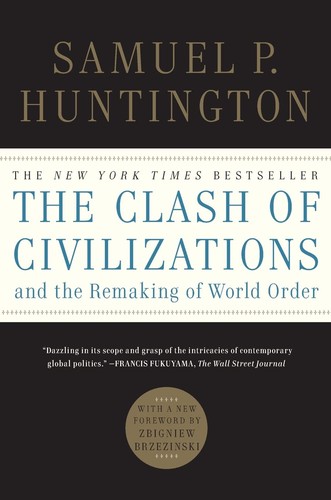
The Clash of Civilizations and the Remaking of World Order
Samuel P. Huntington
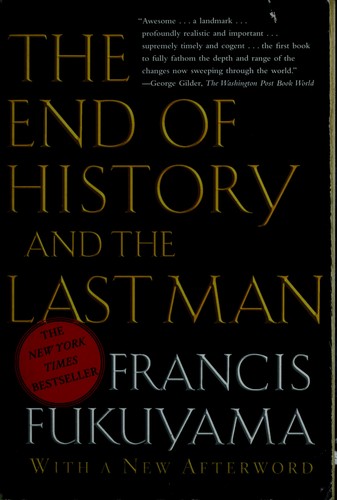
The End of History and the Last Man
Francis Fukuyama
