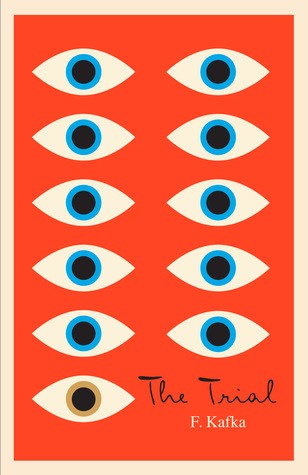
The Castle by Franz Kafka is a 1926 literary fiction book about bureaucratic obstruction, belonging and exclusion, authority and legitimacy. The Castle is always visible but never reachable. Kafka turned geographical proximity without access into an emblem of bureaucratic authority — you can see the institution, but you cannot engage it directly.
Summary
K. arrives in a village in winter, claiming to be the land surveyor summoned by the Castle administration. Nobody in the village can confirm this. The Castle, visible on a hill above, is never reachable. Every attempt to make contact — by phone, by letter, by messenger, by personal appeal — produces more paperwork, more deferral, more contradictory information. K. spends the entire novel trying to establish his right to be there. The novel ends mid-sentence, unfinished, because Kafka died before completing it.
The Castle takes The Trial's bureaucratic nightmare and widens it into something more existential. K. doesn't just want to clear his name — he wants to belong. He wants legitimate status in a community where the authorities are remote and inscrutable and where even the villagers can't quite explain the rules they live by. This makes The Castle less a legal horror story than a novel about longing for recognition from a source that may not acknowledge you exists.
Kafka's style is at its most hypnotic here. Conversations spiral into sub-clauses and qualifications. Characters give explanations that are exhaustive and meaningless at once. The Castle administration produces enormous amounts of paperwork while accomplishing nothing. The effect is that you feel the texture of obstruction — not as something imposed by villains but as the natural atmosphere of the place. Kafka was writing about what organizational culture does to people when authority becomes its own justification.
The Castle is the longest and least plotted of Kafka's novels, and it demands patience. Readers who loved The Trial's forward momentum will find this one more static. But it's also the more emotionally complicated of the two — K. is more self-aware, the relationships more sustained, and the ending (such as it is) more ambiguous about whether any of this was worth attempting. Max Brod reportedly told Kafka that K. would have, near the end, been permitted a kind of grace. The incomplete novel holds that possibility open.
Talk to The Castle like its author wrote you back.
Get the ideas that fit your life — not generic summaries.
- Chat with the book
- Audiobook-style main ideas
- Adapts to your life and goals
- Helps you take action
Key takeaways
- 1.
The Castle is always visible but never reachable. Kafka turned geographical proximity without access into an emblem of bureaucratic authority — you can see the institution, but you cannot engage it directly.
- 2.
Legitimacy in the village depends entirely on Castle recognition, and Castle recognition is never granted clearly. This circular logic traps every character, not just K.
- 3.
K.'s persistence is ambiguous: it reads as admirable, delusional, and occasionally manipulative all at once. He is not a purely sympathetic hero.
- 4.
Klamm, the Castle official K. most wants to reach, is described differently by every character. He may be a fiction the village needs more than a person anyone actually knows.
- 5.
The two assistants the Castle sends K. — useless, childlike, inescapable — are one of Kafka's funniest and most disturbing inventions: bureaucratic appendages that serve no function except to be present.
- 6.
Frieda, K.'s love interest, trades proximity to Klamm for proximity to K. The novel treats this as a genuine loss, not a liberation — belonging has its own costs.
- 7.
The landlady's extended monologue about Klamm and propriety is the clearest portrait of how people internalize and defend an authority that may not care about them at all.
- 8.
Kafka left the manuscript unfinished. The ending-in-progress — K. worn down, the Castle no closer — may be more honest than any conclusion he could have written.
Discussion questions
Use these on your own, with a book club, or as chat starters in Superbook. Book club version, ready to copy or print →
- 1.
K. claims to be a land surveyor summoned by the Castle. Does the novel ever confirm or deny this? Does it matter whether he's telling the truth?
- 2.
The villagers accept Castle authority completely, even when it makes their lives worse. Is this deference presented as weakness, wisdom, or just the way things are?
- 3.
Klamm is described as looking completely different by different characters. Is he a real official, a collective projection, or something else the novel wants you to think about?
- 4.
K. pursues Frieda partly as a strategy to get closer to the Castle. Is their relationship ever more than that? Does the novel let it become something else?
- 5.
The two assistants K. is assigned are absurd and inescapable. What function do they serve in the novel beyond comic relief?
- 6.
The landlady's lectures about propriety and the rules of the village take up large stretches of the novel. Is she villainous, reasonable, or just accurately describing how things work?
- 7.
K. makes very little progress in 300+ pages. At what point did you stop expecting him to succeed, and how did that shift your reading of what the novel is about?
- 8.
Brod claimed Kafka told him K. would eventually receive a kind of grace near death. Does that change how you read the unfinished novel? Should it?
- 9.
Compared to The Trial, where Josef K. is swept along by events, K. in The Castle is more active and initiating. Does that make him more or less sympathetic?
- 10.
The Castle is set in an unnamed village in winter. How much does the physical setting — the cold, the mud, the snow — contribute to the emotional atmosphere?
- 11.
Is there a version of this novel's situation that maps onto something you've experienced — an institution, a community, an authority that couldn't or wouldn't acknowledge your standing?
- 12.
The Castle is unfinished. Does that feel like a flaw, or does it feel right for this particular story?
Themes
Frequently asked questions
-
Is The Castle finished?
No. Kafka left it incomplete and asked Max Brod to destroy all his manuscripts. Brod published it in 1926, two years after Kafka's death, with a note explaining that Kafka had described to him how it would end — with K. receiving a kind of conditional permission to stay in the village near death.
-
Is The Castle harder to read than The Trial?
Most readers find it more demanding. It's longer, slower, and less plot-driven. The conversations are long and winding, the progress is almost nonexistent, and the emotional payoff is more diffuse. If The Trial is a sprint into a nightmare, The Castle is a long winter walk that never reaches the destination.
-
What is The Castle about, without spoilers?
A man arrives in a village claiming to be a land surveyor summoned by the authorities in a castle on the hill. He spends the entire novel trying to gain official recognition of his status and access to the Castle — and fails, over and over, through escalating layers of bureaucracy and obstruction.
-
Why is The Castle considered a classic?
Because Kafka rendered the experience of seeking legitimacy from an indifferent institution with a precision no one has matched. The novel captures something about modern alienation, bureaucratic authority, and the longing to belong that still feels contemporary a century later.
-
Who shouldn't read The Castle?
Anyone who needs a plot to stay engaged. The novel covers a few weeks and almost nothing externally changes. If you require narrative momentum, resolved questions, or a completed ending, this is not the book for you.