Psychology · Book club
Made to Stick: Why Some Ideas Survive and Others Die book club questions
Here are 12 book club questions for Made to Stick: Why Some Ideas Survive and Others Die by Chip Heath and Dan Heath, ordered to open easily and end somewhere worth arguing about. Copy them, print them, or bring them up one at a time.
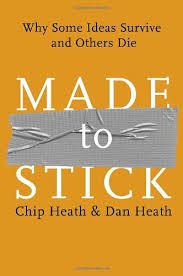
Made to Stick is Chip and Dan Heath's investigation into why some ideas take hold in people's minds and spread while others, equally true and well-reasoned, vanish the moment the conversation ends.
Chip Heath and Dan Heath · 2007 · 5h 15m
Full summary and key takeaways →The 12 questions
- 1.
Think of a message you need to communicate regularly at work or home. Where does the Curse of Knowledge most affect how you deliver it?
- 2.
The Heaths argue that simplicity doesn't mean dumbing down — it means finding the core. What's the core of an idea you're currently struggling to communicate clearly?
- 3.
The unexpected principle says you need to open a knowledge gap before you can close it. When was the last time you were genuinely curious about something because you didn't know how it ended?
- 4.
Concrete beats abstract in nearly every persuasion context. Can you translate an abstract goal or argument you currently use into a specific, sensory example?
- 5.
The identifiable victim effect — one person's story generating more response than statistics about thousands — is uncomfortable to apply deliberately. Is using it manipulation or just good communication?
- 6.
Stories act as mental flight simulators. What kind of story would allow the people you're trying to reach to rehearse a decision or change you're asking of them?
- 7.
Which of the six principles do you use most naturally? Which do you most consistently fail to apply?
- 8.
The book describes a teacher who dramatized racial discrimination to make it stick. Would that experiment be possible in the environment you work or teach in today? Why or why not?
- 9.
Urban legends stick because they hit multiple SUCCES principles at once despite being false. Does that suggest anything uncomfortable about the relationship between stickiness and truth?
- 10.
The military's Commander's Intent principle produces simple, durable guidance that survives contact with reality. What's the equivalent in your organization or project?
- 11.
The Heaths argue that most people with expertise communicate at the wrong level. Think of an expert communicator you admire. What do they do that compensates for the Curse of Knowledge?
- 12.
Made to Stick was published in 2007. Which principles feel more relevant now than they did then? Which feel more challenged by how people actually consume information today?
How to run the discussion
- Pick six to eight, not all of them. An hour of real discussion covers fewer questions than anyone expects, and racing the list is what makes a book club feel like homework.
- Open with what people noticed, not what they concluded. Asking for a verdict first hardens opinions before anyone has heard each other.
- Let the disagreement run. The questions below that split a room are the ones worth the time; the ones everyone answers the same way can be skipped.
- Ask the quiet person a specific question. A direct, narrow question is far easier to answer than an open invitation to contribute.
Themes worth steering toward
If the conversation stalls, these are the threads that usually restart it.
Common questions
What are good book club questions for Made to Stick: Why Some Ideas Survive and Others Die?
Here are 12 book club questions for Made to Stick: Why Some Ideas Survive and Others Die by Chip Heath and Dan Heath, ordered to open easily and end somewhere worth arguing about. The strongest openers ask what each reader noticed rather than what they concluded, and the discussion usually turns on communication, persuasion, storytelling.
How long should a book club discussion of Made to Stick: Why Some Ideas Survive and Others Die last?
Most groups run 60 to 90 minutes of actual discussion. That is roughly six to eight questions, not all of them, so pick the ones that suit your group rather than working down the list in order.
What are the main themes in Made to Stick: Why Some Ideas Survive and Others Die?
Communication, Persuasion, Storytelling, Memory, Simplicity. Those are the threads most likely to divide a room, which makes them the useful places to steer a discussion that has gone quiet.
Picking the next one? See books like Made to Stick: Why Some Ideas Survive and Others Die or questions for other book club picks.
