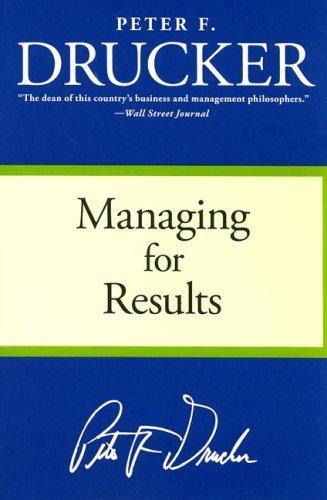
Managing for Results by Peter F. Drucker is a 1964 business book about strategy, resource allocation, opportunity. Results come from exploiting opportunity, not from solving problems. Time and resources spent on problems only restore the status quo.
Summary
Managing for Results was Peter Drucker's first explicitly strategic book, published in 1964 and still in print. Where The Effective Executive is about personal effectiveness and The Practice of Management is about organizational structure, this book is about the economic logic of a business — how to understand what a company actually does, where its results actually come from, and what that implies for where attention and resources should go.
Drucker's starting premise is unsettling: in most businesses, the majority of activities, products, and customers do not contribute to results. They consume resources while the returns cluster in a small number of profitable areas. The first part of the book asks management to map this reality honestly. What are the genuine revenue producers? Where is the cost concentrated? Which customers generate real profit rather than mere revenue? Most managers, Drucker argues, cannot answer these questions clearly because they haven't looked.
The second part turns to opportunity. Drucker distinguishes three types: building on strength, exploiting an existing trend, and innovation. He is particularly insistent that strength — not product lines, not sunk cost, not executive pride — should guide resource allocation. The resources that make a difference are always scarce. Spreading them across everything means concentrating them on nothing.
The third part addresses strategy: how to assess the business's position, how to ask "what business are we actually in," and how to make choices about where to compete given realistic views of what the company does well. The language is sometimes abstract and the examples occasionally dated, but the underlying logic runs cleanly. The book works best as a diagnostic tool — a set of hard questions to put to a business rather than a template to impose on one.
Talk to Managing for Results like its author wrote you back.
Get the ideas that fit your life — not generic summaries.
- Chat with the book
- Audiobook-style main ideas
- Adapts to your life and goals
- Helps you take action
Key takeaways
- 1.
Results come from exploiting opportunity, not from solving problems. Time and resources spent on problems only restore the status quo.
- 2.
Revenue is not profit. Most businesses would find, if they looked carefully, that a small fraction of products and customers produces virtually all the real economic return.
- 3.
Strength, not effort, determines results. Resources should concentrate on the areas where the business already has a genuine advantage.
- 4.
Every business is eventually overtaken by change. The question is not whether the economic foundation will shift but when and how to respond.
- 5.
The most dangerous allocation mistake is spreading resources evenly — it creates the illusion of balance while actually concentrating nothing and achieving nothing well.
- 6.
Knowing what business you are in requires ruthless clarity about who your customer is, what that customer values, and why they buy from you rather than someone else.
- 7.
Sunk cost and executive attachment are the main enemies of honest resource reallocation. Profitable abandonment is a management skill as important as growth.
- 8.
Opportunity analysis should come before problem analysis. Most management teams invert this priority and spend most of their time on symptoms rather than on potential.
Discussion questions
Use these on your own, with a book club, or as chat starters in Superbook. Book club version, ready to copy or print →
- 1.
Drucker argues that most businesses get the bulk of their economic results from a small fraction of their activities. Is that true in your organization, and does management know which fraction it is?
- 2.
He distinguishes between revenue-producing products and profit-producing products. How clearly does your company track this distinction?
- 3.
What would change in your organization if resource allocation decisions were based purely on genuine strength rather than historical precedent or political weight?
- 4.
Drucker says profitable abandonment is a core management skill. What product, service, or activity in your organization would benefit from being abandoned, and what prevents it?
- 5.
He argues you should ask 'what business are we actually in' repeatedly over time rather than once at founding. How has the honest answer to that question changed in your industry recently?
- 6.
What's an area in your company where effort is high but results are consistently low? Is that because the opportunity is weak or because the approach is wrong?
- 7.
Drucker wrote this in 1964. Which of his frameworks for analyzing a business's economic structure still apply directly, and where does the digital economy make them break down?
- 8.
He is skeptical of spreading resources to maintain balance. Where in your organization does the urge toward balance undermine performance?
- 9.
What's a genuine strength in your business or career that is currently underinvested relative to weaker areas that get more attention?
- 10.
Drucker argues that solving a problem restores the status quo at best. Exploiting an opportunity creates something new. How does your organization's meeting calendar reflect this priority?
- 11.
What external change — demographic, technological, or regulatory — is already underway in your industry that your organization is not yet allocating resources to address?
- 12.
If you mapped your customers by profitability rather than revenue, which customers would look very different? What would you do with that information?
Themes
Frequently asked questions
-
What is Managing for Results about?
It's Drucker's analysis of how businesses should diagnose where their economic results actually come from, then allocate resources accordingly — concentrating on genuine strengths and profitable opportunities rather than spreading effort across everything.
-
Is Managing for Results still worth reading?
Yes. The frameworks for identifying where results actually originate and the argument for ruthless resource concentration remain as practically relevant as when the book was written. Some case studies are dated, but the underlying logic is durable.
-
How does it differ from The Effective Executive?
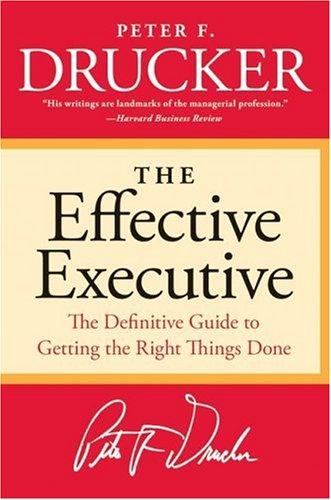
The Effective Executive focuses on individual managers and how they use their time and decisions. Managing for Results operates at the organizational and strategic level, asking how a business should analyze its economic structure and allocate resources to results-producing areas.
-
Who should read this book?
Leaders and managers responsible for strategy, resource allocation, or portfolio decisions in an established organization. It's less useful for early-stage founders and most useful for people running businesses that have accumulated legacy products, customers, and activities over time.
-
What's the most useful idea in the book?
Profitable abandonment — the deliberate decision to stop doing things that consume resources without producing real returns. Most organizations are better at starting things than stopping them, and Drucker makes the case that this imbalance is a fundamental drag on performance.