Margin of Safety by Seth Klarman is a 1991 economics book about value investing, risk management, investment philosophy. A margin of safety means buying at enough of a discount to intrinsic value that even significant errors in your analysis leave capital intact.
Summary
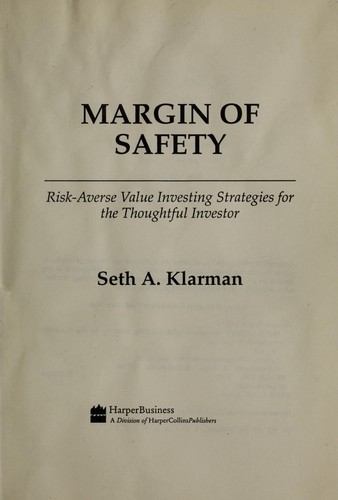
Margin of Safety is Seth Klarman's 1991 treatise on value investing, subtitled "Risk-Averse Value Investing Strategies for the Thoughtful Investor." The book has never been reprinted and used copies sell for hundreds to thousands of dollars, giving it a near-mythical status among serious investors. The title borrows a phrase from Benjamin Graham: always buy with a margin of safety, meaning only purchase an asset at a sufficient discount to its intrinsic value to protect against your own errors of analysis and unpredictable events.
Klarman opens with a lengthy critique of what he calls the institutional imperative: the tendency of professional money managers to chase performance benchmarks, avoid career risk by holding what everyone else holds, and treat market price as validation rather than as an input to be questioned. His argument is that this institutional behavior creates the persistent mispricings that value investors can exploit. Most of the book is about how to identify those mispricings, estimate intrinsic value with appropriate humility, and construct a portfolio that reflects the uncertainty inherent in all estimates.
The second half covers specific investing situations: thrift conversions, liquidations, mergers, and distressed debt — the special situations that Klarman's firm, Baupost Group, has specialized in. These situations are less covered by Wall Street research because they are complex, irregular, and require different analytical skills than standard equity analysis. The opportunities they create are real but require significant work to identify and evaluate.
What distinguishes the book is its consistent focus on risk before return. Klarman argues that most investors get the order wrong — they ask first what returns are possible and only secondarily whether those returns are worth the risk. His reframe is that the primary question is always how much you can lose, not how much you can gain. The margin of safety concept operationalizes this: buying cheap enough means that even if your analysis is wrong, the downside is limited.
Talk to Margin of Safety like its author wrote you back.
Get the ideas that fit your life — not generic summaries.
- Chat with the book
- Audiobook-style main ideas
- Adapts to your life and goals
- Helps you take action
Key takeaways
- 1.
A margin of safety means buying at enough of a discount to intrinsic value that even significant errors in your analysis leave capital intact.
- 2.
Intrinsic value cannot be precisely calculated; it is a range, and the appropriate discount required for a margin of safety depends on how wide that range is.
- 3.
The institutional imperative pushes professional managers toward benchmark-hugging behavior that sacrifices independent judgment for career safety.
- 4.
Risk is not volatility. Risk is the permanent loss of capital, and the primary objective of the serious investor is to avoid it.
- 5.
Catalysts matter: a cheap stock without a visible catalyst can stay cheap indefinitely. Understanding what will unlock value is as important as identifying the value.
- 6.
Special situations — liquidations, restructurings, spinoffs, distressed debt — often offer attractive risk/reward because they require unusual analytical effort that most investors won't do.
- 7.
Cash is not a failure; it is the discipline to wait for genuinely attractive opportunities rather than forcing capital into mediocre ones.
- 8.
The goal is not to beat a benchmark. It is to earn good absolute returns while protecting against permanent capital loss, regardless of what the market does.
Discussion questions
Use these on your own, with a book club, or as chat starters in Superbook. Book club version, ready to copy or print →
- 1.
Klarman argues that most professional investors prioritize career safety over genuine performance. Does that critique ring true from what you've observed, and what would need to change for institutions to behave differently?
- 2.
The margin of safety concept requires estimating intrinsic value before knowing what price is safe. How do you handle the uncertainty in that estimate?
- 3.
Klarman equates risk with permanent capital loss, not volatility. How does that definition change how you evaluate a portfolio or a specific investment?
- 4.
The book was written in 1991. What parts of its analysis of institutional behavior, market inefficiency, or special situations feel most relevant today?
- 5.
Klarman insists on waiting for genuinely attractive prices and is willing to hold large cash positions. How does that approach square with the opportunity cost of cash in a rising market?
- 6.
Which is harder for you: identifying a cheap asset, or holding it through the period of underperformance before the market recognizes its value?
- 7.
Klarman's portfolio is concentrated. He argues that the diversification most investors practice reflects uncertainty about analysis, not genuine risk management. Do you agree?
- 8.
The book covers liquidations and distressed situations that most retail investors cannot access. What principles from those situations transfer to more accessible investments?
- 9.
Baupost Group has remained closed to most investors and keeps its holdings private. Does Klarman's own institutional behavior match his written philosophy?
- 10.
Klarman criticizes growth investors for paying for future earnings that may never materialize. How do you think about the tradeoff between quality, growth, and price?
- 11.
The book's rarity has made it a status symbol among investors. Does the difficulty of access to the book affect how you evaluate its ideas?
- 12.
If you took Klarman's risk-first framework seriously, what would you sell from your current portfolio and why?
Themes
Frequently asked questions
-
Why is Margin of Safety so expensive and rare?
The book was never reprinted after its 1991 print run and Klarman has declined requests to republish it. Used copies sell for hundreds or thousands of dollars. PDF versions circulate informally. Its scarcity has become a status signal among serious investors, which may inflate its perceived value beyond the considerable merit of its actual content.
-
What is the main idea of Margin of Safety?
That the primary task of investing is not maximizing return but avoiding the permanent loss of capital. Buying below intrinsic value — with a margin of safety — ensures that even analysis errors leave the investor protected. Risk, properly understood, is the chance of permanent loss, not short-term price fluctuation.
-
Is Margin of Safety still relevant?
Yes, particularly the philosophical sections on risk, institutional behavior, and the psychology of markets. The specific special-situation chapters are less directly applicable to retail investors but remain instructive about how to find value in complex situations.
-
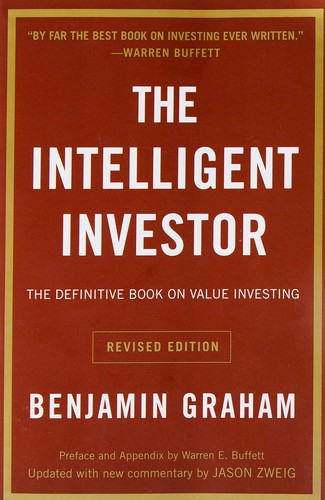
How does Margin of Safety compare to The Intelligent Investor?
Both come from the Graham school. The Intelligent Investor is more accessible and systematic; Margin of Safety is more sophisticated and candid about the difficulty of applying the philosophy in practice. Klarman writes from direct experience managing a large fund through real market cycles.
-
Who should read this book?
Serious investors who have already read Graham and want a more sophisticated treatment of value investing philosophy. Less useful for beginners or investors primarily using index funds, but essential reading for anyone thinking about active stock selection.