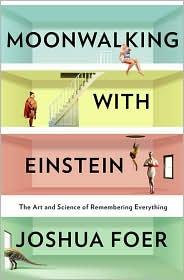
Moonwalking with Einstein by Joshua Foer is a 2011 science book about memory, learning, expertise. The method of loci — placing vivid mental images along a familiar route — is the foundation of virtually all competitive memory performance. It works because human spatial and episodic memory is far stronger than verbal memory.
Summary
Moonwalking with Einstein is Joshua Foer's account of spending a year training for and winning the United States Memory Championship, beginning as a journalist covering the event and ending as its champion. The book weaves together Foer's personal training story and a broader investigation into the history and science of memory — how it works, how it has been understood across cultures, and what the strange subculture of competitive memorization reveals about human cognition.
The central practical thread is the method of loci, also called the memory palace technique. Foer works with Ed Cooke, a British memory champion and coach, who teaches him to encode information as vivid, bizarre, spatial images placed along a familiar mental route. Names become substitute images, cards become characters, numbers become sounds. The technique is ancient — described by Cicero, attributed to the Greek poet Simonides — and modern competitive memory sport is largely an elaboration of the same system. Foer's training shows both the power of the method and how much practice is required to make it reliable.
The historical and scientific sections are at least as interesting as the training narrative. Foer covers the shift from oral to literate culture and what it meant for memory — before widespread literacy, the ability to internalize and carry large bodies of knowledge was a primary intellectual virtue. He profiles savants and people with extraordinary memory deficits, including patients like S.F., who trained his digit span to extraordinary lengths, and EP, who lost the ability to form new memories entirely. He also examines the research on expertise and deliberate practice, drawing on Ericsson's work to ask what memory training actually develops.
Foer is a thoughtful narrator of his own learning, and the book benefits from the fact that it was written by a novice who became competent rather than by an expert who has forgotten what it was like not to know. The result is one of the more accessible treatments of memory science available, anchored by a personal story that makes the techniques feel achievable rather than exotic.
Talk to Moonwalking with Einstein like its author wrote you back.
Get the ideas that fit your life — not generic summaries.
- Chat with the book
- Audiobook-style main ideas
- Adapts to your life and goals
- Helps you take action
Key takeaways
- 1.
The method of loci — placing vivid mental images along a familiar route — is the foundation of virtually all competitive memory performance. It works because human spatial and episodic memory is far stronger than verbal memory.
- 2.
Memory champions are not born with exceptional memories. Studies of their brains show no structural differences from non-experts. What they have is a technique and the practice hours to make it automatic.
- 3.
The shift from oral to literate culture changed the status of memory. Before books, the trained ability to internalize and recite large bodies of knowledge was a primary intellectual virtue; after books, external storage replaced internal storage.
- 4.
Chunking — grouping individual units into larger meaningful clusters — dramatically expands the effective capacity of working memory. Chess masters don't see thirty-two pieces; they see configurations.
- 5.
OK Plateau describes the stage at which a skill becomes automatic and comfortable and stops improving. Most adults stop progressing at this stage in most areas of life. Deliberate practice is the way off the plateau.
- 6.
Vivid, bizarre, and emotional images encode far better than neutral ones. Memory techniques systematically exploit this by making everything into an absurd scene.
- 7.
Savants with prodigious memory often lack the contextual understanding that makes memory useful — they remember vast amounts but can apply very little. Memory without comprehension has limited value.
- 8.
Foer's training reveals that the limiting factor in most memory tasks is not raw capacity but attention. People fail to remember because they fail to notice properly in the first place.
Discussion questions
Use these on your own, with a book club, or as chat starters in Superbook. Book club version, ready to copy or print →
- 1.
Foer begins as a journalist with no special memory ability and wins a national championship. What does that suggest about how much of what we call talent is actually accumulated technique?
- 2.
The method of loci has been used for thousands of years. Why do you think it's not more widely taught in schools or used in professional settings?
- 3.
What have you allowed to reach the OK Plateau in your own life — a skill that works well enough but hasn't improved in years? Is that a problem?
- 4.
The shift from oral culture to literate culture changed what memory was for. What's being outsourced to your phone or search engine now, and does it matter?
- 5.
Foer describes training with Ed Cooke, who believes almost anyone can become a memory champion with the right technique. Do you believe him? What would it take to convince you?
- 6.
Chunking allows experts to perceive complex situations as meaningful units rather than isolated details. Where in your own expertise have you noticed this shift happening?
- 7.
The book covers people with extraordinary memory deficits as well as extraordinary memory abilities. What does the contrast reveal about what memory actually does for us?
- 8.
What is the most consequential thing you have forgotten — a person's name, an experience, a lesson — where the forgetting had real costs?
- 9.
Foer argues that improving memory changes the quality of your present experience because you pay more attention when you know you need to remember. Have you noticed anything like this?
- 10.
Memory sports require competitors to memorize abstract information — cards, numbers, words — that has no intrinsic meaning. What does this tell you about the relationship between memory and meaning?
- 11.
If you spent a month seriously practicing a memory technique, what would you most want to apply it to? What's stopping you?
- 12.
Foer wins the championship and then largely stops practicing. What does that say about sustained motivation after a goal is achieved?
Themes
Frequently asked questions
-
Is Moonwalking with Einstein worth reading?
Yes, for the combination of a compelling personal narrative and genuinely interesting science. It's one of the most readable books on memory available, and the history of memory from ancient Greece through modern neuroscience is fascinating even for readers not interested in practicing the techniques.
-
How long does it take to read Moonwalking with Einstein?
Around five to six hours at average reading pace for the 307-page book. It reads faster than that pace would suggest because the narrative is well-structured and the chapters end with momentum.
-
What is the memory palace technique described in the book?
The method of loci: a technique for memorizing information by placing vivid, bizarre mental images at specific locations along a familiar mental route — your home, a walk you know well. To recall the information, you mentally walk the route and pick up each image in sequence.
-
Do you have to compete in memory sports to benefit from this book?
No. The competitive framing is what makes the narrative engaging, but the underlying techniques apply to any practical memory challenge: names, numbers, lists, presentations, foreign vocabulary. The historical and scientific sections also stand alone as interesting reading.
-
Who should read Moonwalking with Einstein?
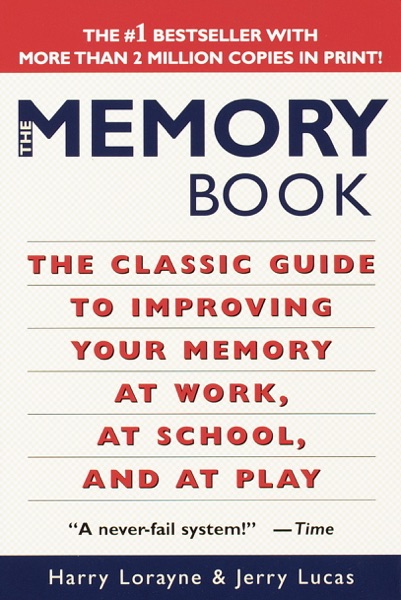
Anyone curious about how memory works and whether it can be improved, science readers interested in cognitive psychology, and people who found the ideas in books like The Memory Book interesting but wanted more narrative and context around them.