My Own Country: A Doctor's Story by Abraham Verghese is a 1994 memoir book about aids epidemic, medicine, community. The AIDS epidemic in rural America was shaped by the pattern of gay men leaving small towns and returning home when they became ill, a dynamic that brought the epidemic to places assumed to be unaffected.
Summary
My Own Country is Abraham Verghese's account of his years as an infectious disease specialist in Johnson City, Tennessee, during the early years of the AIDS epidemic. Verghese, who was born in Ethiopia to Indian parents and trained in medicine in India before emigrating to the United States, arrived in Appalachia as an outsider and found himself at the center of an epidemic that was, in the mid-1980s, presumed to belong to cities. What he found instead was a steady stream of gay men who had left rural Tennessee for New York, San Francisco, and Atlanta — and who, when they became sick, came home to die.
The book is a portrait of two communities discovering each other under the worst possible circumstances. The gay men returning to Johnson City had mostly kept their lives secret from their families; the families, often deeply religious and culturally conservative, had to confront both their child's illness and their child's life simultaneously. Verghese treats these encounters with great care. He is neither a moralist nor a sentimentalist. He records what happened in the exam room, the hospital, the home, with the kind of attention that comes from a doctor who understood that treating AIDS at that moment meant treating the whole human context of illness.
Verghese's own identity runs through the book as a secondary current. He is an immigrant, an outsider, and someone who understands from personal experience what it means to be between worlds. That positioning gives him unusual access — his patients trusted him partly because he himself didn't fully belong to either the rural Tennessee world or the urban gay world they had left. The memoir is also a document of medicine at a particular crisis moment, before effective treatment existed and when the primary skill a doctor needed was the ability to accompany patients through dying.
My Own Country is a quieter book than its subject might suggest. Verghese is a measured, elegant writer. He does not overexplain. The accumulation of individual stories — patients, families, nurses, colleagues — builds a picture of a community under strain that is more affecting for being specific rather than representative.

Talk to My Own Country: A Doctor's Story like its author wrote you back.
Get the ideas that fit your life — not generic summaries.
- Chat with the book
- Audiobook-style main ideas
- Adapts to your life and goals
- Helps you take action
Key takeaways
- 1.
The AIDS epidemic in rural America was shaped by the pattern of gay men leaving small towns and returning home when they became ill, a dynamic that brought the epidemic to places assumed to be unaffected.
- 2.
Treating AIDS in the 1980s was almost entirely palliative — Verghese's role was accompaniment through dying rather than cure, which required a different kind of medical practice.
- 3.
Verghese's outsider identity as an immigrant and a person of color in Appalachia gave him unusual access to communities that might not have trusted a local doctor.
- 4.
Families often learned simultaneously that their child was gay and that their child was dying — a double disclosure with no preparation.
- 5.
The book is a portrait of how a community's religious and cultural conservatism coexisted with individual acts of compassion when illness made abstraction impossible.
- 6.
Verghese's clinical attention to the physical examination — the ritual of the doctor's hands and eyes — runs throughout as a form of respect for the patient as a complete person.
- 7.
The epidemic transformed how Verghese understood his own sense of belonging, leading ultimately to his departure from Johnson City when the community he'd built there dissolved.
- 8.
My Own Country is also a critique of how American medicine was slow to respond to AIDS, with stigma at every level — political, social, and institutional — delaying care.
Discussion questions
Use these on your own, with a book club, or as chat starters in Superbook. Book club version, ready to copy or print →
- 1.
Verghese writes as an outsider in multiple senses. How does that positioning serve the book — what does he see that an insider might not?
- 2.
The families in the book are asked to absorb two revelations at once: a child's sexual identity and a terminal diagnosis. How does Verghese navigate that double disclosure in his clinical practice?
- 3.
What does the book suggest about the particular nature of medicine before effective treatment exists — how does a doctor practice when there is nothing curative to offer?
- 4.
Verghese is an immigrant who found community in an unlikely place. How does his own experience of displacement shape his empathy for his patients?
- 5.
The AIDS epidemic in Johnson City was made up largely of men who had left rural America to be themselves. What does that geography of escape say about American life in that period?
- 6.
How does Verghese balance the individual portraits of patients with the larger epidemiological story? Where does the book succeed and where does it feel incomplete?
- 7.
Religious faith appears throughout the book — in families, in patients, sometimes as comfort and sometimes as condemnation. How does Verghese handle that tension?
- 8.
Which patient or family in the book stayed with you most, and why?
- 9.
The book ends with Verghese leaving Johnson City. Does that departure feel like abandonment, self-preservation, or something else?
- 10.
What has changed about the AIDS epidemic since the period Verghese describes, and what does reading the book in hindsight do to how you experience his accounts of dying patients?
- 11.
How does My Own Country compare to other accounts of the early AIDS epidemic that you know — does it add something different?
- 12.
Verghese's role as a doctor meant he was present at deaths in a way most people aren't. How does his relationship to death come through in the writing?
Themes
Frequently asked questions
-
Is My Own Country worth reading?
Yes, particularly if you're interested in medicine, the early AIDS epidemic, or what it looks like when a community faces a crisis it wasn't prepared for. Verghese writes beautifully and brings a clinical eye to human situations that most writers would either sentimentalize or abstract.
-
How long does it take to read My Own Country?
Around six to seven hours. It's a substantial book, but the accumulation of individual stories creates a rhythm that carries most readers forward without difficulty.
-
What is My Own Country mainly about?
Verghese's years treating AIDS patients in rural Tennessee in the mid-1980s, and the community of patients, families, and colleagues he found there. It's also about his own identity as a perpetual outsider and what that made possible in his practice.
-
Who should read My Own Country?
Anyone interested in medicine, the history of the AIDS epidemic, or memoirs that move between personal identity and public crisis. It will also appeal to readers of Atul Gawande and Paul Kalanithi who want more narrative and less analysis.
-
How does the book hold up given what we now know about AIDS treatment?
Well. The book is not primarily about the disease but about the human situations surrounding it. The medical treatments have changed radically; the human dynamics Verghese describes — family, identity, dying, belonging — have not.
Similar books
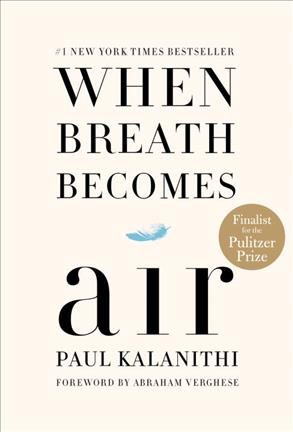
When Breath Becomes Air
Paul Kalanithi
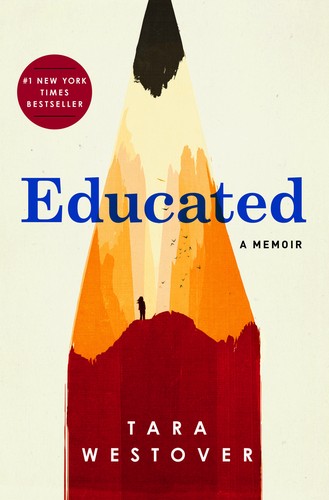
Educated: A Memoir
Tara Westover
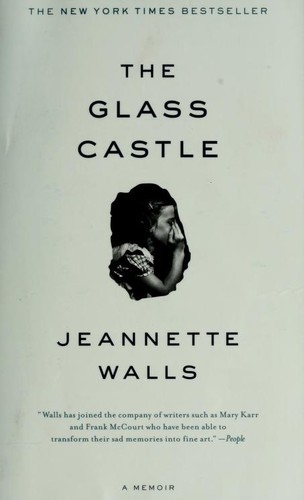
The Glass Castle: A Memoir
Jeannette Walls
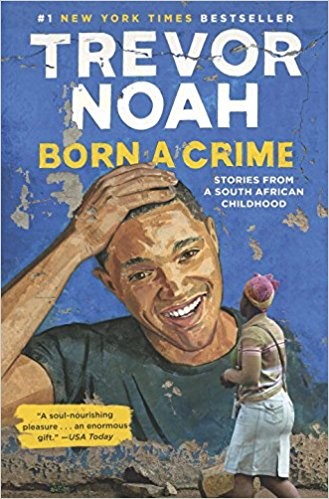
Born a Crime: Stories from a South African Childhood
Trevor Noah
