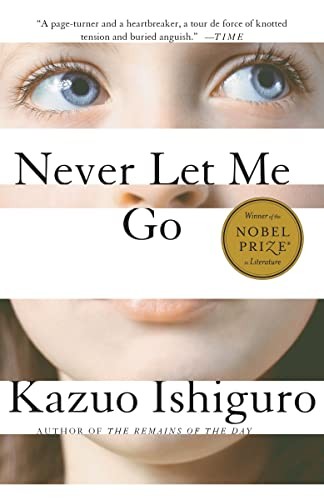
Never Let Me Go by Kazuo Ishiguro is a 2005 literary fiction book about mortality and acceptance, memory and loss, ethics of science. The dystopia is withheld and revealed gradually, but the novel is not a thriller — once you understand the situation, it asks you to sit with it rather than resist it.
Summary
Kathy H. is a carer in her early thirties, looking back on her childhood at Hailsham, an English boarding school, and on her relationships with her two closest friends, Ruth and Tommy. The novel is structured as Kathy's reminiscence, and Ishiguro parcels out its central revelation slowly: the children at Hailsham are clones, raised to donate their organs in adulthood. By the time you understand this fully, you're too far inside Kathy's voice to experience it as science fiction.
Ishiguro is not interested in the mechanics of the dystopia or the injustice of the clones' condition. He is interested in how people accommodate their own mortality — how Kathy and her friends know, at some level, what they are and what awaits them, and arrange their emotional lives around that knowledge without ever quite confronting it directly. The children speculate about "deferrals" for couples in love; they seek meaning in their artwork; they navigate the same petty jealousies and loyalties as any children. The horror of the novel is not that the system exists but that everyone in it has found a way to live with it.
The prose is Kathy's voice, and it's Ishiguro's most precise formal achievement: conversational, digressive, full of qualifications and loops back, but never slow. The digressiveness enacts Kathy's psychology — she approaches the painful material from oblique angles, circles back, says "I don't know" at moments when she clearly does know. Reading it, you're aware that something is being withheld, but the withholding feels like a personality rather than a trick.
This is a deeply sad book, and it is not interested in consolation. Readers who want science fiction world-building won't find it; readers who want resolution or hope should not expect it. What they will find is one of the most precise accounts in recent fiction of what it means to face an ending you cannot change — and to have loved people, and to have been loved imperfectly, along the way.
Talk to Never Let Me Go like its author wrote you back.
Get the ideas that fit your life — not generic summaries.
- Chat with the book
- Audiobook-style main ideas
- Adapts to your life and goals
- Helps you take action
Key takeaways
- 1.
The dystopia is withheld and revealed gradually, but the novel is not a thriller — once you understand the situation, it asks you to sit with it rather than resist it.
- 2.
Kathy's narration is calibrated to approach the most painful material obliquely — the gaps and deflections are the emotional content, not its absence.
- 3.
The children's passive acceptance of their fate is the novel's most disturbing element. Ishiguro suggests this passivity is not stupidity but a specifically human form of accommodation.
- 4.
The question of whether the clones have souls — posed explicitly in the novel — is never answered, and the point is that no satisfying answer is available.
- 5.
Ruth's complicated jealousy and manipulation are treated with full seriousness: the novel doesn't reduce its characters to victims of the system but shows them creating their own cruelties.
- 6.
Tommy's art — initially mocked, later understood as his attempt to prove something about his inner life — is the novel's most sympathetic strand.
- 7.
The 'deferral' plot — the possibility that couples in love can delay donation — is presented as likely wishful thinking, and the novel asks what it means to pursue hope you don't fully believe in.
- 8.
Miss Lucy's honesty about the children's situation, and the other guardians' discomfort with it, dramatizes the ethics of telling people the truth about an irreversible condition.
Discussion questions
Use these on your own, with a book club, or as chat starters in Superbook. Book club version, ready to copy or print →
- 1.
The children at Hailsham accept their fate with very little apparent resistance. Is that acceptance plausible? What would it mean to truly resist if you had been raised from birth to accept?
- 2.
Miss Lucy tells the children the truth and is removed. What does the novel think about that decision — the system's, and hers?
- 3.
Ruth manipulates Tommy and Kathy throughout their childhood and young adulthood, and then apologizes near the end. Is the apology adequate? Is it meant to be?
- 4.
The 'deferral' hope — that couples could delay donation — turns out to be false. Why do you think Kathy and Tommy pursue it anyway? Does the novel judge them for it?
- 5.
Ishiguro never names the country or the exact period. What does that deliberate vagueness do? Is it evasion, or does it serve the novel's purposes?
- 6.
The clones don't rebel and don't escape, even though escape seems possible. What explanation does the novel offer? Do you find it convincing?
- 7.
Madame and Miss Emily represent the people who created the system while caring about the clones. How does the novel treat their moral position?
- 8.
Kathy's voice is carefully designed to make the reader complicit in her accommodation — we follow her perspective so closely that we start to normalize what is being described. Did you notice yourself doing that?
- 9.
Compared to The Remains of the Day, this novel also uses a first-person narrator who cannot quite say the most painful things directly. Which narrator do you find more affecting?
- 10.
The title comes from a song Kathy dances to as a child — an old cassette tape playing 'Never Let Me Go.' What does the song mean to her, and what does it mean to the novel?
- 11.
The final image of the novel: Tommy's anger at the motorway, and then Kathy's return. What is Ishiguro asking you to feel in those last pages?
Themes
Frequently asked questions
-
Is Never Let Me Go science fiction?
Technically yes — it posits a world with human cloning — but it reads nothing like science fiction in the genre sense. Ishiguro uses the premise to write about mortality and accommodation, not about technology or dystopian resistance. Readers who come to it expecting plot-driven speculative fiction will be surprised.
-
Is it as sad as people say?
Yes. It is genuinely and quietly devastating, especially on a second reading when you can see how precisely Ishiguro has arranged the withholding. It does not provide consolation.
-
Should I read The Remains of the Day first?
They're independent novels. That said, if you read both, the similarities in method are illuminating — both use first-person narrators who cannot quite access their own emotional lives, and both build to a devastating accumulation of loss.
-
Is there a film adaptation?
Yes. The 2010 film directed by Mark Romanek, with Carey Mulligan, Keira Knightley, and Andrew Garfield, is a faithful and visually beautiful adaptation. Mulligan's performance as Kathy captures Ishiguro's tone of restrained grief.
-
Who shouldn't read this book?
Readers who need agency and resistance in their protagonists. The clones' passivity is essential to the novel's argument, but if you find yourself wanting them to run, that frustration won't resolve — the novel refuses that escape. Also, anyone who recently lost someone or is facing a terminal diagnosis may find it too close.
Similar books
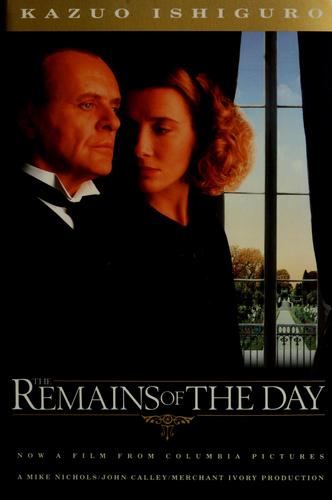
The Remains of the Day
Kazuo Ishiguro
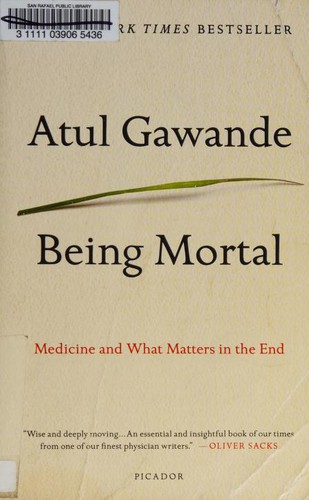
Being Mortal: Medicine and What Matters in the End
Atul Gawande
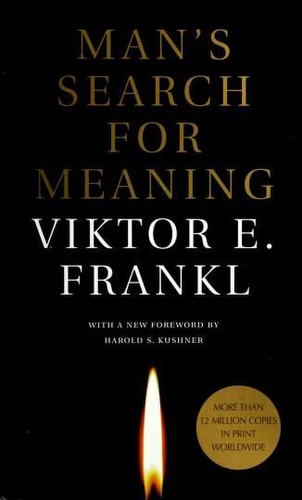
Man's Search for Meaning
Viktor E. Frankl
When Breath Becomes Air
Paul Kalanithi
