Scattered Minds by Gabor Maté is a 1999 health book about adhd, childhood development, attachment. ADHD is neither purely genetic nor purely environmental. It emerges from the interaction of genetic sensitivity and early developmental conditions, particularly the quality of early emotional attunement.
Summary
Scattered Minds, originally published as Scattered, is Gabor Maté's account of ADHD seen through the lens of his own diagnosis and his decades of clinical practice. Maté rejects the view of ADHD as purely a genetic condition expressing itself regardless of environment. Instead, he argues that the disorder emerges from the interaction of genetic predisposition and early childhood environment — specifically, from disrupted emotional attunement between caregivers and infants during critical periods of brain development. The biology is real, but it is shaped by experience.
The book covers both the neurological underpinnings and the psychological consequences of ADHD. The prefrontal cortex, which handles attention, impulse control, and emotional regulation, develops primarily in the context of early relationships. When those relationships are characterized by stress, emotional unavailability, or inconsistency — even without any abuse or neglect — the developing brain organizes itself around hypervigilance and reactivity rather than calm focus. Maté draws on research showing that parental stress, not just parental genetics, is transmitted to children through physiological channels.
What distinguishes Scattered Minds from most ADHD books is its tone. Maté writes from the inside. His own distractibility, emotional sensitivity, and compulsive behaviors appear throughout as data points. He is not neutral about medication — he sees it as useful but limited, a way of managing symptoms rather than addressing the developmental and emotional roots. He advocates for what he calls the "four As": acceptance, awareness, anger, and autonomy — a framework for adults with ADHD to renegotiate their relationship with their own minds.
The book is less a clinical manual than a reframing. Critics have noted that Maté's developmental theory, while compelling, doesn't account for everyone with ADHD, many of whom grew up in stable and attentive households. But for readers who recognize themselves in his case studies — the gifted but disorganized adult, the person who cannot finish things but burns intensely when interested — the book often feels like the first accurate description of their interior experience they have ever encountered.
Talk to Scattered Minds like its author wrote you back.
Get the ideas that fit your life — not generic summaries.
- Chat with the book
- Audiobook-style main ideas
- Adapts to your life and goals
- Helps you take action
Key takeaways
- 1.
ADHD is neither purely genetic nor purely environmental. It emerges from the interaction of genetic sensitivity and early developmental conditions, particularly the quality of early emotional attunement.
- 2.
The prefrontal cortex, which governs attention and impulse control, is uniquely dependent on early relational experience for its development. Chronic stress in caregivers is transmitted to infants in physiological ways that shape brain organization.
- 3.
Adults with ADHD often develop compensatory strategies that work up to a point — hyperfocus, intellectual intensity, creative workarounds — but break down under the sustained demands of adult life.
- 4.
Emotional sensitivity is a core feature of ADHD, not a side effect. Many people with the condition are exquisitely attuned to others' emotional states while being poorly regulated in their own.
- 5.
Medication addresses the neurotransmitter deficits associated with ADHD but does not change the underlying emotional and relational patterns that developed around it. Both matter.
- 6.
Shame is a central experience for many people with ADHD, accumulated over years of failing to meet expectations that assume a different kind of brain. Addressing shame is as important as addressing attention.
- 7.
Maté's framework of acceptance, awareness, anger, and autonomy offers adults with ADHD a way to work with their neurology rather than perpetually fighting it.
- 8.
Parents of children with ADHD benefit from understanding their own emotional state. A regulated parent is the most powerful intervention available, more durable than any technique.
Discussion questions
Use these on your own, with a book club, or as chat starters in Superbook. Book club version, ready to copy or print →
- 1.
Maté argues ADHD is shaped by early relational environment, not just genetics. Does this framing relieve or add to the sense of responsibility you associate with the condition?
- 2.
The book emphasizes emotional sensitivity as central to ADHD. If you or someone you know has ADHD, does that match the experience, or does it feel like it misses something?
- 3.
Maté implicates parental stress in the development of ADHD in children. How do you think about the ethics of that claim — is it useful or does it risk misplaced blame?
- 4.
The book is partly a memoir. Does Maté's personal narrative make the argument more compelling, or does it make you wonder whether he's generalizing too freely from his own case?
- 5.
What would it change for someone you know with ADHD if they understood the diagnosis through Maté's developmental lens rather than a purely neurological one?
- 6.
Maté is skeptical of medication as a full solution but not opposed to it. What's your own intuition about the balance between medication and other interventions for attention disorders?
- 7.
The book describes hyperfocus — intense absorption in things that interest the ADHD mind — as both a strength and a symptom. How do you think about the line between a gift and a disorder?
- 8.
Maté traces adult ADHD symptoms back to childhood environments. What does it feel like to look back at childhood through that lens — clarifying, unsettling, or neither?
- 9.
The shame accumulation Maté describes — years of failing at things neurotypical people find easy — is specific. Do you think mainstream culture has gotten better or worse at recognizing that burden?
- 10.
Maté argues that awareness, not just behavioral strategies, is the starting point for change. What does genuine self-awareness look like versus the kind of self-awareness that still doesn't change anything?
- 11.
The book distinguishes between children who need more emotional attunement and environments that can't provide it. What are the realistic limits of what any parent can give?
- 12.
If ADHD is partly a mismatch between a particular kind of nervous system and modern demands, what would have to change about school, work, or social life to accommodate rather than pathologize it?
Themes
Frequently asked questions
-
Is Scattered Minds worth reading for adults with ADHD?
Yes, particularly for adults who feel that purely neurological or behavioral accounts of ADHD miss something important about their experience. Maté's developmental and emotional framing resonates strongly with many readers who recognized themselves in clinical literature for the first time.
-
What is Scattered Minds about?
It argues that ADHD is not purely genetic but emerges from the interaction of inborn sensitivity and early childhood environment, especially the quality of emotional attunement between caregiver and child. Maté draws on his own diagnosis and clinical practice to make the case.
-
Does Scattered Minds offer practical advice?
Less than many ADHD books. The practical framework — acceptance, awareness, anger, autonomy — is useful but not a step-by-step program. The book's primary value is reframing how readers understand the condition rather than providing techniques.
-
How does Scattered Minds compare to other ADHD books?
Most ADHD books focus on behavioral strategies or neuroscience. Scattered Minds is unusual in centering emotional history and relational development. It's more philosophical and personal, less clinical. Readers who want a practical guide may prefer other books; those who want a deeper understanding of why their mind works the way it does will find this more useful.
-
Does Maté think parents cause ADHD?
Not exactly. He argues that parental stress and emotional unavailability during critical developmental periods shape how a genetically predisposed brain organizes itself. He is careful to emphasize that parents in stressful circumstances are also responding to their own histories — it's a chain, not a verdict.
Similar books
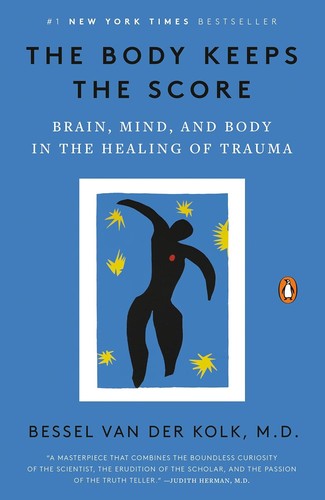
The Body Keeps the Score
Bessel van der Kolk
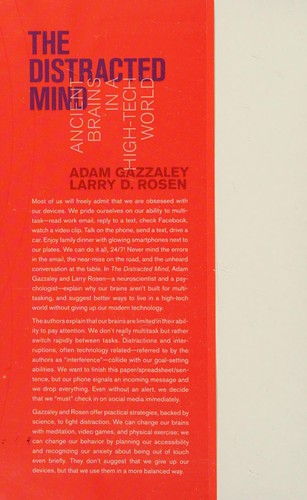
The Distracted Mind
Adam Gazzaley and Larry D. Rosen
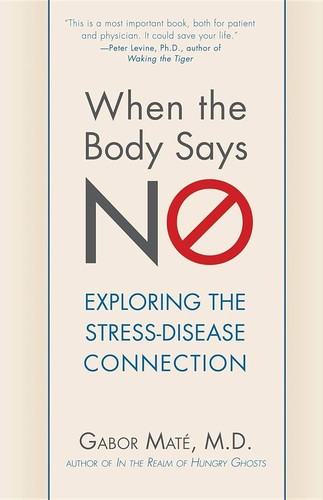
When the Body Says No
Gabor Maté
Behave: The Biology of Humans at Our Best and Worst
Robert M. Sapolsky
