Management of Organizational Behavior by Paul Hersey and Kenneth Blanchard is a 1969 business book about leadership, management, situational judgment. There is no single best leadership style. Effective leadership requires diagnosing the development level of the follower and matching the appropriate style.
Summary
Management of Organizational Behavior is the textbook that introduced Situational Leadership Theory, the model that argues there is no single best leadership style — only styles that are more or less appropriate to the development level of the person being led. First published in 1969 by Paul Hersey and Kenneth Blanchard, the book has gone through multiple editions and is among the most widely cited leadership frameworks in academic and corporate training programs worldwide.
The central model maps leadership style across two dimensions: task behavior (the degree to which a leader directs what, how, where, and when) and relationship behavior (the degree to which a leader engages in two-way communication and socio-emotional support). Four styles emerge from these two axes: Telling (high task, low relationship), Selling (high task, high relationship), Participating (low task, high relationship), and Delegating (low task, low relationship). The leader's job is to diagnose the follower's development level — a combination of competence and commitment on a specific task — and then match the appropriate style to that level.
The model's appeal is its specificity. Rather than asking "what kind of leader are you," it asks "what does this particular person need for this particular task at this particular moment." A new employee learning a skill needs Telling; a competent employee who has lost motivation needs Participating; a highly capable, self-directed person needs Delegating. Mismatches create predictable problems: over-directing capable people breeds resentment, under-directing beginners breeds confusion.
The book is a management textbook as much as a leadership guide, and it covers motivation theory (Maslow, Herzberg, McClelland), organizational climate, and group development in addition to the leadership style model. The writing is academic and dense in places. Most practitioners encounter the model through corporate training programs rather than the full text, which is a reasonable approach — the core Situational Leadership model is learnable in an hour, even if the theoretical scaffolding takes longer. Readers who want the framework concisely should look at Blanchard's later books; readers who want the behavioral science underpinning should start here.
Talk to Management of Organizational Behavior like its author wrote you back.
Get the ideas that fit your life — not generic summaries.
- Chat with the book
- Audiobook-style main ideas
- Adapts to your life and goals
- Helps you take action
Key takeaways
- 1.
There is no single best leadership style. Effective leadership requires diagnosing the development level of the follower and matching the appropriate style.
- 2.
Development level combines competence (skill and knowledge) with commitment (motivation and confidence) on a specific task, not in general.
- 3.
The four styles — Telling, Selling, Participating, Delegating — match to four development levels. Moving through them is a developmental progression, not a hierarchy of value.
- 4.
Over-directing a competent person is as damaging as under-directing a beginner. Both are style mismatches and both produce disengagement.
- 5.
Leadership style should flex continuously. The same person may need different styles for different tasks simultaneously, depending on their experience level in each domain.
- 6.
Regressive cycles are real: a crisis, a new assignment, or a confidence collapse can move someone back to an earlier development level, requiring a return to more directive leadership.
- 7.
Motivation is not a stable trait. Whether someone is motivated depends heavily on how they are being led, what the task is, and the organizational climate around them.
- 8.
Effective delegation is not abdication. It applies to people who are both competent and committed on a specific task, and it still requires monitoring and relationship maintenance.
Discussion questions
Use these on your own, with a book club, or as chat starters in Superbook.
- 1.
Think about one direct report. What is their development level on their most important current task? Are you using a matching leadership style?
- 2.
Hersey and Blanchard argue that most leaders have a dominant style they revert to under pressure. What is yours, and where does it create mismatches?
- 3.
Have you experienced a regressive cycle — a competent person losing confidence or motivation and needing more direction again? How did you handle it?
- 4.
The model separates task behavior from relationship behavior. Most managers lean toward one. Which do you lean toward, and when does that lean hurt you?
- 5.
Delegating is appropriate for high-competence, high-commitment followers. How many people in your current team qualify? What does that tell you?
- 6.
The model says development level is task-specific, not general. How does your current approach to leading people account for the fact that the same person can be at D4 on one task and D1 on another?
- 7.
Many training programs teach Situational Leadership. Have you seen it applied well in an organization? What made it work or not work?
- 8.
Over-directing capable people damages motivation. Can you identify a situation where you did this? What was the effect?
- 9.
The book draws heavily on Maslow and Herzberg. How much of mid-twentieth-century motivation theory do you find applicable to your actual workplace?
- 10.
Hersey and Blanchard distinguish leadership style from leadership effectiveness. A style is only effective when it matches the situation. How do you calibrate your effectiveness rather than just your intent?
- 11.
Is Situational Leadership still a useful model, or have knowledge work and flat organizations made it obsolete? What would you keep and what would you update?
- 12.
The model implies that leaders should move people toward self-direction. Do most organizations actually reward leaders for developing followers' autonomy, or for maintaining control?
Themes
Frequently asked questions
-
What is Situational Leadership Theory?
It's the model from Hersey and Blanchard that says effective leadership style should match the development level of the follower on a specific task. Four styles — Telling, Selling, Participating, Delegating — correspond to four development levels combining competence and commitment.
-
Do I need to read the full textbook to understand Situational Leadership?
No. The core model is accessible through Blanchard's shorter book Leadership and the One Minute Manager or through corporate training programs. The full textbook provides the behavioral science background and motivation theory but is not necessary for applying the framework.
-
Is Situational Leadership still used in organizations today?
Yes. It remains one of the most widely deployed leadership development models globally. Critics note that the competence-commitment matrix oversimplifies human motivation, but practitioners find the diagnostic discipline — asking 'what does this person need for this task?' — consistently useful.
-
What is the most common mistake leaders make according to Hersey and Blanchard?
Style inflexibility — reverting to a dominant style regardless of the situation. This typically means either over-directing capable people (creating resentment) or under-directing beginners (creating confusion and failure).
-
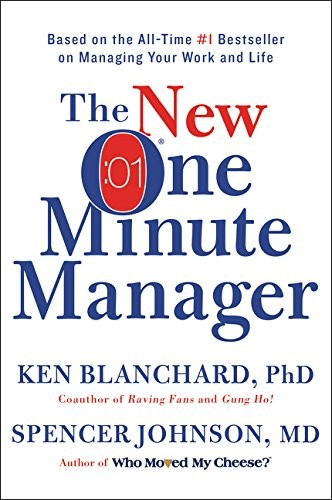
How does this book differ from The New One Minute Manager?
Management of Organizational Behavior is the academic source text that developed the underlying theory. The New One Minute Manager is a concise popular parable applying some of those ideas. The textbook is more comprehensive and rigorous; the parable is faster and more immediately actionable.