The 7 Habits of Highly Effective People by Stephen R. Covey is a 1989 self-help book about effectiveness, character ethics, personal leadership. The personality ethic (techniques and image) cannot substitute for the character ethic (integrity, humility, fairness). Lasting effectiveness is built on principles, not on shortcuts.
Summary
Stephen R. Covey's argument is that most self-improvement advice treats symptoms rather than causes. He draws a contrast between the "personality ethic" — the techniques and shortcuts that dominated popular success literature after World War I — and the "character ethic" that dominated prior to it. Covey's claim is that lasting effectiveness has to be built on principles like integrity, humility, and fairness, not on tactics for making people like you. The seven habits are meant to be an integrated system, not a checklist.
The first three habits address what Covey calls the private victory: becoming independent in a mature, principled way. Be proactive means taking responsibility for your own choices rather than attributing your responses to circumstances or other people. Begin with the end in mind means clarifying your values and long-term goals before letting urgent tasks drive your days. Put first things first means scheduling around those priorities rather than reacting to whatever feels pressing. Covey illustrates this last habit with a time-management matrix that separates the important from the merely urgent — the insight being that most people spend their time in urgent but unimportant quadrants and neglect the important but non-urgent work that actually moves life forward.
The next three habits concern the public victory: building productive interdependence with others. Think win/win argues that most negotiations don't have to be zero-sum and that relationships built on mutual benefit are more durable. Seek first to understand, then to be understood is Covey's reframing of communication: most people listen with the intent to reply rather than to genuinely comprehend, and that failure is the source of most interpersonal friction. Synergize holds that genuine collaboration — valuing differences rather than tolerating them — produces outcomes neither party could reach alone. The seventh habit, sharpen the saw, is about renewal: sustaining the physical, mental, social, and spiritual capacity that the other six habits require.
The book's age shows in places. Some of the business examples are dated, and the reliance on Covey's consulting background gives certain sections a workshop-manual feel. The prose is not especially lean. But the underlying framework has held up well: the distinction between urgency and importance, the principle that trustworthy character precedes effective technique, and the idea that you have to orient yourself before you can orient your relationships — these are ideas that have influenced management thinking for decades and continue to appear, repackaged, in newer books on leadership and habit change. Covey is not always the easiest read, but for readers willing to engage with the whole model rather than cherry-pick habits, there is a coherent philosophy here.
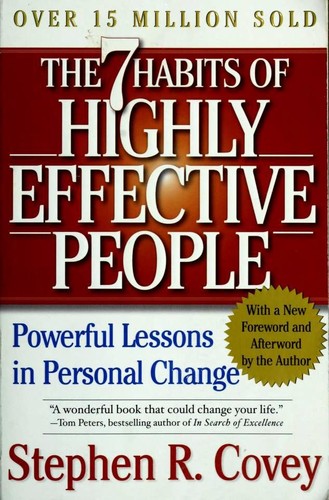
Talk to The 7 Habits of Highly Effective People like its author wrote you back.
Get the ideas that fit your life — not generic summaries.
- Chat with the book
- Audiobook-style main ideas
- Adapts to your life and goals
- Helps you take action
Key takeaways
- 1.
The personality ethic (techniques and image) cannot substitute for the character ethic (integrity, humility, fairness). Lasting effectiveness is built on principles, not on shortcuts.
- 2.
Be proactive means your responses to events are chosen, not conditioned. Between stimulus and response, there is always a space — and that space is where your freedom lives.
- 3.
Beginning with the end in mind means writing a personal mission statement and letting it govern decisions before urgency does. Most people drift because they never clarify what they actually want.
- 4.
The time-management matrix: quadrant two — important but not urgent — is where planning, relationship-building, and renewal live. Neglecting it in favor of urgent tasks is how lives stay reactive.
- 5.
Think win/win is not a compromise; it's a genuine search for solutions that serve both parties. If a win/win solution can't be found, no deal is better than a bad deal.
- 6.
Seek first to understand, then to be understood. Empathic listening — hearing with the intent to truly comprehend — is rarer than it sounds and more powerful than most people realize.
- 7.
Synergy means the whole exceeds the sum of its parts. It's only possible when differences are treated as strengths rather than problems to manage.
- 8.
Sharpen the saw — renewing your physical, mental, social, and spiritual capacity — is the habit that makes all the others sustainable. Without it, effectiveness degrades over time.
Discussion questions
Use these on your own, with a book club, or as chat starters in Superbook. Book club version, ready to copy or print →
- 1.
Covey distinguishes the character ethic from the personality ethic. Which ethic has shaped most of the career or self-improvement advice you've received? Does that match your experience of what actually works?
- 2.
Which of the seven habits do you find most natural, and which creates the most resistance for you? What does that gap reveal?
- 3.
Map your last week against Covey's time-management matrix. Which quadrant got most of your time? Which quadrant got least?
- 4.
What would it mean to 'begin with the end in mind' for the area of your life that currently feels most adrift? What is the end you actually want?
- 5.
Covey argues that most people listen with the intent to reply rather than to understand. Think of a recent conversation where you did this. What might you have missed?
- 6.
The think win/win habit requires believing that mutual gain is possible. In which relationships in your life do you default to a zero-sum assumption, and is that assumption accurate?
- 7.
Covey says a personal mission statement is the foundation of the second habit. Have you ever written one? If you drafted one right now, what would it say?
- 8.
The concept of the circle of influence versus the circle of concern — spending energy on what you can control rather than what you can't — is central to being proactive. Where are you currently spending energy on things outside your circle of influence?
- 9.
Sharpen the saw covers physical, mental, social, and spiritual renewal. Which of these four dimensions is most depleted in your life right now, and what would genuine renewal look like?
- 10.
Covey writes that trust is the highest form of motivation. Where in your professional or personal life have you seen high trust produce results that management or incentives alone couldn't?
- 11.
The synergy habit requires valuing differences. Think of a person whose approach to a shared problem frustrates you. Is there something in their perspective that you've been dismissing as merely wrong rather than differently valid?
- 12.
Covey was writing primarily for managers and professionals in 1989. Which parts of the book translate well to your life today, and which feel like relics of a specific era of work?
Themes
Frequently asked questions
-
Is The 7 Habits of Highly Effective People still worth reading?
Yes, though with patience for its age. The core framework — character before technique, private victory before public victory, urgency versus importance — is as useful as ever. Some case studies and prose are dated, and newer books have distilled pieces of it more concisely, but none have replaced the whole model.
-
How long does it take to read The 7 Habits?
Around six to seven hours at an average pace for the roughly 380-page book. The chapters are dense compared to modern self-help, and many readers find it worthwhile to pause and apply each habit before continuing to the next.
-
What is the most actionable idea in The 7 Habits?
The time-management matrix from habit three. Drawing your own version and categorizing last week's tasks by importance and urgency takes about ten minutes and almost always reveals that you're spending too little time in quadrant two — the important, non-urgent work that shapes the future.
-
How does The 7 Habits differ from Atomic Habits?
Atomic Habits is about the mechanics of behavior change — how to build or break any habit using environmental design and identity. The 7 Habits is about which habits to build and why, grounded in a philosophy of character and principle. They complement each other well but operate at different levels.
-
Who should read The 7 Habits?
People in or approaching leadership roles, anyone who feels reactive and wants a framework for taking more deliberate control of their priorities, and readers who want a foundational text rather than a trendy shortcut. It's less useful as a quick-read productivity fix and more useful as a model to return to over years.
Similar books
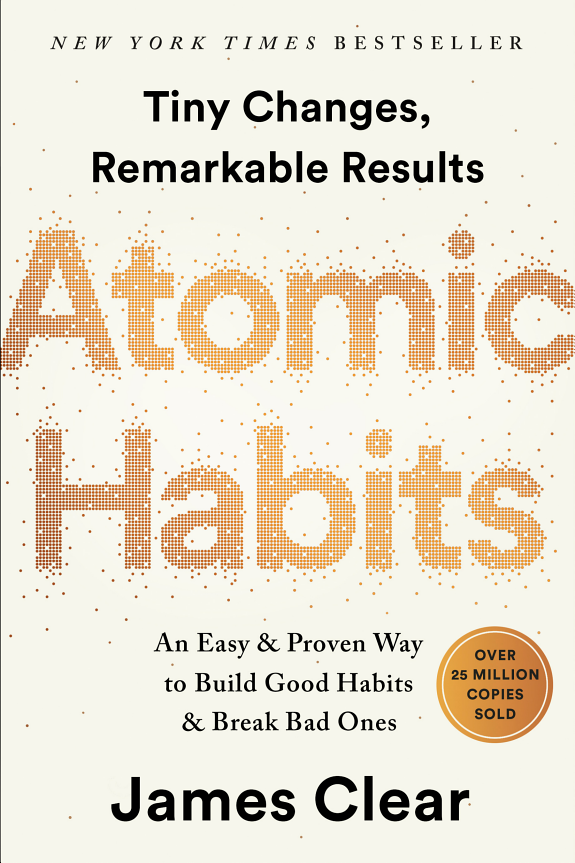
Atomic Habits
James Clear
Mindset: The New Psychology of Success
Carol S. Dweck
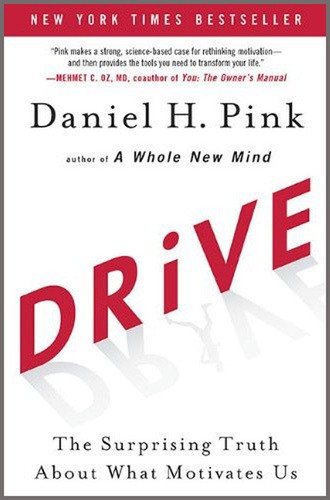
Drive: The Surprising Truth About What Motivates Us
Daniel H. Pink
How to Win Friends and Influence People
Dale Carnegie
The 7 Habits of Highly Effective People vs.
Deciding between two books? The 7 Habits of Highly Effective People vs Atomic Habits .
